
Central Texas Roofing Expert
Hail Damage Roofing Contractor in Austin, TX
If your neighborhood got hit by hail recently, your roof may be damaged even if it looks fine from the driveway. In Central Texas, hail damage to asphalt shingles is usually invisible from the ground – but it is accelerating the aging of your roof, can void your warranty, and will close your insurance filing window if you wait too long to document it.
Altitude Roofing is the hail damage roofing contractor in Austin homeowners call when they need it done right. We are a family-owned, GAF Master Elite certified roofing company that has been inspecting and repairing hail-damaged roofs across Austin and Central Texas for over 20 years. Our owner, Mr Nichols, holds an all-lines insurance adjuster license and follows HAAG engineering inspection protocols – which means our damage reports hold up under adjuster scrutiny, and denied claims get reopened. Whether you need targeted hail damage repair, a full hail damage roof replacement, or help navigating an insurance claim, we handle every step in-house.
Get Your Free Inspection
Please fill out the form below to schedule your roof inspection. Our team will contact you within 24 hours to confirm the details.
- No obligation. 100% Free Estimate.
What Hail Actually Does to Your Roof
Austin sits in a hail corridor. The storm track that runs northeast through Hays and Travis counties puts the 78737 zip code and the entire Southwest Austin corridor directly in the path of the systems that produce the most damaging hail in the region. These are the same systems that have driven billions in insured losses in Central Texas over the past decade. Hail size, wind angle, and roof age all affect how much damage a storm leaves behind. Here is what we look for during every post-storm inspection:
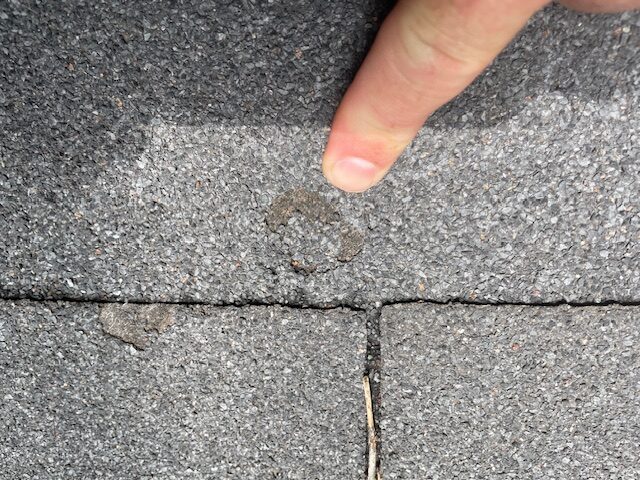
Asphalt shingles
A direct hail hit fractures the granule coating that protects the asphalt layer underneath. From the ground, the shingle looks intact. Up close, you will see a dark bruised spot or a circular depression where granules have been knocked loose. That exposed asphalt starts oxidizing and cracking immediately - within months, not years.

Granule accumulation in gutters
Some granule loss from new shingles is normal, but heavy accumulation after a storm - especially uneven deposits clustered near downspout exits - usually means impact damage across multiple shingles. This is often the first thing a homeowner notices without getting on the roof.
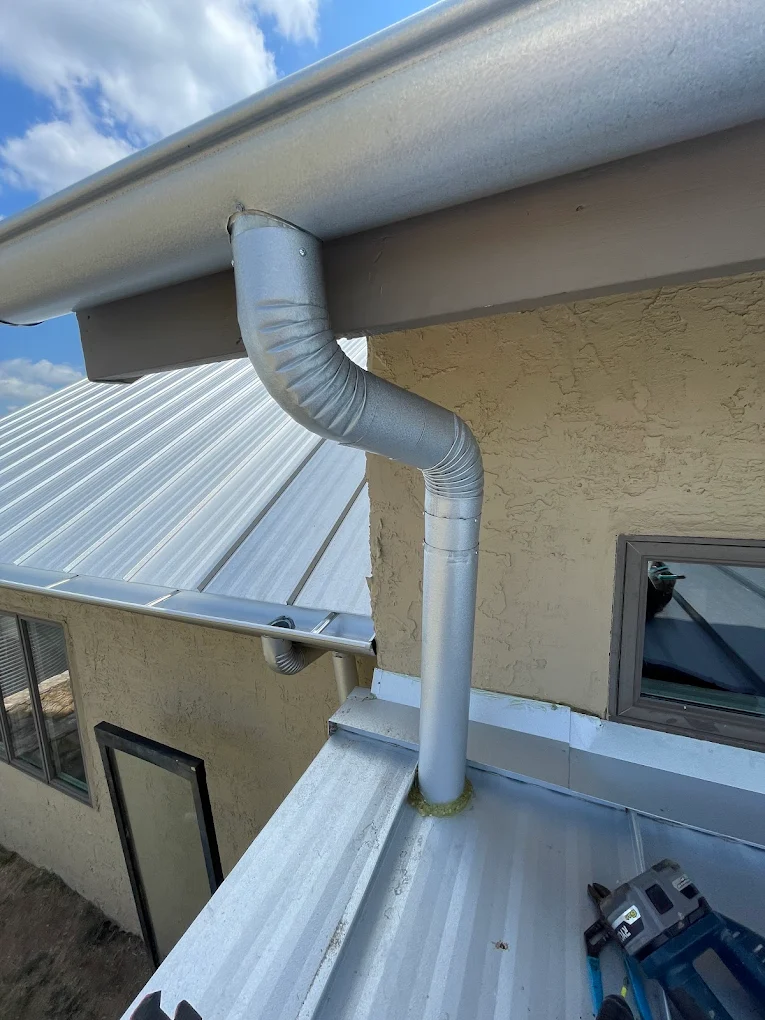
Gutters, downspouts, and fascia
These soft metal components dent on impact and are useful indicators: if your gutters have fresh impact marks after a storm, your shingles took hits too. The same applies to metal flashing around chimneys, pipes, and skylights.
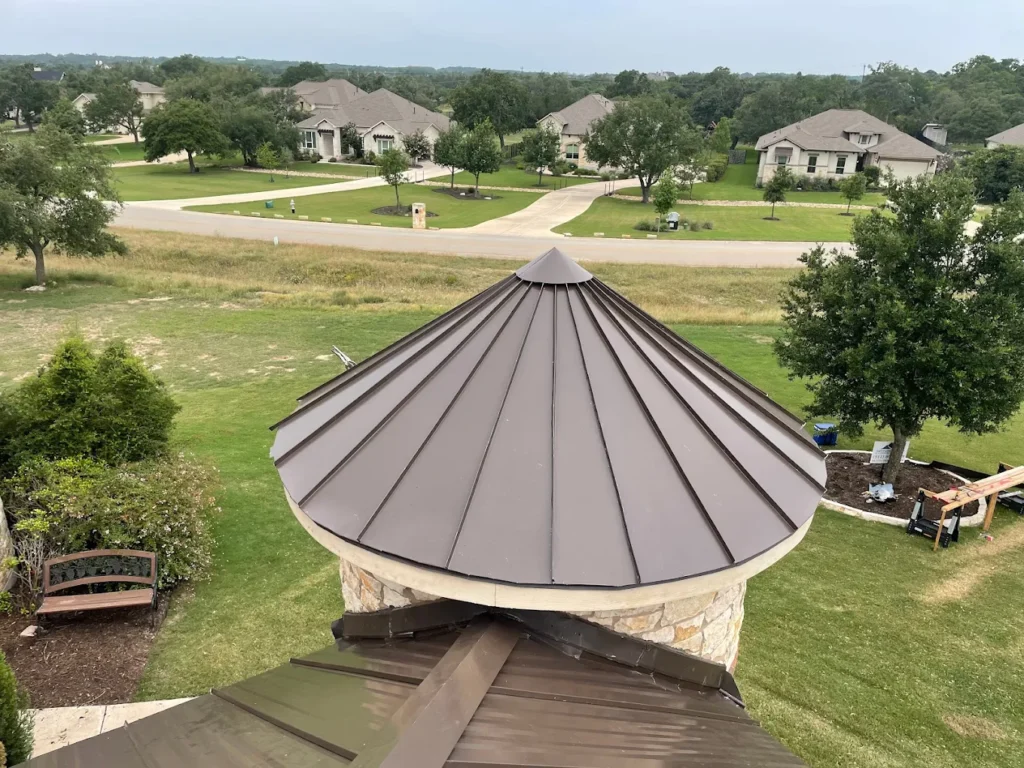
Ridge caps and hip shingles
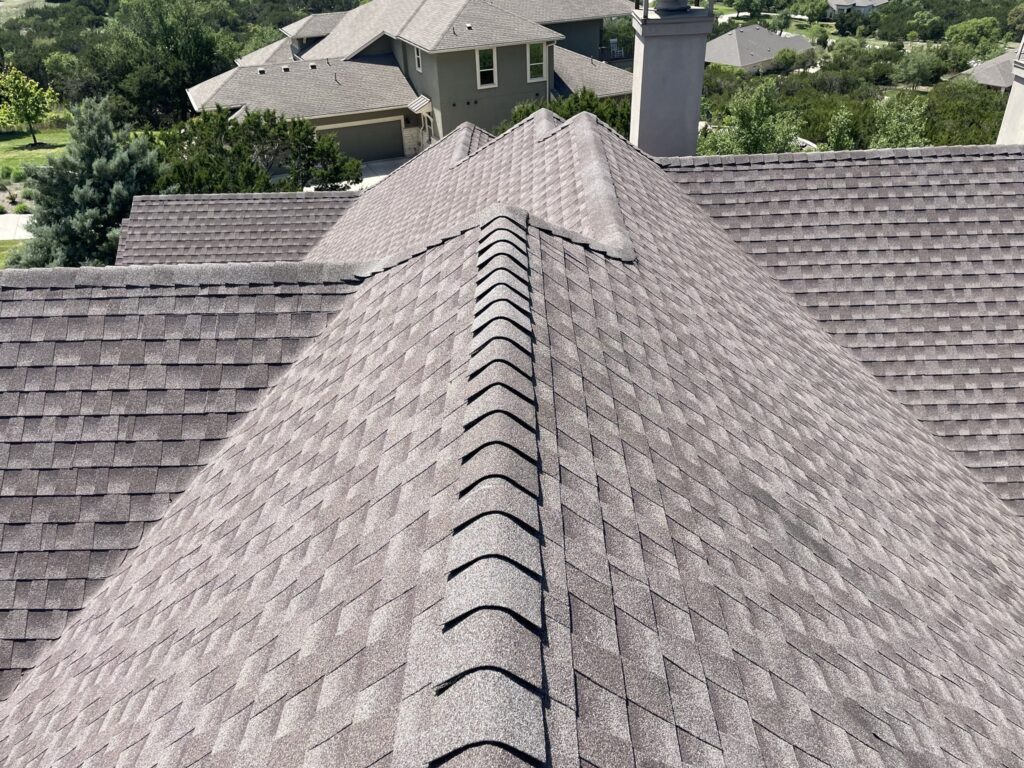
Ridge caps and hip shingles take more direct hits because of their exposed angle. We check these carefully since they are a common place where storm damage starts but goes unnoticed for months.
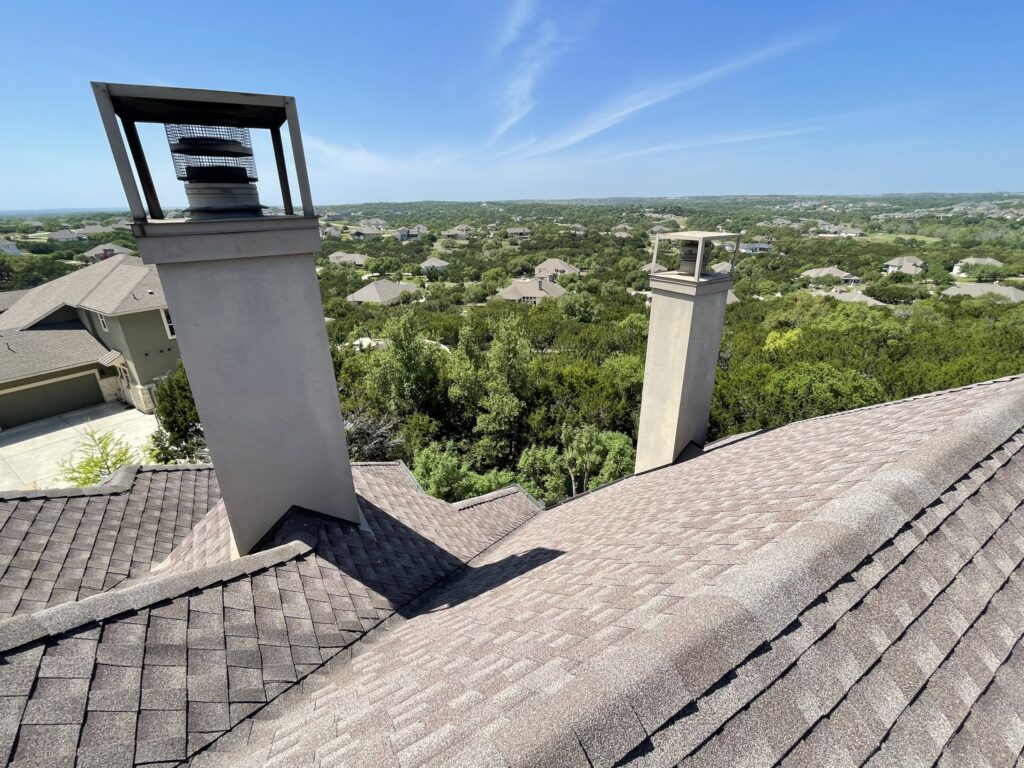
Roof vents and HVAC equipment
Dented or cracked vents can allow water entry that later gets misattributed to other causes. We inspect every soft metal surface on the roof, not just shingles.
How We Handle Hail Damage Repair - From First Call to Final Walkthrough
Hail damage handled incorrectly, or documented inadequately for your insurance claim, creates problems down the road. Here is exactly how we handle every hail damage job.
Step 1
- Free Roof Inspection
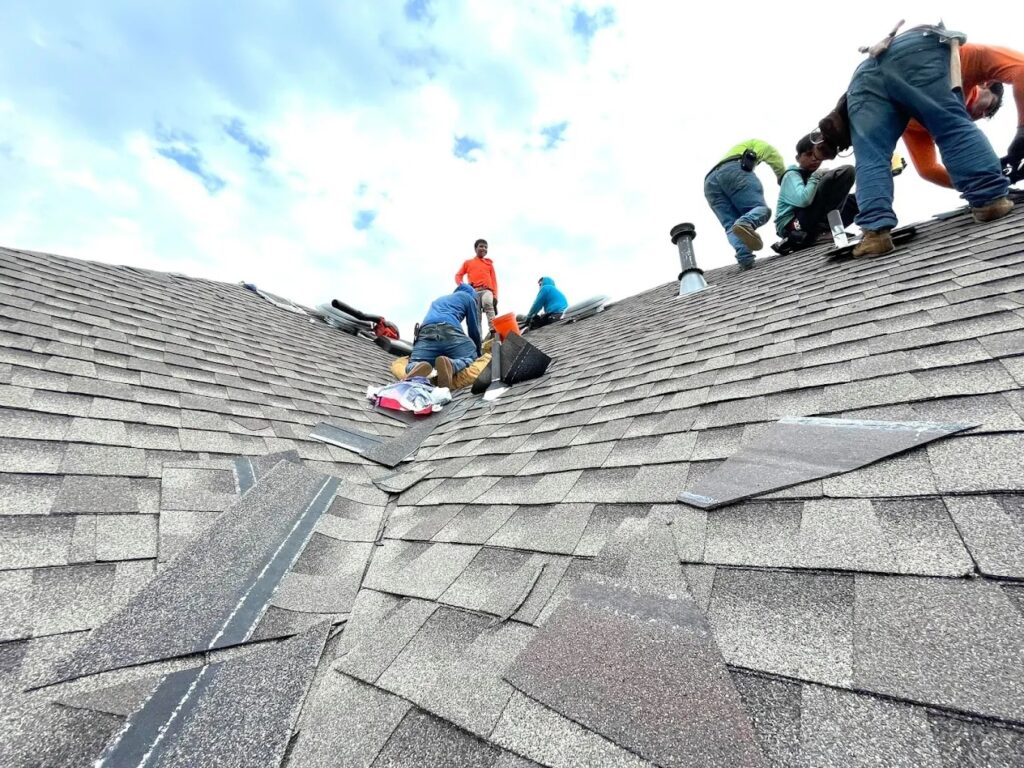
We get on the roof and inspect every surface – shingles, flashings, pipe boots, vents, ridge caps, gutters – documenting all damage with high-resolution photos. You receive a written report. No guesswork, no pressure toward any particular outcome.
Step 2
- Honest Damage Assessment
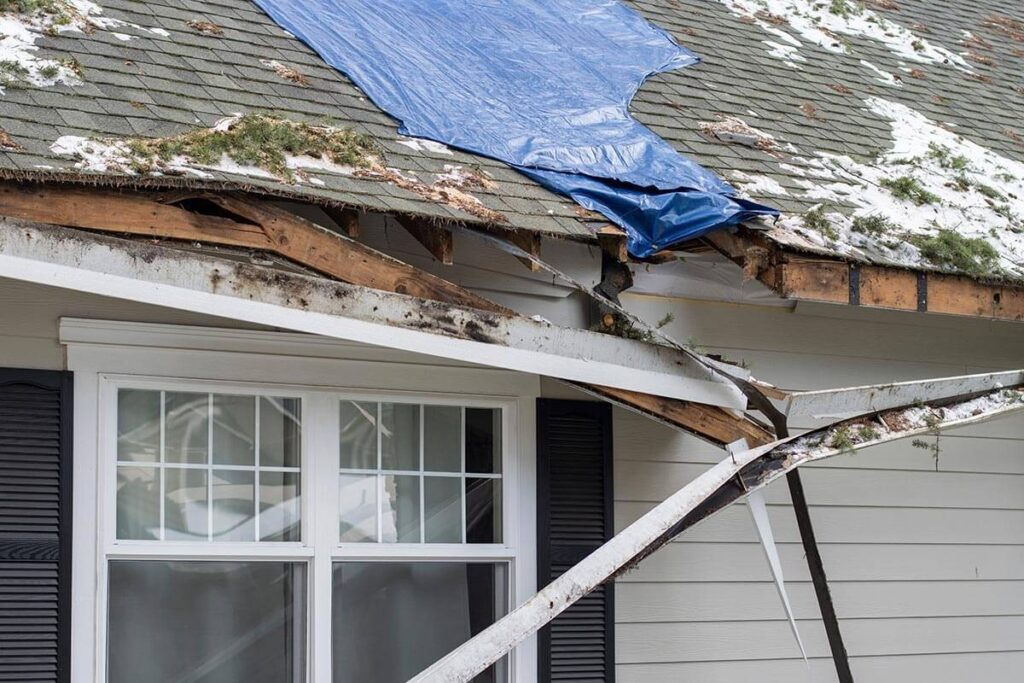
We tell you clearly what we found, whether it warrants a claim, and whether repair or full replacement is the right answer. If the damage does not justify a claim, we will tell you that before you call your insurer. If it does, we walk you through the next steps.
Step 3
- Insurance Claim Support
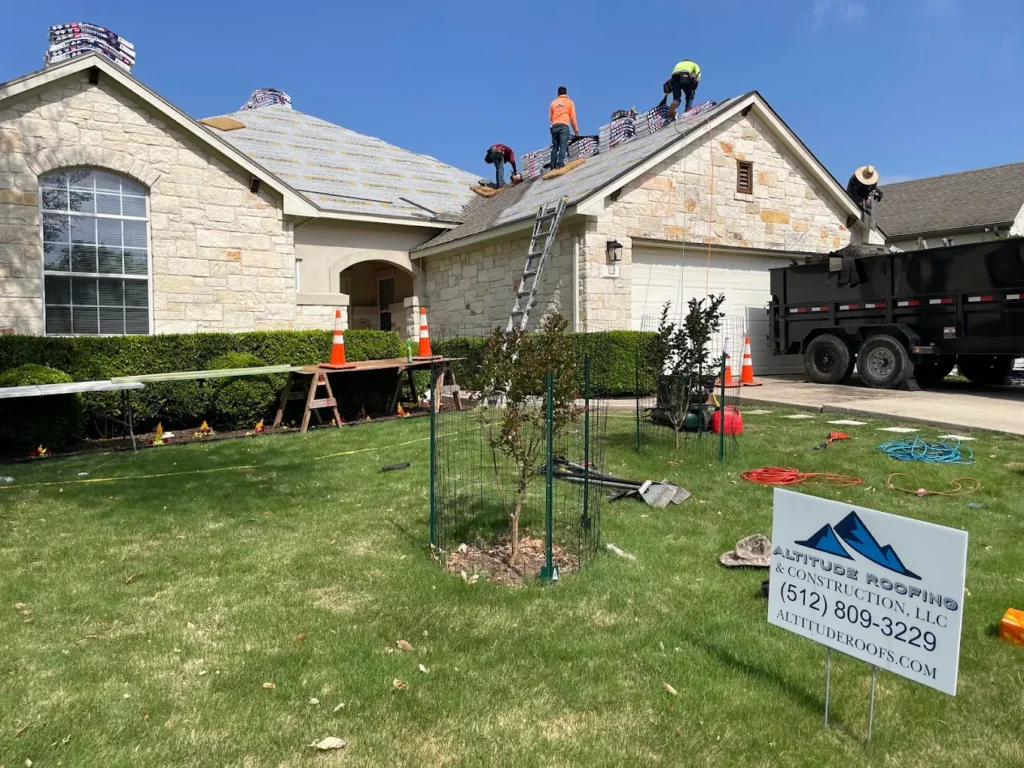
We provide all the documentation your insurance company requires to open a strong claim – detailed photos, written damage assessment, measurement data. Edwin’s adjuster license means our reports speak the adjuster’s language. We also meet your adjuster on-site to make sure nothing gets missed or undervalued.
Step 4
- Scope and Material Review
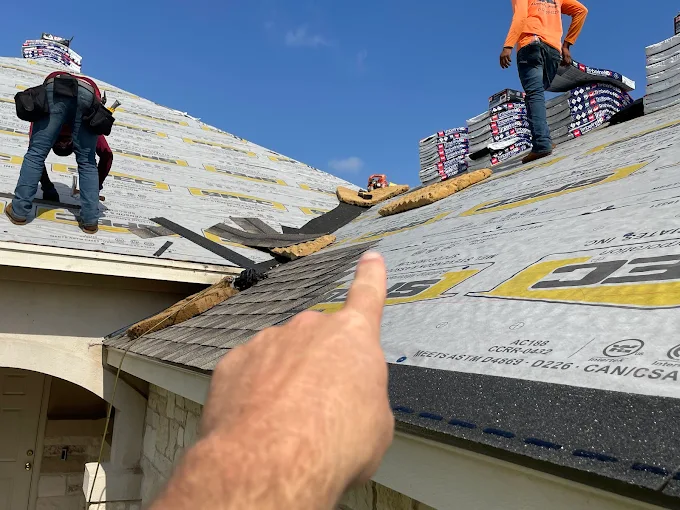
Once your claim is approved, we review the settlement with you to confirm it covers the full scope of work. If anything is underpaid or missing, we prepare supplement documentation and advocate for the correct amount before any installation is scheduled.
Step 5
- In-House Installation
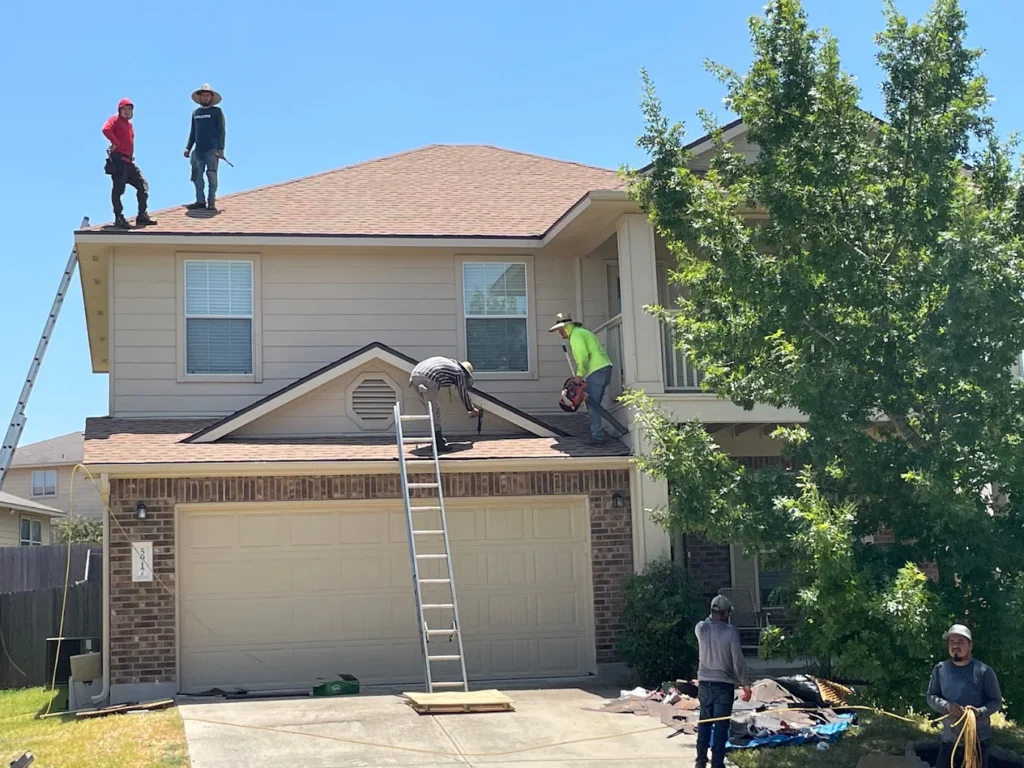
Our own trained crew handles every installation no subcontracting. Proper underlayment, flashing at every penetration, ventilation addressed, quality materials throughout. The same standard on every job regardless of claim size.
Step 6
- Final Walkthrough and Cleanup
We walk the completed roof with you before we call it done. Magnetic sweepers run across your driveway and yard to collect any stray fasteners. Your property is left clean. Edwin personally signs off on every job.
Austin's Hail Season and What to Watch For
Hail in Central Texas most commonly occurs in the spring and early summer, though late-season storms do happen. Several factors affect how much damage any given storm causes:
Hail size
Anything over one inch can cause meaningful granule damage on standard asphalt shingles. Golf-ball-size hail (1.75 inches) and above is when we typically see widespread damage across entire roof sections.
Wind during the storm
Directional wind drives hail at an angle, which concentrates damage on one face of the roof. If your neighbor reported heavier hits on their south-facing slope, yours likely absorbed the same pattern.
Roof age and condition
Older shingles have less granule reserve and are more susceptible to impact damage from smaller hailstones. A 15-year-old roof and a 5-year-old roof respond very differently to the same storm.
After any storm that prompts neighborhood talk, news coverage, or hail reports in your zip code, it is worth getting eyes on your roof before assuming it came through clean.
Hail Damage Roof Replacement in Austin
Not every hail-damaged roof needs a replacement, but many do – especially roofs over 12 to 15 years old, roofs with widespread granule loss across multiple slopes, or roofs where the insurance settlement covers a full replacement rather than patching a declining system.
As an Austin hail damage roof replacement company with over 20 years of local experience, we guide you through the material decision as part of the process, not after. Here is what most Austin homeowners choose for hail damage roof installation:
Material | Hail Rating | Lifespan | Why It Matters After a Hail Event |
Class 4 Impact Resistant Shingles | UL 2218 Class 4 (highest) | 25-30 years | The most important upgrade after a hail event. Rated to withstand 2-inch steel ball impact. May qualify your home for 20-30% insurance premium reduction depending on your carrier. |
GAF Timberline HDZ Shingles | Class 3 or Class 4 (impact version) | 25-30 years | Wind-rated to 130 mph. Our most-installed system. Eligible for GAF Golden Pledge 25-year labor and materials warranty. |
Architectural Asphalt Shingles | Class 3 standard | 20-30 years | Most common insurance-approved replacement material. Best value for standard replacement. |
Excellent hail resistance | 40-70 years | Premium long-term option. Metal roofs handle hail and heat better than any shingle system. Best ROI over 20+ year horizon. |
Why "It Looks Fine From the Driveway" Can Cost You Later
Hail of one inch or greater can damage a roof enough to warrant a full replacement – yet cause almost no visible surface disruption from the ground. Here is what actually happens when a hailstone hits your roof.
When a hailstone strikes a shingle, its kinetic energy travels through the granule layer and into the asphalt beneath, creating micro-tears in the laminate structure. The surface shows only a small spot where a few granules are missing. But underneath, the shingle’s structural integrity is already compromised – and that damage compounds with every heat cycle and temperature swing Austin throws at it.
Months later, those micro-tears become entry points for water. By the time you see a ceiling stain, water has typically been working through the decking and into framing or insulation for weeks. What could have been a repair – or a fully covered replacement – becomes a larger, more expensive project.
In many of those cases, the insurance filing window has also closed. Most Texas homeowner policies require claims to be filed within one year of the storm event. Some carriers have shorter windows. A roof that looks fine the day after a storm can still carry damage that legally qualifies for a covered claim – but only if you document it in time.
Hail Damage Repair vs. Replacement - What Your Roof Actually Needs
Our job is to give you an honest read on what the damage requires – not push you toward the larger job.
When Replacement Makes More Sense
- Granule loss is widespread across multiple slopes or the entire field
- The roof is 12 to 15 years old or older – patching heavily depleted shingles buys far less time than most homeowners expect
- Multi-layer damage has compromised underlayment or decking beneath the shingles
- Insurance will cover replacement – a partial repair on an insurable roof leaves you with a mixed-age system and reduced warranty coverage going forward
When Repair Is the Right Answer
- Damage is localized to one section or slope of the roof
- Affected shingles are under 10 to 12 years old with adequate granule reserve remaining
- Impact damage is limited to field shingles with no decking compromise
- Cost of targeted repair is well below the insurance claim threshold and the replacement cost threshold
We will walk you through what we found, show you photos from the inspection, and give you a straight recommendation either way. If the damage warrants a claim, we handle the documentation and the adjuster meeting.
How Much Does Hail Damage Repair Cost in Austin, TX?
Hail damage repair costs in Austin depend on how much of the roof is affected and what was damaged:
- Localized hail repair (one section of shingles, flashing points, vents): $300 – $2,000
- Partial hail damage repair (multiple sections, widespread impact across one slope): $2,000 – $5,000+
- Full hail damage roof replacement (widespread damage, or when replacement is more cost-effective than patching): $8,000 – $20,000+ depending on roof size, pitch, and material
If your damage qualifies under your homeowner’s insurance policy, your actual out-of-pocket cost is typically limited to your deductible. The rest is covered by the claim. We provide a written estimate after every free inspection – insurance-covered or not – before any work begins.
What Austin Homeowners Say About Our Hail Damage Work
Why Altitude Roofing Documentation Carries Weight With Adjusters
Mr Nichols holds an all-lines insurance adjuster license, earned in 2006, in addition to his GAF Master Elite roofing certification. He has studied and follows HAAG engineering hail and windstorm inspection methods and protocols. Most roofers produce basic damage reports.
We produce documentation that speaks the adjuster’s language because he has sat on both sides of the table. That is why the reports Altitude submits hold up under scrutiny, and why claims that other contractors document inadequately get approved when we step in.
Had a hail claim denied or not sure if your damage qualifies? Start with a free inspection.
Does Insurance Cover Hail Damage Roof Repair in Austin, TX?
Yes. Hail damage is one of the most common covered perils under Texas homeowner policies. If your roof sustained hail damage from a documented storm event, your insurer should cover repair or full replacement, minus your deductible. The two things that most determine whether a claim succeeds are the quality of the damage documentation and whether you file before your policy’s deadline.
For the complete breakdown of what’s typically covered, how RCV compares to ACV policies, and what to do if your claim was denied or underpaid.
Serving Austin and Central Texas - 20 Communities
Altitude Roofing is headquartered in the Belterra Village area of Southwest Austin (78737). We serve homeowners across 20 communities in the greater Austin metro and Central Texas, and can typically schedule an inspection within one to two business days.
Why Austin Homeowners Choose Altitude Roofing as Their Hail Damage Roofing Contractor

GAF Master Elite Certified
Top 2% of U.S. roofing contractors. Matters for documentation credibility and qualifies your replacement for GAF's strongest manufacturer warranties.

Licensed Roofing Contractor
We hold an all-lines insurance adjuster license earned in 2006, in addition to his GAF Master Elite certification. He follows HAAG engineering inspection protocols. Our documentation is produced at the standard adjusters requirements.

Denied Claims Won
We have overturned hail damage claims denied multiple times. If your claim was rejected, contact us before accepting that answer.

We Meet Your Adjuster
We attend the adjuster meeting at your property, walk through every documented damage point, and advocate for a complete, accurate assessment. Most contractors skip this step.
20+ Years in Austin & Central Texas
We know Austin & Central Texas hail patterns, the carriers active in this market, and what documentation they require. That experience changes outcomes.
Preferred Contractor - Major Carriers
Currently preferred by several top insurance companies in Texas. Called as a credible witness for both policyholders and carriers.
Ready to Find Out What the Storm Left Behind?
If your neighborhood took a hail hit recently, the best next step is a free inspection from a hail damage roofing contractor who works for you, not your insurance company. We’ll tell you honestly what we found, whether it warrants a claim, and what repair or replacement actually costs – before you commit to anything.
Call us directly at (512) 809-3229 or request an inspection online.
Frequently Asked Questions
How do I know if my roof has hail damage?
Check soft metal surfaces first like gutters, downspouts, AC unit, and roof vents. Fresh dents on those surfaces mean hail was large enough to damage your shingles too. On the roof itself, look for dark bruised spots, granule loss, and impact marks on ridge caps. Most hail damage requires a rooftop inspection to document properly as it is not reliably visible from the ground.
How do I file an insurance claim for hail damage?
First, have an industry professional do an inspection on your roof to see if it warrants filing a claim. If so, simply call the 1(800) number to the corporate claims office on your policy (NOT YOUR AGENT) and tell them you are requesting an “insurance adjuster” and an “appointment time” to meet about the damage. They will soon assign you an adjuster, and that person will contact you directly. (Your agent just collects your premium and has nothing to do with the claim. By having your agent do this, you are adding an extra step. Often times your request may sit on their desk a couple of days before they call it in, which delays the process.) Simply call the claims department directly. It is also imperative that you have a contractor or industry professional present during the adjuster meeting going over the scope of the damage in order to ensure the best possible outcome or that nothing gets overlooked. Most insurance adjusters are paid per claim, so if they can come by when no one is there, not get on the roof, and be done in ten minutes – they sometimes will. Even with a set appointment time a cunning or rogue adjuster may still show up an hour early in order to avoid a contractor or public adjuster the homeowner has requested be present to witness or offer an expert opinion. Step #1, file a claim. Step #2, get an appointment time. Step #3 call your contractor so they can add the meeting to their schedule.
My hail damage claim was denied. What now?
Call us before accepting the denial. Hail claims are frequently denied due to inadequate documentation, not because the damage is not real. Edwin’s insurance adjuster license and HAAG inspection training mean we produce the kind of detailed damage case that gets denials reversed. We have overturned multiple denied hail claims for Austin homeowners.
How long do I have to file a hail damage claim in Texas?
Most Texas homeowner policies require filing within one year of the storm event. Some carriers have shorter windows. Do not assume you have time — check your policy or call us and we will help you assess where you stand. The sooner damage is documented after a storm, the stronger your claim position.
Can I wait to get my roof inspected after a hailstorm?
Do not wait. Most Texas homeowner policies have filing windows – typically one year from the storm date, sometimes shorter. Undocumented damage also weakens your claim position. If a significant hail event moved through your area, call for an inspection within a few weeks regardless of whether damage is visible from the ground.
Will my insurance cover hail damage roof repair in Texas?
Yes, hail damage is a covered peril under most Texas homeowner policies. Coverage applies to the storm damage itself regardless of roof age, though payout calculations differ under ACV vs. RCV policies. The key variables are documentation quality and filing promptly. We handle both.