Skip to content
 Central Texas Roofing Expert
If you are replacing your roof, your gutters should be part of the conversation. New shingles and a fresh drip edge paired with gutters that are pulling away from the fascia, holding debris, or mismatched in color is a problem – both functionally and visually. A roof replacement is the right time to assess the gutter system and handle everything together.
We install seamless gutters as part of our roofing work. This is not a separate subcontract hand-off – our gutter crew works alongside the roofing installation so the systems integrate correctly. Proper pitch, clean fascia connection, and color matching to your new roof so the finished result looks right and functions the way it should. We also handle gutter repair and replacement as standalone jobs when the roof is fine but the gutters are failing.
Whether you need a new gutter system installed in Austin or need to replace failing existing gutters, we fabricate seamless gutters to fit the roofline, drainage requirements, and exterior of the home.
Please fill out the form below to schedule your roof Evaluation. Our team will contact you within 24 hours to confirm the details.
As an Austin roofing and gutter contractor, we evaluate the roof edge, drip edge, fascia, downspouts, and gutter system together rather than treating the gutters as an isolated component. This is especially important during roof replacement or storm repairs, when changes at the roof edge can directly affect how the gutter system performs.
Dedicated gutter companies install gutters. What they typically do not do is assess the fascia condition before installation, confirm the drip edge integration is correct, or catch a flashing issue at the roofline that is going to push water behind the gutter the day after it is installed.
A roofing contractor working on your gutters sees the full picture – roof deck, drip edge, fascia board condition, and gutter system – as a single system. When something is off in the integration between them, it gets caught and addressed during the job rather than surfacing as a callback six months later.
The Rim Rock job is a good example of how gutters and roofing work together when both are handled by the same contractor.
Immediately following the roof replacement, our gutter crew came in and installed all new seamless gutters. Because the roofing crew had already finished, the drip edge and fascia condition were confirmed – the gutter installation team was not working around unknowns.
We brought color samples and helped the homeowners choose a gutter color that worked with the new roof. Not pushed toward a specific option, just walked through what was available and what would look right. The homeowners picked what they liked. The end result was a complete exterior that looked intentional rather than assembled from two separate projects.
That coordination is what changes the outcome. A gutter company installing after the fact does not know what drip edge profile was used, has not seen the fascia condition, and is color-matching blind. We do not work that way.
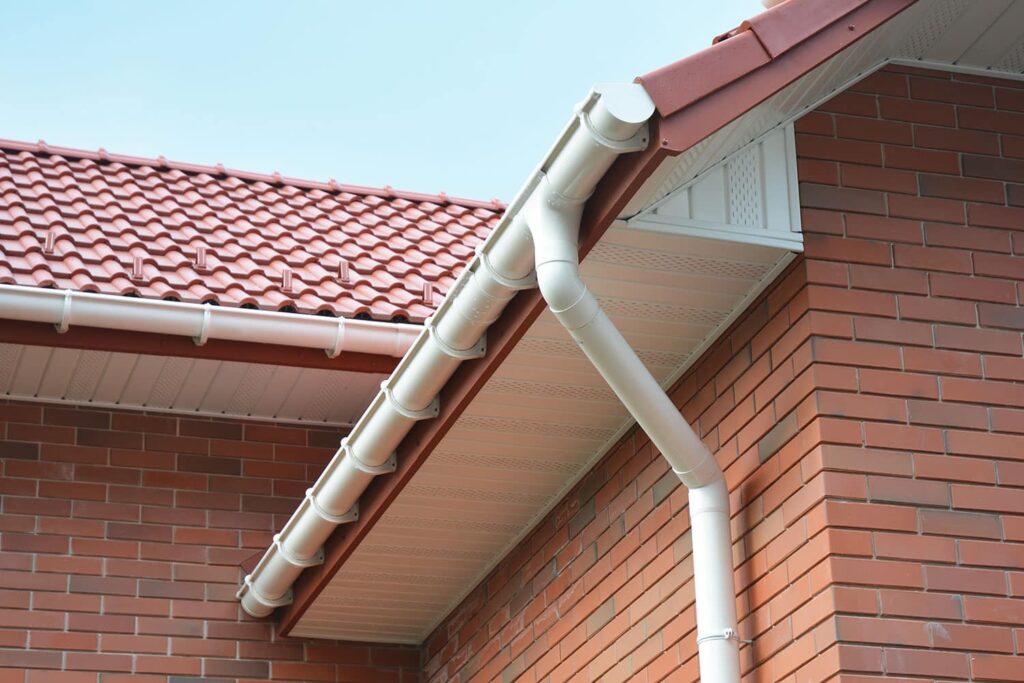
Seamless gutters are formed on-site to the exact length of each run - no joints except at corners and downspout outlets. No joints means fewer leak points over time. Aluminum is the standard for residential work in Central Texas: lightweight, does not rust, and available in a wide range of colors.

Both 5-inch and 6-inch gutters can work well for Austin homes, but the right size depends on roof area, roof pitch, drainage volume, downspout placement, and how much water needs to move during heavy Central Texas storms. Homes with larger roof planes, steeper pitches, or high rainfall collection areas benefit from 6-inch gutters that move more water. We assess the roof drainage volume and recommend the right size for the application.
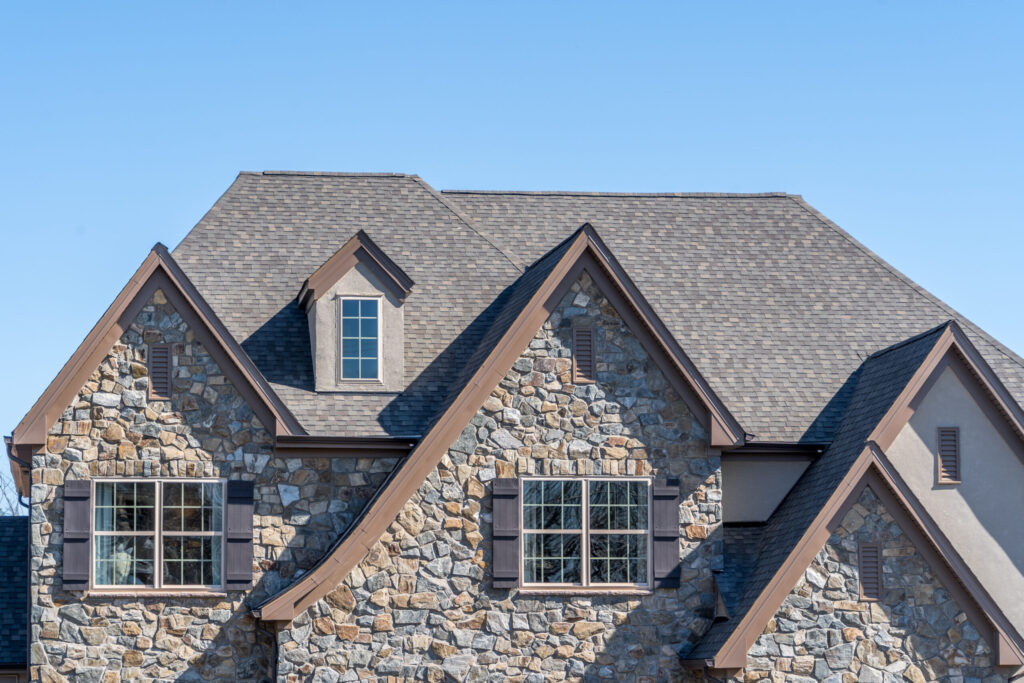
Downspout location and count matters as much as the gutter profile. We position downspouts for optimal drainage away from the foundation, confirm adequate outlet capacity for each gutter run, and can extend downspouts to direct water further from the home on properties where drainage is a concern.

Before any gutter installation, we inspect the fascia boards for rot, separation, and structural condition. Fascia that cannot properly support gutter hangers gets repaired before the gutters go up. We also confirm the drip edge is properly installed and integrated with the gutter lip.

We bring color samples and work with homeowners to select a gutter color that complements the roof and trim. For new roof replacements, we coordinate the color selection so the two systems look right together.

Gutters pulling away from fascia, sagging sections, leaking miters or end caps, improper pitch causing standing water - we repair all of these as standalone jobs. If the gutters are otherwise sound, repair is the right answer and we tell homeowners that.
Most of our replacement work is on single-family homes, from established neighborhoods inside the city to newer subdivisions in Dripping Springs, Lakeway, and the surrounding Hill Country. If you’re in an HOA community, we’re familiar with the material and color approval process across the Southwest Austin corridor and can help you navigate it without slowing down your timeline.
A documented, warrantied roof replacement is also one of the few home improvements that consistently shows up in resale value, particularly for buyers comparing homes where roof age and condition factor directly into financing and insurance approval.
Gutter repair makes sense when the system is structurally sound but has specific failure points – a few loose hangers, a leaking seam at a miter joint, a section that has lost proper pitch. These are isolated problems and repair is the right answer.
Our gutter repair services in Austin address leaking seams and corners, sagging sections, loose or damaged hangers, gutters pulling away from the fascia, improper pitch, damaged downspouts, and localized storm damage. We first identify whether the issue can be corrected with a targeted repair or whether the system has deteriorated enough to justify replacement.
When only a portion of the gutter system is damaged, we can often repair or replace the affected section without replacing the entire system. If multiple sections are failing or the gutters are undersized for the roof, we may recommend a full gutter replacement instead.
Widespread hanger failure means the fascia itself may be deteriorating, or the original installation used too few attachment points. Rehanging a few sections does not fix a systemic problem.
Aluminum gutters do not rust, but they dent, crack, and oxidize over time. If the gutters are at the point where multiple sections have visible physical damage, replacement is more cost-effective than section-by-section repair.
New shingles, new drip edge, and 15-year-old gutters is a mismatch. The new roof raises the functional expectation for the rest of the drainage system. Most homeowners who are replacing a full roof replace the gutters at the same time – the labor overlap makes the cost of doing it together significantly lower than doing it separately six months later.
Older homes sometimes have 4-inch gutters that were adequate for the original roof but are overwhelmed after a re-pitch or addition. Upgrading to 5-inch or 6-inch gutters is part of any roof project where drainage capacity is a real concern.
Not always, but it depends on the age and condition of your existing gutters. If the gutters are under 10 years old and structurally sound, they are often worth keeping. If they are 15 or more years old, showing signs of pulling away from the fascia, or will look significantly mismatched against new roofing materials, replacing them at the same time makes financial sense. The labor to remove and reinstall or replace gutters is lower when it is done as part of a roof project than as a standalone job later.
Most standard Austin residential homes are well served by 5-inch K-style aluminum gutters. Homes with larger roof pitches, wide roof planes, or areas with heavy tree cover that increases debris load often benefit from 6-inch gutters. We assess your specific roof during the inspection and recommend the right sizing based on the drainage volume your gutters will need to handle.
Properly installed seamless aluminum gutters in Central Texas typically last 20 to 30 years with reasonable maintenance. The main factors that shorten that lifespan are improper pitch that allows water to stand in the gutter, debris accumulation that holds moisture against the metal, and physical damage from fallen branches or hail. Austin’s heat and UV exposure does not significantly degrade aluminum the way it affects other materials.
In most cases, no. The roofing installation needs to be complete – shingles down, drip edge set, fascia confirmed – before the gutter crew can properly measure, form, and install seamless gutters to the correct pitch and profile. We typically schedule gutter installation immediately following roof completion so both happen within the same service window without an extended gap.
Gutters damaged by a covered storm event – hail dents, wind-induced separation, impact damage from fallen debris – are typically included in a storm damage claim alongside the roof. Gutters that are sagging or failing from age and lack of maintenance are generally not covered. We document gutter conditions as part of our post-storm inspection so you have an accurate picture of what is storm-related and what is maintenance-related before you file.
The cost of gutter replacement in Austin depends on the total linear footage, whether you choose 5-inch or 6-inch gutters, the number and size of downspouts, the height and layout of the home, the number of corners, and whether fascia repairs are needed before installation. Removing an existing gutter system or making drainage upgrades can also affect the final cost. We provide a detailed estimate based on the home and the gutter system required rather than using a one-size-fits-all price.
Yes. Altitude Roofing handles both roofing and gutter installation, allowing us to evaluate the roof edge, drip edge, fascia, drainage, and gutter system as one complete exterior system. This is especially useful when gutters need to be installed or replaced alongside a roof replacement, storm repair, or other roofing work. We install seamless gutter systems based on the layout and drainage requirements of the home.
Altitude Roofing is headquartered in the Belterra Village area of Southwest Austin (78737). We install, repair, and replace seamless gutter systems across 20 communities throughout the greater Austin metro and Central Texas. Whether you need a new gutter system or replacement for damaged or undersized gutters, we can typically schedule an evaluation within one to two business days.
Whether you need new seamless gutters, replacement gutters, or repairs to an existing system, start with a conversation about your gutter needs. We’ll understand your situation and recommend the right next step.
If an onsite assessment is needed, we’ll explain the process and any applicable fee before scheduling.