 Skip to content
Lakeway, TX Roofing Expert
Hail Damage Roof Repair in Lakeway, TX
Hail can damage a roof even when the damage is difficult to see from the ground. Impact from hail can remove shingle granules, bruise asphalt shingles, crack tile, dent metal components, and damage flashing or other parts of the roofing system. Altitude Roofing provides professional hail damage roof repair in Lakeway, TX, starting with a detailed inspection to determine what was actually affected.
If your Lakeway home recently experienced a hailstorm, don’t assume your roof is fine simply because there are no visible leaks. Some hail damage can remain hidden until the roofing material begins to deteriorate or water eventually finds its way into the home.
Altitude Roofing can inspect your roof, document visible damage, explain what we find, and help you determine whether the appropriate solution is a localized repair or a complete roof replacement.
Get Your Free Roof Evaluation
Please fill out the form below to schedule your roof Evaluation. Our team will contact you within 24 hours to confirm the details.
- Starts with a 15-minute call with a roofing specialist.
Types of Hail Damage We Repair in Lakeway
Different properties and roofing systems can have different inspection requirements. Altitude Roofing provides inspections based on the type and condition of the roof.
Asphalt Shingle Hail Damage
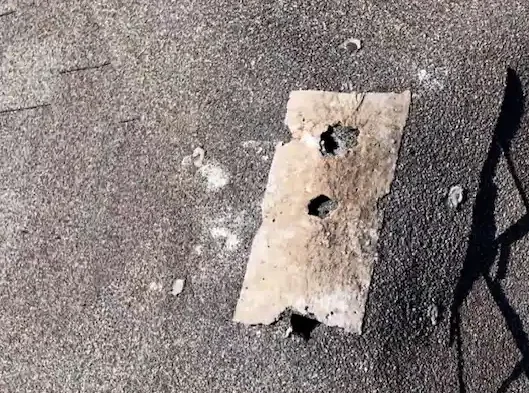
Asphalt shingles are particularly susceptible to hail impact. Hail can knock away granules, bruise the shingle surface, crack the material, or weaken areas that appear relatively normal from the ground.
Our hail damage roof repair in Lakeway can address localized damage when the rest of the roofing system remains in good condition. During an inspection, we look for impact-related deterioration and other signs that may indicate the shingles have been compromised.
If damage is widespread or the roof is already significantly aged, repair may not be the best long-term solution. In that situation, we can explain whether replacement should be considered.

Metal Roof Hail Damage
Metal roofing can withstand significant weather exposure, but hail can still leave dents or damage panels, flashing, vents, fasteners, and other components.
Altitude Roofing can evaluate metal roofing after a hailstorm and determine whether the damage is primarily cosmetic or whether it has affected the performance of the roofing system. Where localized damage can be repaired, we can recommend the appropriate repair rather than automatically recommending full replacement.
Tile Roof Hail Damage
Tile roofs can also be affected by hail. Larger hailstones may crack or break individual tiles, while impact or movement can create vulnerabilities that allow moisture to reach the components beneath the tile.
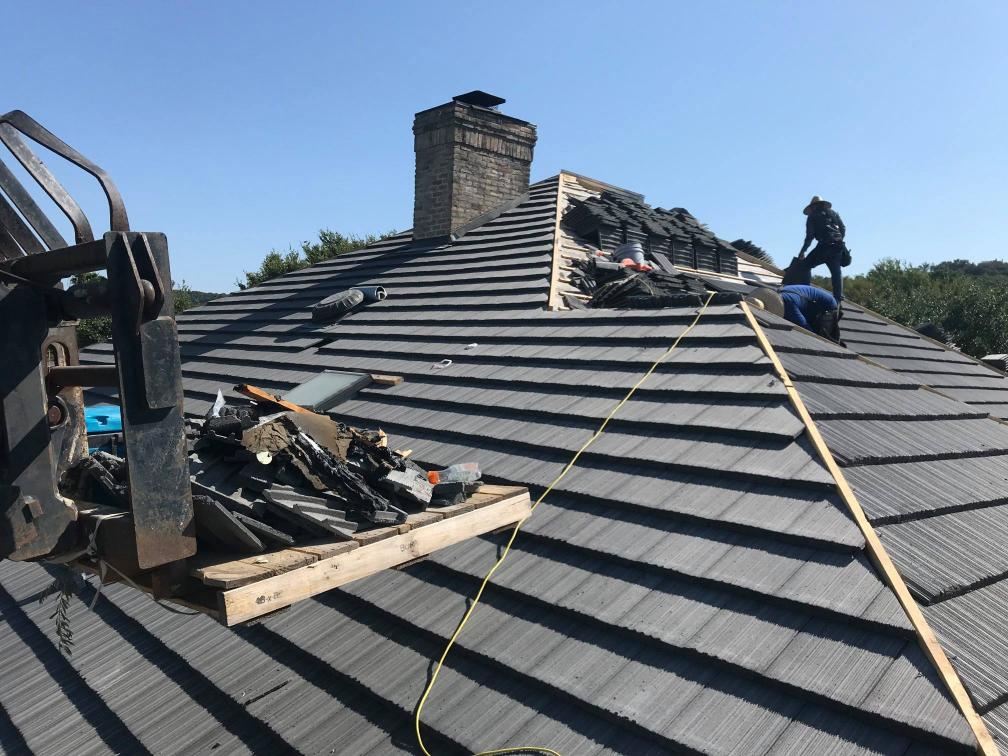
Altitude Roofing provides tile roof repair in Lakeway, TX for localized hail damage, including damaged or displaced tiles and related roofing components. Because tile requires careful handling, repairs should be performed without unnecessarily disturbing surrounding tiles.
Hail Damage to Flashing and Roof Components
Hail can affect areas beyond the primary roofing material. Flashing, vents, pipe boots, gutters, downspouts, ridge components, and other exposed parts of the roofing system can also show signs of impact.
A complete hail damage inspection should therefore look at the roofing system as a whole rather than focusing only on the shingles or tiles.
EXCELLENTTrustindex verifies that the original source of the review is Google. A pesar de la lluvia se logró la instalación en un solo día!!!Posted on GoogleTrustindex verifies that the original source of the review is Google. Edwin answered the phone after hours and came out the next morning to do an emergency repair when we spotted damage from a leak.Posted on GoogleTrustindex verifies that the original source of the review is Google. Great company, Edwin explains everything really wellPosted on GoogleTrustindex verifies that the original source of the review is Google. Edwin responded quickly after we reached out and was extremely knowledgeable as to what our issue was. The fix was completed at the same time as the inspection. Thank you for such great customer service!Posted on GoogleTrustindex verifies that the original source of the review is Google. I just moved to Belterra. The dryer exhaust vent on the roof came up on the inspection. I notified Edwin with Altitude and he promptly came out and fixed it at no charge. We appreciate the service even though we were not the owners that paid for new roof. Thanks!Posted on GoogleTrustindex verifies that the original source of the review is Google. If you’re a homeowner in the Dripping Springs area dealing with roof issues — storm damage, a nagging leak, or a full replacement — do yourself a favor and call Altitude Roofing. I don’t write reviews often, but my experience here was genuinely exceptional and I felt like I had to share it. Trust is everything when someone’s working on your home, and Altitude Roofing earned mine immediately. From the first conversation to the final walkthrough, everything was upfront and consistent. No hidden fees, no surprise add-ons, no runaround — just honest, straightforward communication the whole way through. A lot of that comes down to Edwin Nichols, the owner, who handled my project personally. Edwin knows roofing inside and out, and what really set him apart was how he managed the insurance side of things. If you’ve ever tried to navigate a homeowner’s insurance claim for roof damage, you know it can feel completely overwhelming. Edwin took that stress off my plate entirely. He knew exactly how to document the damage, what the insurance company needed to see, and how to communicate with the adjuster to make sure nothing was missed or shortchanged. He was professional, thorough, and clearly had done this many times before. I walked away with a settlement that actually covered the work — and I’m confident I wouldn’t have gotten there on my own. Beyond the insurance process, Edwin is just a pleasure to work with. He answered every question I had in plain English, never made me feel pressured, and gave me his honest recommendation rather than just telling me what I wanted to hear. The fact that he’s the owner and still shows up personally, stays involved, and follows through after the job is done says a lot about the kind of company Altitude Roofing is. The crew was equally impressive — on time, efficient, and they cleaned up completely when they were done. The finished roof looks great and feels solid. I’ve already sent neighbors Edwin’s way, and I’d recommend Altitude Roofing to anyone without hesitation.Posted on GoogleTrustindex verifies that the original source of the review is Google. Super helpful and thorough with our inspection. Made a path forward easy to understand.Posted on GoogleTrustindex verifies that the original source of the review is Google. I called Altitude after noticing a leak in my roof when it was raining. The owner Edwin took my call and agreed to come check it out as soon as the weather passed as we have a metal roof. Edwin was honest about what repairs were necessary to the roof and chimney and even told me I could do it myself if I wanted to get the supplies from Home Depot but I wanted it done right so I went through with his services. He did a great job and patched everything up for me. Would recommend to anyone in need of roofing repairs or installation.Posted on GoogleTrustindex verifies that the original source of the review is Google. Had them come out to assess a ventilation issue in my attic and couldn't be more impressed. Incredibly knowledgeable, responded fast, and didn't waste my time. They identified the problem quickly and walked me through several options to fix it. No upselling, no runaround, just straight answers and solid solutions. Would highly recommend to anyone needing roofing or ventilation work done right.
Why Hail Damage Can Be Different on Lakeway Roofs
Lakeway properties experience a combination of intense Central Texas sun, heat, wind, rain, and severe weather. Existing roof age and condition can also influence how a roofing system responds to a hail event.
Older properties around the Lake Travis area may have roofing systems that have already experienced years of weather exposure. Newer homes may have newer roofing materials but can still experience legitimate hail damage after a significant storm.
Lakeway also includes properties in communities such as Rough Hollow, Serene Hills, and The Hills of Lakeway, where homeowners may need to consider HOA requirements when selecting roofing materials for a repair or replacement. Altitude Roofing is familiar with the local area and considers these requirements when discussing roofing options.
Our Hail Damage Roof Repair Process
We begin by inspecting the roofing system for visible impact damage and other conditions that may have resulted from the storm.
Step 1
Damage Documentation
We document the conditions we find during the inspection, including relevant photographs and observations that can help explain the extent of the damage.
Step 2
Repair Assessment
After evaluating the roof, we determine whether the damage appears localized and repairable or whether the condition of the roof may warrant a larger project.
Step 6
Free Hail Damage Inspection
We begin by inspecting the roofing system for visible impact damage and other conditions that may have resulted from the storm.
Step 4
Professional Roof Repair
If the damage can be addressed through repair, our team completes the necessary work using materials and methods appropriate for the existing roofing system.
Step 5
Final Inspection
After the work is completed, we review the repaired areas to make sure the identified damage has been properly addressed.
Step 3
Insurance Documentation
When an insurance claim is involved, proper documentation can help the homeowner and insurance adjuster understand the roofing conditions that were observed. Altitude Roofing's owner, Mr. Nichols, holds an all-lines insurance adjuster license.
Why Lakeway Homeowners Choose Altitude Roofing for Hail Damage
GAF Master Elite Certified
Top 2% of U.S. roofing contractors. Strengthens documentation credibility with insurers and qualifies replacements for GAF's strongest manufacturer warranties.

HAAG-Certified Inspection Methodology
Edwin follows HAAG engineering hail and windstorm inspection protocols, the standard for distinguishing hail damage from pre-existing conditions. On older Lakeway properties where algae-driven pre-existing granule loss coexists with new hail impact, the HAAG methodology is what produces documentation that holds up under adjuster review.
Licensed Insurance Adjuster
Edwin holds an all-lines insurance adjuster license (2006). He has sat on both sides of the table and knows exactly what adjusters require to approve a hail claim on a Lakeway property with pre-existing algae conditions. That knowledge is built into every inspection report we produce.

HOA Compliance on Claim-Funded Work
We confirm current HOA-approved material and color specifications before ordering anything on Rough Hollow, Serene Hills, and Hills of Lakeway properties. Your hail claim will not fund a repair that creates an HOA compliance issue.
We Meet Your Adjuster
We attend every adjuster visit and walk through all documented damage, distinguishing hail bruising from pre-existing algae conditions where relevant, and ensuring metal component damage and elevated-lot exposure factors are not overlooked. Most contractors hand you a report and leave.
No Storm Chasers
After major hail events, out-of-state crews target Lakeway. They take the job without verifying HOA requirements and are gone before any issues surface. We are based here and stand behind every job.
How Much Does Hail Damage Roof Repair Cost in Lakeway, TX?
The cost of hail damage roof repair depends on the amount of damage, roofing material, accessibility, and whether the damage is limited to one area or affects multiple sections of the roof.
A small localized repair can be very different from repairing widespread damage across several roof slopes. Tile, metal, and asphalt shingle roofs also require different materials and repair methods.
Because of these differences, there is no single price that applies to every hail damage project. A professional inspection allows the roofing contractor to determine the actual condition of the roof and provide a recommendation based on the damage found.
For insurance-related projects, your coverage, deductible, policy terms, and claim decision can also affect what you ultimately pay.
Hail Damage Repairs and HOA Requirements in Lakeway
Some Lakeway communities have guidelines concerning roofing materials, colors, and other exterior changes. This can become particularly important when hail damage requires a larger repair or complete roof replacement.
Altitude Roofing has experience working in Lakeway communities and considers applicable HOA requirements when discussing roofing materials and project options. The company’s Lakeway service-area information specifically notes familiarity with HOA requirements in communities including Rough Hollow and The Hills of Lakeway.
If your property is located within an HOA, let us know during the roofing process so the appropriate requirements can be considered before work begins.
What We Check on Every Lakeway Post-Hail Inspection
A professional post-hail inspection covers more than shingles. Here is what we assess on every Lakeway property after a hail event.
Shingles - elevated planes (south and west-facing)
On Rough Hollow and Serene Hills elevated-lot homes, we inspect south and west-facing planes first, as these take the most direct UV exposure year-round and the most direct hail impact during wind-driven storm events. We look for impact bruising (dark circular depressions with defined perimeters, distributed consistently across the plane in the storm’s wind direction) and distinguish these from algae-driven granule loss (diffuse, surface-wide, concentrated on north-facing and shaded sections). The HAAG methodology governs how we document each.
Shingles - north-facing and shaded planes (older lakeside properties)
On older Lakeway lakeside homes, north-facing and shaded planes often have algae-related granule loss that predates the hail event. We assess the full plane and distinguish between pre-existing algae-driven loss and new impact bruising. Both can coexist on the same section of the roof. Our inspection report documents each separately and accurately, which is what an adjuster needs to process the claim correctly and what prevents a denial based on ‘pre-existing wear.’
Gutters and downspouts
Fresh dents on gutters and downspouts after a storm are one of the most reliable indicators that hail reached the threshold for shingle damage. On Lakeway properties, gutters may also contain granule deposits from both hail impact and algae-driven shingle wear. We distinguish between post-storm granule surge (concentrated near specific downspout exits after a hail event) and the ongoing baseline granule loss from algae-degraded sections. Both matter for the inspection report.
Ridge caps and hip shingles elevated terrain exposure
Ridge caps and hip shingles on elevated Lakeway lots take more direct hail impact due to their exposed angle and elevated position. These are inspected carefully on every post-hail call in these communities. Wind-driven hail at the angle typical during Lake Travis corridor storms concentrates impact on ridge lines and windward-facing hips. Displaced or cracked ridge caps after a hail event on elevated terrain are a covered event under most Texas homeowner policies.
Metal components - vents, flashing, gutters
Dented metal components are the clearest hail indicator visible without getting on the roof. AC units, roof vents, and flashing on the south and west-facing planes of elevated Lakeway lots take direct exposure. We inspect every accessible metal component and document the denting pattern and severity. On properties where HOA approval will be required for any replacement work, we include a component inventory in the initial inspection report.
Hail Damage Repair vs. Roof Replacement in Lakeway
Not every hail-damaged roof needs to be completely replaced. The appropriate solution depends on how much of the roofing system has been affected and the existing condition of the roof.
When Hail Damage Repair May Be Enough
If the damage is limited to a small area and the rest of the roofing system remains in good condition, localized repair may be a practical solution. This could involve replacing damaged shingles or tiles, repairing flashing, or addressing other affected components.
When Roof Replacement May Make More Sense
Replacement may be more appropriate when hail damage is widespread, the roof was already significantly deteriorated, or repairing individual areas would not provide a reasonable long-term solution. Altitude Roofing can evaluate the condition of the roof and explain whether repair or replacement appears appropriate based on the damage observed.
Why Altitude Roofing's Documentation Carries Weight With Adjusters
Edwin Nichols holds an all-lines insurance adjuster license earned in 2006, in addition to his GAF Master Elite roofing certification. He has studied and follows HAAG engineering hail and windstorm inspection methods and protocols. On Lakeway properties where the hail damage vs. pre-existing algae-driven granule loss distinction is the central claim question, HAAG methodology is the specific tool that makes that argument accurate. Our documentation is produced to the standard that adjusters require, not a basic contractor report.
Had a hail claim denied or not sure if your Lakeway roof damage qualifies? Start with a free inspection.
Hail Damage Roof Repair in Lakeway - Common Questions
How do I know if my Lakeway roof has hail damage after a storm?
Check soft metal surfaces first, gutters, downspouts, AC units, and roof vents. Fresh dents after a storm indicate hail was large enough to damage shingles. On elevated Rough Hollow and Serene Hills properties, also check the south and west-facing planes from the ground for any visible granule loss or lifted sections; these planes take the most direct exposure. The most reliable assessment is a professional inspection. On Lakeway properties with algae-related pre-existing granule loss, a HAAG-caliber inspection is specifically what distinguishes new hail bruising from the existing condition.
Can hail damage be repaired without replacing the entire roof?
Yes. If the damage is limited and the existing roof remains in good condition, localized repairs may be possible. More extensive damage or an already deteriorated roof may require replacement.
How soon should I inspect my roof after a hailstorm?
It’s best to have the roof inspected as soon as reasonably possible after a significant hail event. Prompt documentation can help establish the condition of the roof and identify problems before additional weather causes further damage.
Does hail damage asphalt shingles?
Yes. Hail can remove granules, bruise shingles, crack roofing materials, and weaken areas of the shingle. Some impact damage may not be obvious from the ground.
Can hail crack tile roofing?
Yes. Large or forceful hail can crack or break roof tiles. Damaged tiles should be evaluated because water can potentially reach the components beneath them.
How much does hail damage roof repair cost in Lakeway?
The cost depends on the roofing material, extent of damage, affected areas, and required repairs. A roof inspection is the best way to determine the actual scope of work and provide an appropriate estimate.
Expert Hail Damage Roof Repair Across Lakeway Communities
Altitude Roofing provides expert hail damage roof repair throughout Lakeway communities, including Lakeway, Rough Hollow, Serene Hills, and Lakeway Estates. Serving the Lake Travis area gives our team firsthand knowledge of the roofing challenges caused by severe hailstorms, lakefront exposure, and the unique conditions affecting homes throughout established neighborhoods and custom properties. Whether your roof has visible hail impacts, damaged shingles, compromised flashing, or storm-related issues that are difficult to identify from the ground, we provide detailed inspections, proper documentation, and reliable repair recommendations to help Lakeway homeowners restore their roofs with confidence.
Schedule a Free Hail Damage Roof Inspection in Lakeway
The damage may not be visible from the ground, but it may be there. Call us for a free inspection. We inspect to HAAG standards, document everything your insurance company needs, meet your adjuster on-site, and make sure any claim-funded repair or replacement uses your HOA-approved materials.
Altitude Roofing. Based in 78737. GAF Master Elite certified. Serving Lakeway and the Lake Travis corridor for over 20 years.