Skip to content
Choosing a roof style is a big decision. It shapes how your home looks, how much you spend, and how well it holds up to Texas weather. The flat roof vs pitched roof question comes up a lot among Austin homeowners, especially during a new build or a full roof replacement.
Both roof types have real strengths. Both have real downsides too. This guide breaks down the differences in plain language, so you can pick the roof that fits your home, your budget, and our wild Central Texas weather.
Quick answer: In the flat roof vs pitched roof debate, pitched roofs win for most Austin homes. They shed rain and hail fast and often last 20 to 30 years. Flat roofs cost less to install and give you usable rooftop space, but they need more upkeep. Your best choice depends on your budget, your home’s structure, and how you plan to use the space.
What Is the Difference Between a Flat Roof and a Pitched Roof?
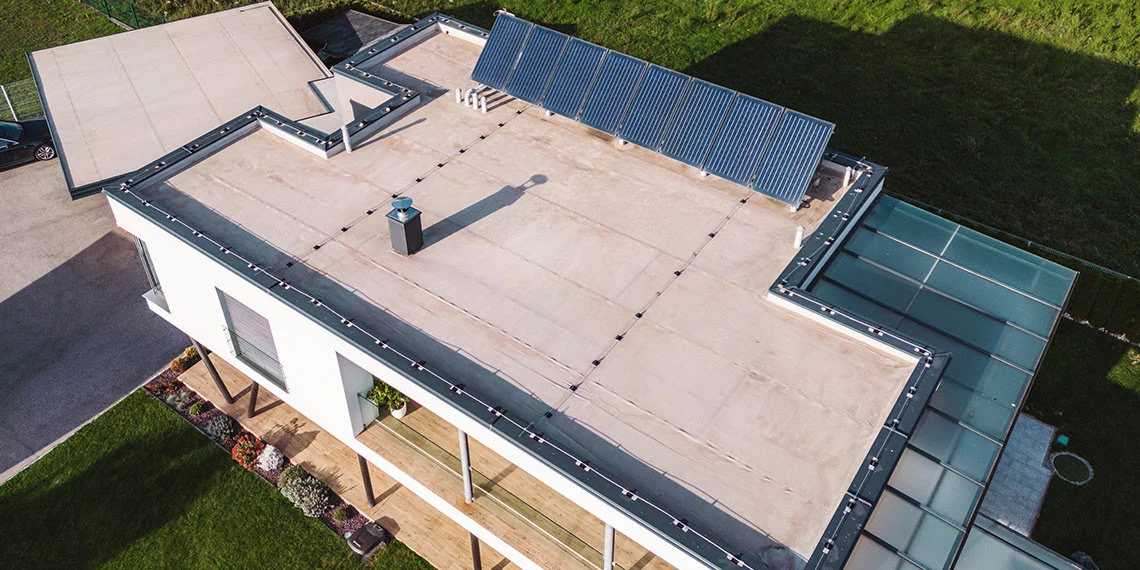
A flat roof isn’t perfectly level. It sits at a very low angle, usually 1 to 10 degrees. That slight tilt sends water toward drains instead of letting it pool everywhere. You’ll spot flat roofs most often on modern homes, porch covers, and commercial buildings around Austin.
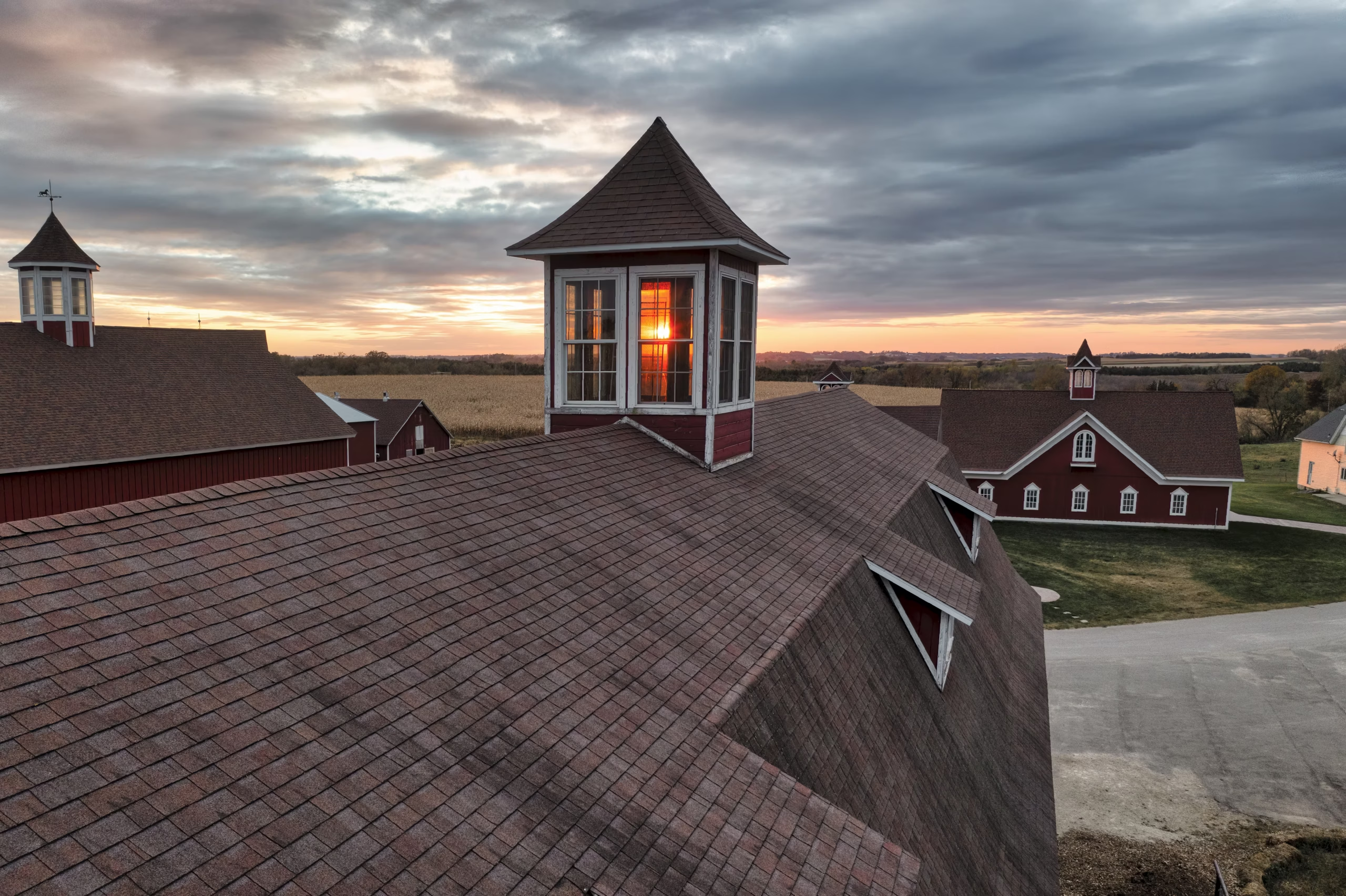
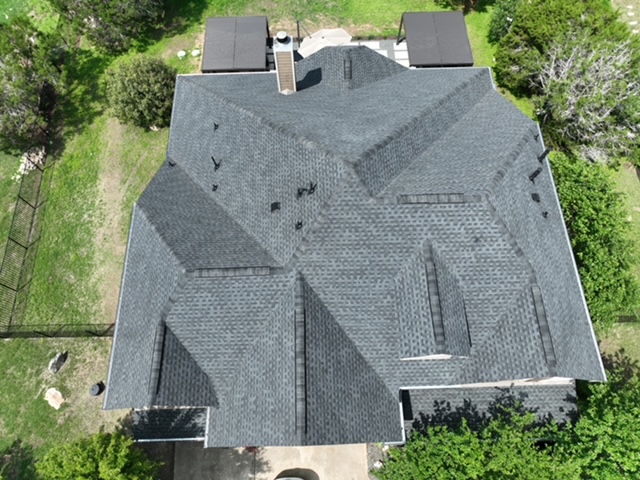
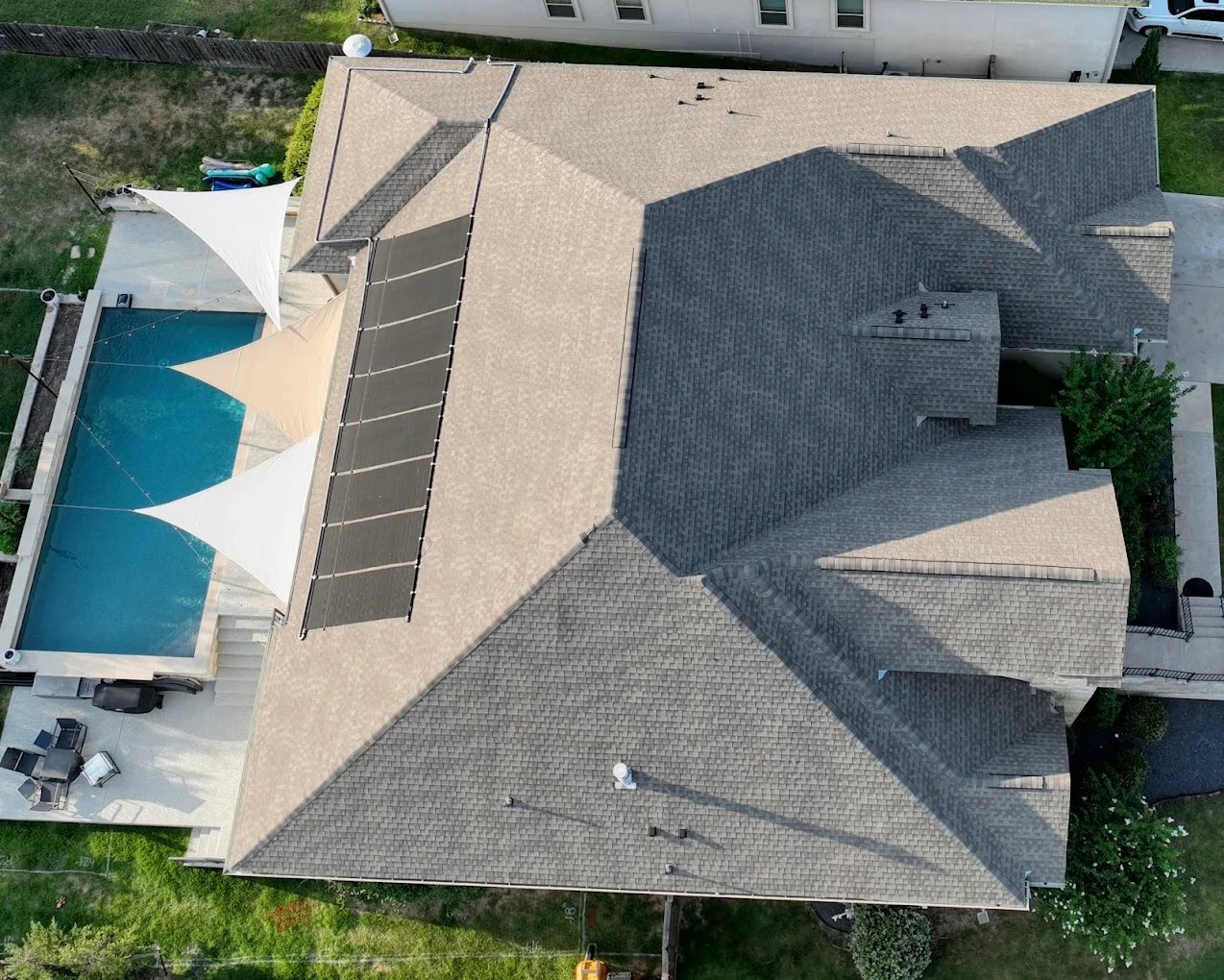
A pitched roof rises at a sharp angle. Two or more slopes meet at a peak, and gravity does the rest of the work. Rain, leaves, and hail simply slide off. This is the classic roofline you see on most Austin houses, from older bungalows in Travis Heights to new builds out in Dripping Springs.
The slope is the whole story here. It decides how water moves, how long materials last, and how much maintenance you’ll sign up for. Everything else in this flat roof vs pitched roof comparison flows from that one design choice.
Flat Roof vs Pitched Roof: Side-by-Side Comparison
Here’s a quick snapshot before we dig into each factor:
- Install cost: Flat roofs are generally cheaper. Pitched roofs cost more upfront.
- Lifespan: Flat roofs last 10 to 20 years. Pitched roofs often last 20 to 30 years or longer.
- Drainage: Flat roofs rely on slope and open drains. Pitched roofs shed water on their own.
- Maintenance: Flat roofs need checks several times a year. Pitched roofs need about one check a year, plus after storms.
- Usable space: Flat roofs offer rooftop access. Pitched roofs offer attic space instead.
Both styles can work well in Austin. The right pick depends on what matters most to you: lower upfront cost, or fewer headaches down the road.
Cost Comparison: Upfront Price vs Lifetime Cost
A flat roof usually wins on day-one pricing. It uses less material, and crews install it faster than a sloped roof. That makes it tempting if you’re working with a tight construction budget or renovating an older property.
But the upfront number doesn’t tell the whole story. Flat roofs often need more frequent repairs, drain clearing, and recoating over the years. Add that up over two decades, and the total cost can land surprisingly close to a pitched roof.
Pitched roofs cost more to build. You’re paying for a bigger truss system, more labor hours, and more material overall. That said, a well-installed pitched roof asks less of you afterward, which is exactly why so many homeowners search for roof replacement options that prioritize long-term value over the cheapest possible bid.
Why Austin’s Climate Favors Pitched Roofs
Central Texas weather doesn’t play fair. We get sudden downpours, spring hail, brutal summer sun, and the occasional high-wind event. Roof slope matters more here than in milder climates.
Heavy rain is the biggest factor. A pitched roof clears water in seconds. A flat roof has to manage every drop until it reaches a drain, and that takes time. When drains clog with leaves or debris, water pools fast, and standing water is one of the top causes of roof leaks in this region.
Hail season adds another layer. Steep slopes deflect hailstones better than flat surfaces, which take a direct hit and hold onto impact stress longer. If a storm does roll through, prompt hail damage repair can stop small issues from becoming expensive ones.
Summer heat is its own challenge. Pitched roofs create attic space that helps hot air escape, which keeps your home cooler. Flat roofs sit closer to the living space below, so heat builds up unless you add reflective coatings or extra insulation.
Durability and Lifespan: How Long Does Each Roof Type Last?
Flat roofs typically last 10 to 20 years, depending on the membrane material and how well you maintain it. TPO, EPDM, and PVC membranes each perform a little differently under Texas sun and storms. Skipping maintenance shortens that lifespan fast.
Pitched roofs tend to last 20 to 30 years or more. Asphalt shingles sit on the lower end of that range, while metal and tile roofs can stretch well past 30 years with proper care. This durability gap is the main reason most Austin homes still favor a sloped design.
Ponding water is the number one enemy of flat roofs. It cooks the membrane under UV rays and adds weight that can stress the roof deck. Pitched roofs avoid this problem entirely, since water never has a chance to sit still.
Maintenance Requirements: What Each Roof Actually Needs
Flat roofs ask for more attention. You’ll want to check drains and scuppers for clogs, inspect the membrane for cracks, and look for ponding after every major storm. A few checks a year keeps small problems from turning into leaks.
Pitched roofs are lower maintenance, but they’re not maintenance-free. Gutters need clearing, flashing needs a look, and shingles can loosen after high winds. An annual roof inspection catches most issues before they reach your ceiling.
Both roof types deserve a check after any serious Central Texas storm. Hail, in particular, can cause damage that isn’t visible from the ground. If you notice granules in your gutters or soft spots on a flat membrane, it’s worth calling in a professional rather than waiting it out.
Energy Efficiency and Insulation
Pitched roofs have a built-in advantage here. The attic space underneath acts as a buffer, and proper ventilation pushes hot air out before it reaches your living space. That translates into real savings on summer cooling bills, which matter a lot in Austin’s triple-digit months.
Flat roofs can close that gap with the right materials. Reflective membranes, often called cool roofing, bounce sunlight away instead of absorbing it. Adding rigid foam insulation under the membrane also helps, though it usually costs more than standard attic insulation.
If energy bills are a top priority, a pitched roof with good attic ventilation generally performs better without any extra upgrades. Flat roofs can compete, but only with deliberate planning and a bigger upfront investment.
Design, Resale Value, and Austin Architecture
Most Austin neighborhoods lean traditional, with gabled and hip roofs dominating the skyline from South Congress to Cedar Park. A pitched roof blends naturally with that look and tends to match buyer expectations when it’s time to sell. Flat roofs suit modern, minimalist builds and stand out in neighborhoods full of contemporary architecture.
Before you commit to either style, check your HOA guidelines. Some Austin-area communities restrict roofline changes or require specific materials, and that can limit your options more than you’d expect. It’s a quick call that can save you a permitting headache later.
Resale value tends to favor pitched roofs in most local markets, mainly because buyers associate them with lower long-term maintenance. That said, a well-built flat roof with usable rooftop space can be a real selling point in the right neighborhood, especially for buyers drawn to modern design.
Can You Convert a Flat Roof to a Pitched Roof?
Yes, but it’s a major project, not a simple swap. Converting typically means building a new truss system on top of your existing structure, which adds attic space and changes your roofline completely. It requires a structural assessment and a general contractor who understands both systems.
Cost and timeline vary based on your home’s size and the type of conversion you choose. Some homeowners go this route after years of fighting recurring leaks, while others convert purely to boost curb appeal and resale value. Either way, it’s worth getting a professional opinion before committing, since the investment is significant.
If your flat roof is otherwise sound, regular roof repair and drainage upkeep is often the more practical path. Conversion makes the most sense when a flat roof is failing repeatedly or when you’re already planning a major renovation.
Which Roof Is Right for Your Austin Home?
Think about what you value most. If a tight budget and rooftop usability matter to you, a flat roof can work, as long as you stay on top of maintenance. If you want low upkeep, strong storm resistance, and better resale value, a pitched roof is the safer long-term bet.
Your home’s existing structure also plays a role. Converting between roof types isn’t cheap, so most homeowners are better off optimizing the roof they already have. A solid maintenance plan and the right materials go a long way, regardless of which side of the flat roof vs pitched roof debate you land on.
When storms hit hard, as they often do here, having a trustworthy team for storm damage repair matters more than the roof style itself. The best roof is the one that’s properly installed, properly maintained, and built for Texas weather.
Conclusion
There’s no single right answer in the flat roof vs pitched roof debate. It comes down to your budget, your home’s architecture, and how much maintenance you’re willing to handle. Pitched roofs offer better drainage and a longer lifespan, while flat roofs offer a lower price tag and extra usable space.
Whatever direction you’re leaning, getting expert advice before you commit makes all the difference. At Altitude Roofs, our team helps Austin homeowners weigh their options and choose a roof built to handle everything Central Texas weather throws at it. Contact us today for a free consultation, and let’s find the right roof for your home.
FAQ
Is a flat roof or pitched roof cheaper in Austin?
A flat roof is usually cheaper to install since it uses less material and labor. Over time, though, flat roofs often need more repairs and upkeep, so the total cost can end up close to a pitched roof.
How long does each roof type last in Texas heat?
Flat roofs typically last 10 to 20 years, while pitched roofs often last 20 to 30 years or more. Intense summer heat and UV exposure can shorten both lifespans without regular maintenance.
Do flat roofs leak more than pitched roofs?
Flat roofs are more prone to leaks because water can pool instead of draining away quickly. With clear drains and routine inspections, though, a flat roof can stay watertight for many years.
Can I add solar panels or a rooftop deck to either roof type?
Flat roofs are generally easier and cheaper for solar panels and rooftop decks since they’re flat and walkable. Pitched roofs can support solar too, but mounting and access usually cost more.
Which roof type handles hail damage better?
Pitched roofs generally handle hail better because their slope deflects impact instead of absorbing it directly. Flat roofs can still perform well with impact-resistant membranes and prompt repairs after a storm.