
Central Texas Roofing Expert
Storm Damage Roof Repair Contractor in Austin, TX
Austin weather is unpredictable in the worst way for roofs. Hail storms roll through the Hill Country with little warning, and straight-line winds during spring and summer thunderstorms regularly strip flashing, lift shingles, and crack ridge caps. If your roof took a hit recently, you are not overreacting by getting it looked at quickly.
Altitude Roofing is the storm damage roof repair company in Austin homeowners call when they need it handled right the first time. We’ve been doing this work in Central Texas for over 20 years, led by owner Mr Nichols, a GAF Master Elite certified roofer who also holds an all-lines insurance adjuster license. That combination means we know exactly what Central Texas storms do to roofs, what it takes to fix them properly, and how to work with your insurance company so you are not left paying out of pocket for damage that should be covered.
Get Your Free Inspection
Please fill out the form below to schedule your roof inspection. Our team will contact you within 24 hours to confirm the details.
- No obligation. 100% Free Estimate.
What We Look For During a Storm Damage Inspection
A basic visual walk-around from the driveway misses most of what actually matters after a storm. When we inspect a roof for storm damage, we’re checking specifically for what a weather event causes, not running a general maintenance checklist.
- Shingle bruising, cracking, and granule loss from hail impact
- Lifted or missing shingles and broken sealant strips from wind
- Flashing separation at chimneys, vents, skylights, and valleys
- Dented or displaced gutters, vents, and ridge caps
- Decking damage, checked from the attic where access allows
This is a storm-specific check, not our full routine inspection process. If you want the complete walkthrough of everything we examine on a standard roof inspection.
Types of Storm Damage We Repair — And What Each Means for Your Claim
Storm damage in Austin & Central Texas is not just hail. Wind, rain, falling trees, and debris all create different damage patterns, and each type has different implications for your insurance claim. Knowing what you’re dealing with before you call your insurer gives you a stronger starting position.
Hail impact
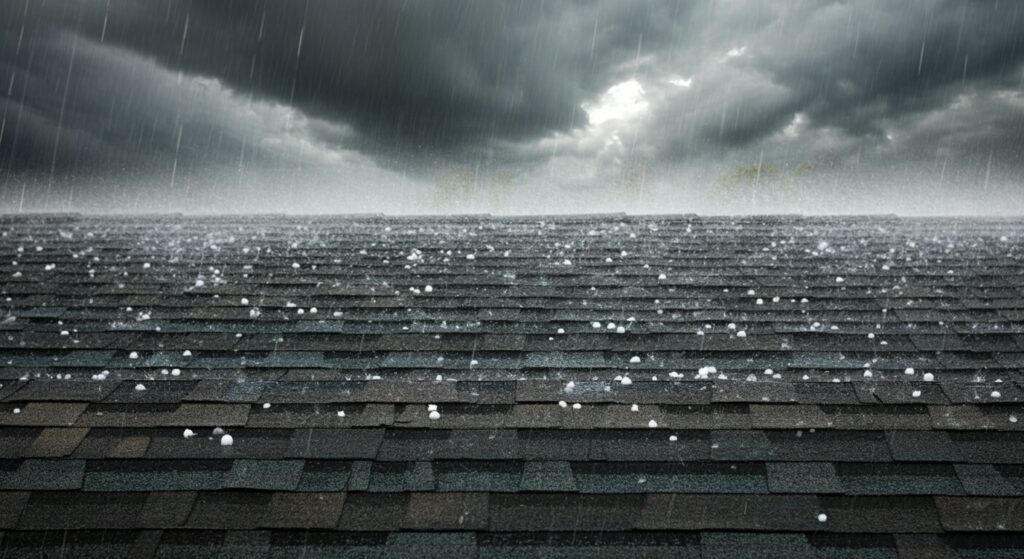
Hailstones leave impact bruising and granule loss on shingles, and dents on metal components including vents, flashing, gutters, and ridge caps. Hail damage is often the primary driver of full replacement approvals. See our Hail Damage Roof Repair page for full detail on identifying and documenting hail-specific damage.
Wind Damage
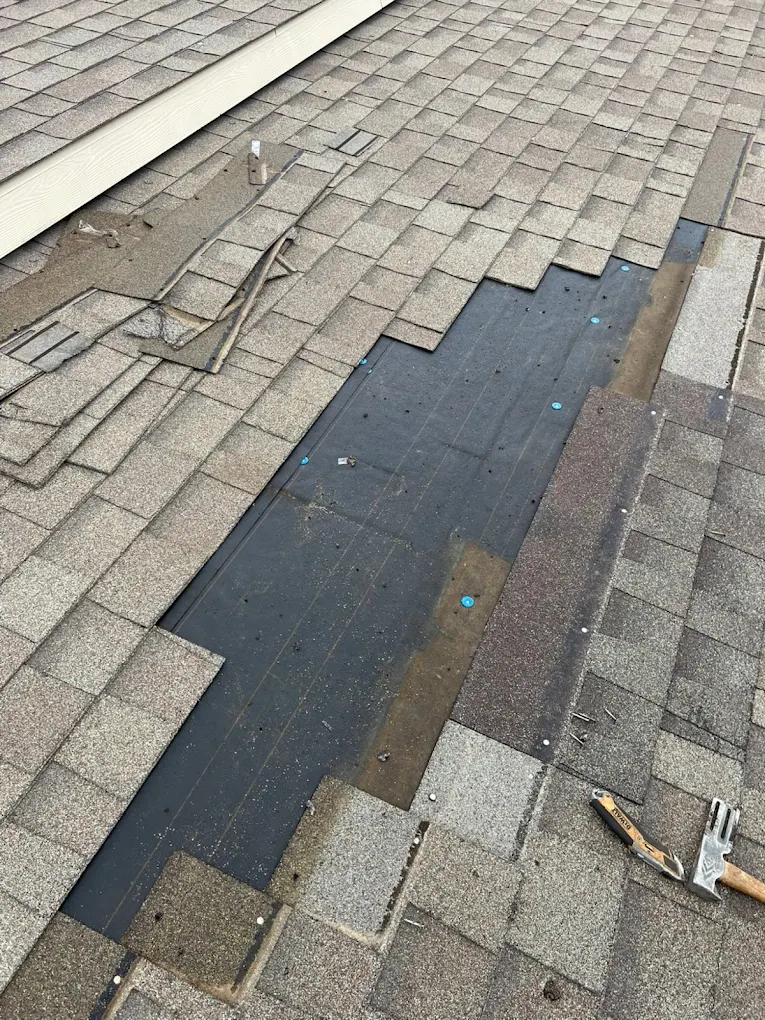
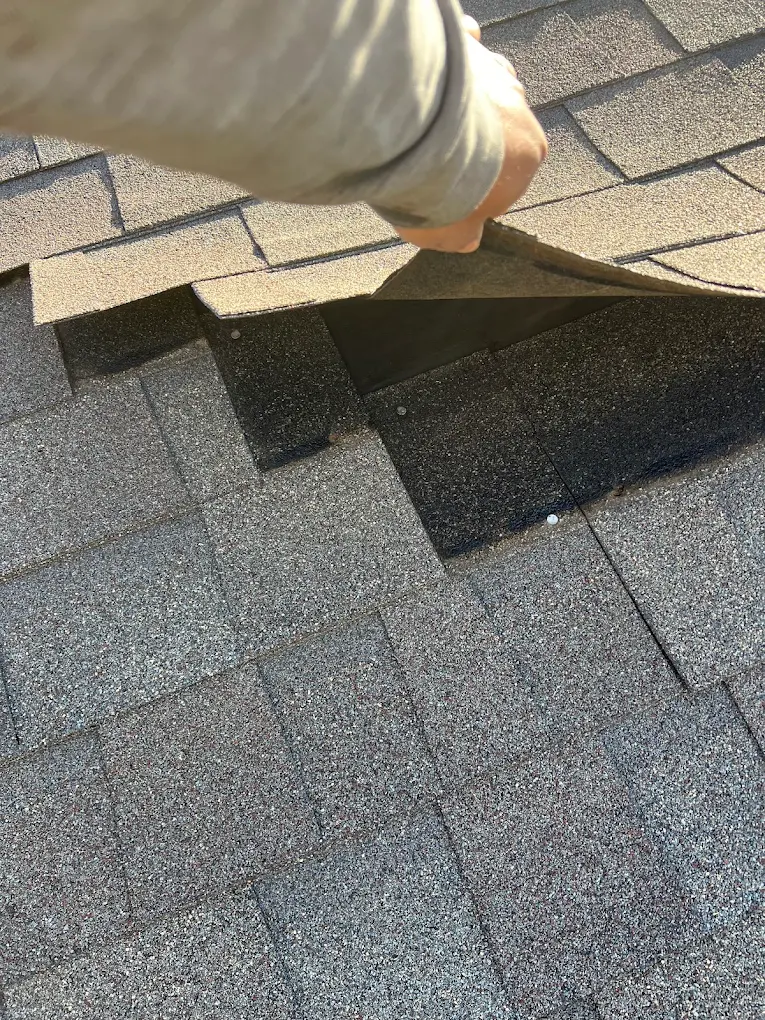
High winds lift shingles at the edges and corners, break the sealant strip between shingles, and displace ridge caps. This is one of the most common forms of storm damage we see in Austin, and it’s also one of the easiest to miss from the ground, a few lifted shingles along an edge don’t always look serious until the next rain finds the gap. Missing or lifted shingles after a storm are a covered event under most Texas policies, but wind damage should be documented quickly: exposed decking deteriorates fast in Austin heat, and a delay between the storm and the inspection can weaken your claim.
Fallen tree or branch
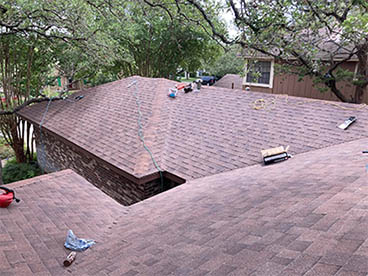
Direct impact from a falling tree or heavy branch causes structural damage to the decking underneath the shingles, not just surface damage. This is typically a covered event regardless of roof age. Document the impact site with photos before any debris is removed, insurers need to see the scene as the storm left it.
Water Intrusion From Storm Events
Heavy rainfall combined with any compromised area, lifted shingles, failed flashing, damaged pipe boots, creates water entry. Storm-related water intrusion is covered; gradual leaks from pre-existing issues are not. Documentation connecting the storm event to the entry point is critical to a successful claim.
Debris impact
Branches, loose materials, and other airborne debris can puncture or crack shingles and damage flashing. This is often overlooked in post-storm inspections that only check the area directly under the tree line. We check every roof surface, not just the obvious impact zone.
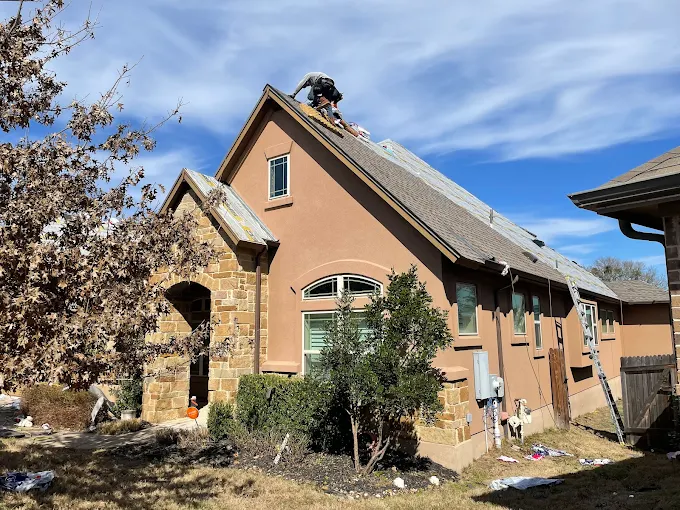
Flashing and sealant displacement
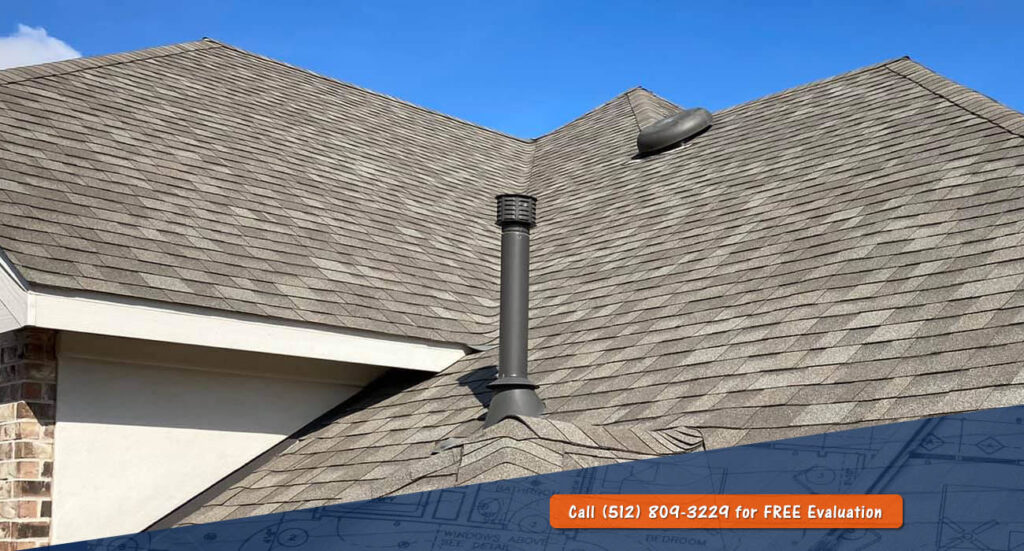
Wind events can unseat flashing at chimney bases, pipe boots, skylights, and valleys without disturbing the shingles themselves. These are active leak risks that may not show up until the next rainfall. We inspect every penetration and transition point on every storm inspection.
Why You Should Not Wait to Get It Inspected
Central Texas heat accelerates the damage cycle. A small crack or lifted shingle that might hold for months in a cooler climate can turn into a leak within weeks during an Austin summer. The UV exposure here is brutal, and once the protective layer on a shingle is compromised, the shingle itself breaks down fast. It’s worth knowing the signs of storm damage every Austin homeowner should watch for and acting on them promptly.
There’s also the insurance timeline to consider. Most homeowners policies have a window for filing storm damage claims, and that window is shorter than most people realize. The sooner you have documentation of the damage, the easier your claim is to file and support.
How Much Does Storm Damage Roof Repair Cost in Austin?
Storm repair costs vary depending on how much of the roof is affected and what was damaged. As a general guide:
- Localized storm repairs (a section of shingles, one or two flashing points): $1,800 – $5,000+
- Full storm-driven replacement (widespread hail or wind damage across the roof): $8,000 – $20,000+
If your damage qualifies under your insurance policy, your actual out-of-pocket cost is typically limited to your deductible, the rest is covered by your claim. We give you a written estimate after every free inspection, so you know your real number, insurance-covered or not, before any work begins.
How We Handle Storm Damage Repair — From First Call to Final Inspection
After a storm event, the sequence matters. Documenting damage correctly before anything is disturbed strengthens your insurance position. Here’s exactly how we handle every storm damage job, start to finish.
Free Inspection
We inspect the full roof and all adjacent components, shingles, flashing, vents, gutters, fascia, soffits, with high-resolution photos and a written assessment. We document before any debris is cleared or temporary repairs are made where possible. This protects your insurance claim position.
Emergency Temporary Protection
If the roof has active exposure, missing shingles, open decking, a structural breach, we provide emergency tarping or temporary repair to stop further water intrusion while the claim is processed. Emergency protection costs are often covered under your policy as part of the claim.
Honest Damage Assessment and Claim Guidance
We tell you clearly what we found, what type of storm event it relates to, and whether the damage qualifies under your policy as a covered sudden event. We walk you through filing the claim and provide the documentation your insurer needs to open a strong case.
We Meet Your Adjuster On-Site
We attend the adjuster visit and walk them through every documented damage point so nothing gets overlooked, misclassified, or undervalued. For the full breakdown of how we handle claim documentation, appeals, and underpaid settlements.
Settlement Review
Once your settlement arrives, we review it against the full scope of work. If the number doesn't cover legitimate damage, we prepare supplement documentation and advocate for the correct settlement before installation begins.
Full Repair or Replacement
Our in-house crew handles the complete repair or replacement. No subcontracting, proper underlayment, flashing at every penetration, ridge ventilation addressed. Edwin personally supervises and conducts the final walkthrough with you before we leave.
Why Austin Homeowners Choose Altitude Roofing as Their Storm Damage Roof Repair Contractor

GAF Master Elite Certified
Top 2% of U.S. roofing contractors. Strengthens documentation credibility and qualifies replacements for GAF's strongest manufacturer warranties.
Emergency Response
If your roof has active exposure after a storm, we respond same-day to provide temporary protection. Emergency repairs are documented as part of your claim.

Licensed Insurance Adjuster
Mr Nichols holds an all-lines insurance adjuster license earned in 2006 and follows HAAG engineering inspection protocols. Our documentation is produced to the standard adjusters require, not a basic contractor report.

We Meet Your Adjuster
We attend every adjuster visit and walk them through the damage systematically. Most contractors hand you a report and leave you to handle this alone.
Full Scope Documentatio
We document the roof, gutters, flashing, fascia, soffits, vents, and any additional storm-affected components, not just shingles. Your settlement should reflect everything that was damaged.
Denied Claims Won
We have overturned storm damage claims denied or underpaid for Austin homeowners. Contact us before accepting a denial.
In-House Crews Only
No subcontracting. Our own trained crews handle every job from tear-off to cleanup. Consistent workmanship and accountability on every project.

160+ Five-Star Google Reviews
The consistent pattern: Edwin guided the process, showed up when he said he would, and the work was done right.
As a local storm damage roof repair company, we’re not a national franchise running a call center, you work directly with the same team and the same owner from first call to final walkthrough.
Does Insurance Cover Storm Damage Roof Repair in Texas?
Yes, in most cases. Storm damage from sudden weather events, wind, hail, fallen trees, and storm-related water intrusion, is one of the most common covered perils under Texas homeowner policies. What isn’t covered is gradual deterioration, deferred maintenance, or pre-existing damage. The two factors that determine whether your claim succeeds are the quality of the damage documentation and how quickly you file.
For the complete breakdown of what’s typically covered, how Replacement Cost Value compares to Actual Cash Value, and what to do if your claim is denied or underpaid.
File promptly
Most Texas policies require storm damage claims to be filed within one year of the event. Some carriers have shorter windows. Do not wait undocumented damage weakens your position and filing windows close.
Document before cleanup
Do not clear debris or make repairs before professional documentation. Insurers need to see the condition of the property as the storm left it. If emergency protection is needed, we can tarp while documenting.
All damage types count
Storm damage claims often include secondary damage to gutters, soffits, fascia, vents, and fencing in addition to the roof itself. We document every affected component — not just the shingles — so your settlement reflects the full scope.
Sudden event vs gradual
Insurance covers sudden storm events, not gradual wear. Our inspection report establishes the connection between the specific event and the damage found, which is what adjusters require to classify it as a covered claim.
Denied or underpaid
If your storm damage claim was denied or the settlement seems low for the scope of work needed, contact us before accepting it. We review denials and have successfully appealed underpaid storm damage settlements for Austin homeowners.
What Austin Homeowners Say About Our Storm Damage Roof Repair
Why Altitude Roofing Documentation Carries Weight With Adjusters
Mr Nichols holds an all-lines insurance adjuster license earned in 2006 in addition to his GAF Master Elite roofing certification. He has studied and follows HAAG engineering hail and windstorm inspection methods and protocols. Most roofers produce basic damage reports.
Mr Nichols produces documentation that speaks the adjuster’s language because he has sat on both sides of the table. That is why the reports Altitude submits hold up under scrutiny and why claims that other contractors document inadequately get approved when we step in.
Had a storm damage claim denied or not sure if your damage qualifies? Start with a free inspection.
Serving Austin and Central Texas - 20 Communities
Altitude Roofing is headquartered in the Belterra Village area of Southwest Austin (78737). We serve homeowners across 20 communities in the greater Austin metro and Central Texas, and can typically schedule an inspection within one to two business days.
Frequently Asked Questions
How soon after a storm should I get my roof inspected?
As soon as you can arrange it. Even if you do not see any interior signs of damage, storm damage can be present and worsening. Getting it documented quickly also protects your insurance claim timeline.
Will my homeowners insurance cover storm damage roof repair?
Most standard homeowners policies cover sudden storm damage from hail, wind, and falling debris. Coverage depends on your specific policy and deductible. We can help you understand what to expect before you file.
Can you repair only the damaged section, or does the whole roof need to be replaced?
It depends on the extent of the damage and the age of your roof. Many storm damage situations are partial repairs. We will give you an honest assessment after inspection.
How long does a storm damage roof repair take?
Most repairs are completed in one day. Larger sections or full replacements take longer and we will give you a clear timeline before work begins.
Do I need to be home during the inspection?
We recommend it so we can walk you through what we find, but we can also document the inspection with photos and review it with you afterward.
Schedule a Free Storm Damage Inspection
If your roof was hit by a recent storm, the best next step is a free inspection from a storm damage roof repair contractor who works for you, not your insurance company. We’ll tell you honestly what we found, what needs to be repaired, and whether your damage is likely to be covered.