 Skip to content
Hill Country Custom Home Specialists
Top Rated Roofing Contractor in the Texas Hill Country
Most roofing contractors are built for volume — standard suburban homes, straightforward rooflines, the same material on repeat. That model works fine for those jobs. It is not the right fit for a Hill Country home with a complex roofline, premium materials, or a property where the cost of a poor installation is significantly higher.
Altitude Roofing works across the Texas Hill Country from a base in the Belterra Village area of Southwest Austin, in the 78737 zip code. That puts us inside this market daily rather than driving out from north Austin when a job comes up. We are GAF Master Elite certified – the top 2% of roofing contractors nationally, with more than 20 years in this specific geography and its housing stock, and 170-plus five-star reviews from homeowners in it. We handle standing seam metal, clay and concrete tile, and premium shingle systems on homes that require more than the standard approach.
If your home has multiple roof planes, a turret, a steep pitch, an existing tile system, or architectural requirements most contractors have not seen before, we can handle it.
Get Your Free Roof Evaluation
Please fill out the form below to schedule your roof Evaluation. Our team will contact you within 24 hours to confirm the details.
- Starts with a 15-minute call with a roofing specialist.
What Makes a Hill Country Home Harder to Roof
Hill Country custom homes are not harder to roof because they are expensive. They are harder because the architecture and the terrain both work against a standard installation, and the two compound each other.
Complex rooflines and multiple roof planes
A home with eight or ten roof planes, dormers, turrets, covered porches and skylights has a corresponding number of valley intersections and
penetrations. Each one is an installation detail that has to be executed correctly, and errors compound. A missed step on a standard suburban home is a nuisance. On a complex Hill Country home it becomes an ongoing leak source that is expensive to trace and expensive to fix.
Higher flashing complexity
Every transition, every penetration, every valley on a complex roofline requires precision flashing work. Homes with multiple chimneys, skylights, step flashing on dormer walls and covered porch transitions have more of these details than any standard residential build. The quality of that flashing work is what determines whether a roof performs for 20 years or develops problems in five.
Exposure on ridgelines and wooded lots
Hill Country homes sit in two very different conditions, often on the same property. Elevated limestone ridgelines catch sustained wind and direct UV that valley properties never see. Live oak and Ashe juniper canopy holds moisture against north-facing slopes and drops constant debris into valleys, where it compresses into a layer that traps water against the roof surface. We account for both when we scope a roof out here.
HOA and community requirements
Communities like Rough Hollow, The Hills of Lakeway, Barton Creek, and others in the Southwest Austin corridor have material and color approval requirements. Documentation, lead time, and pre-approval coordination are part of the project scope on many custom home jobs in this area. We factor this in from the first estimate.
Architectural constraints
On a standard home, material selection is primarily functional. On a custom home the material has to work within the architectural vocabulary of the building. A standing seam metal roof that reads correctly on a Hill Country modern build may look wrong on a French Country estate. We treat material selection as an architectural decision as much as a technical
one.
Insurance documentation on high-value homes
When a storm event affects a custom home, the insurance documentation requirements are more complex. Higher replacement values, multiple material types, and custom details require adjuster-grade documentation to support a full claim. Mr. Nichols holds an all-lines insurance adjuster license and applies those inspection standards on every assessment.
Premium Roofing Systems for Hill Country Homes
The right material for a custom home depends on its architecture, its location, its HOA context, and how long the owner plans to stay. Here is an honest summary of the systems we install and where each one fits. Full system detail lives on the dedicated material pages – these are the decision criteria that are specific to custom and high-value hill country homes.
Standing Seam Metal
The natural fit for Hill Country modern architecture and any home where the roofline is part of the design statement. Panels run vertically with raised interlocking seams and concealed fasteners – no exposed screws, no fastener holes in the panel face. The result is a cleaner line and a more durable seam than any exposed-fastener metal system. On custom homes with steep pitches and multiple transitions, standing seam also handles flashing details more cleanly than corrugated or screw-down alternatives.
We fabricate panels on-site using a roll former, which allows us to cut each panel to the exact length the roof geometry requires. This is standard for high-quality standing seam work and the difference is visible in the result.
Class 4 hail impact resistance on qualifying systems. Lifespan in Central Texas conditions: 35 to 50 years realistically. Kynar finish reflects solar radiation and reduces attic heat load. If your community has HOA guidelines on metal roofing, confirm panel profile and color requirements before committing to a material.
Clay and Concrete Tile
The appropriate material for homes designed in Spanish Colonial, Mission, Mediterranean, or similar architectural styles where tile is part of the building’s design vocabulary rather than just a covering. Homes in Barton Creek, Davenport Ranch, and similar Southwest Austin corridors frequently carry clay barrel tile or concrete S-tile profiles that are architecturally required — not optional upgrades.
Tile work on custom homes introduces structural considerations that do not apply to shingle or metal installations. Tile is significantly heavier than either alternative, and the framing must be evaluated for load capacity before any tile system is specified. For homes that already carry tile, replacement with a similar profile class is typically straightforward from a structural standpoint. For homes converting from shingles to tile, structural assessment and potentially reinforcement are required.
Profile matching on older Austin tile systems from the 1980s and 1990s is a genuine challenge. Some profiles from that era are discontinued. We identify matching options before committing to any repair scope and give you an honest assessment when matching is not feasible.
Premium Architectural Shingles
Not all custom home situations call for metal or tile. When HOA guidelines restrict material selection, when the architectural style calls for a traditional profile, or when the math on a shorter ownership horizon does not support a metal or tile investment, the right answer is the highest-tier shingle system rather than builder grade.
GAF Timberline UHDZ and equivalent premium-tier products from CertainTeed, Owens Corning, Atlas, and IKO deliver meaningfully better performance than standard architectural shingles — heavier mat construction, better impact ratings, stronger seal strips, longer warranty coverage. On a custom home, the additional cost per square over a builder-grade shingle is small relative to total project cost and significant in terms of lifespan and performance.
For homes in active hail corridors, Class 4 impact-rated shingles are the relevant specification – not just the top-of-line shingle in a brand’s lineup, but specifically the Class 4 rated product. We identify which products qualify and what the insurance premium implication is for your specific carrier.
Where We Work
We work primarily across the Southwest Austin and Hill Country corridor – the geography where custom homes, estate properties, and architecturally complex residential builds are concentrated. Our crew is based in the 78737 zip code, which puts us inside this market daily.
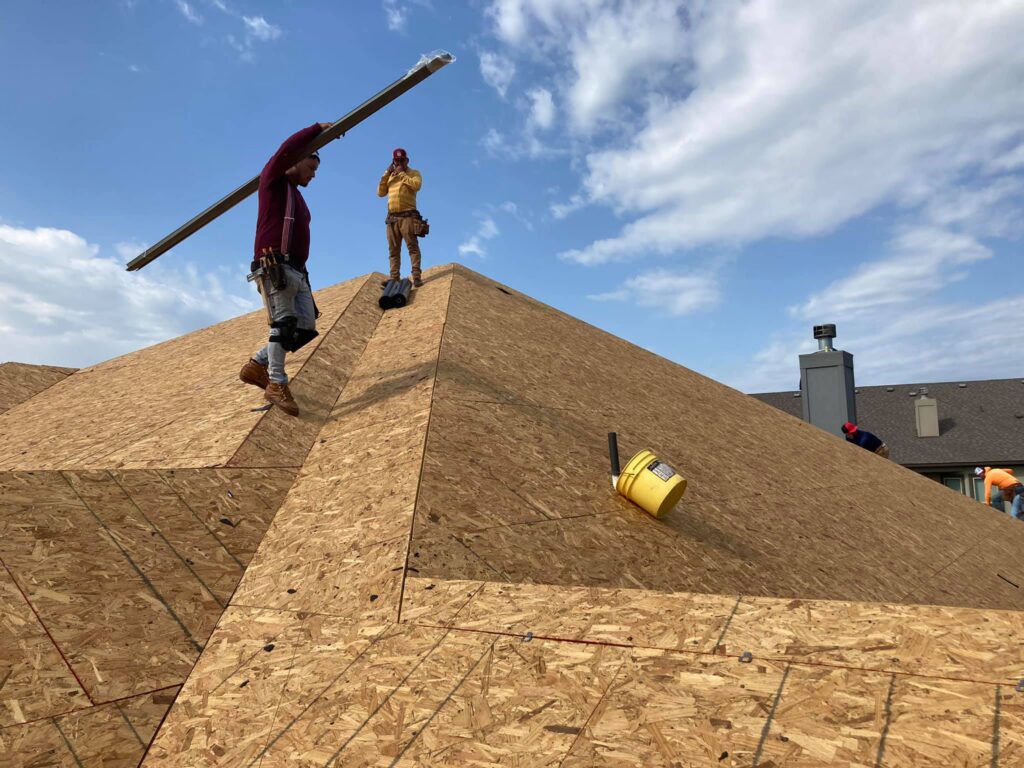
Established custom homes on hillside lots west of Austin. Many properties are 30 to 50 years old with rooflines and materials that require experienced hands. High property values and complex site access are standard here.
Barton Creek and Davenport Ranch
Significant concentration of Mediterranean and Spanish Colonial architecture with clay and concrete tile roofing. Older tile systems in this corridor are in the repair-vs-replace decision window. HOA requirements apply in Barton Creek.

Dripping Springs, Driftwood and Belterra
Acreage custom homes, many from the 1980s and 1990s, on wooded lots with complex rooflines and no HOA restrictions on material selection. Standing seam metal is a natural fit for older rural custom homes in this corridor that are replacing at end of life.
Lakeway, Bee Cave and Rough Hollow
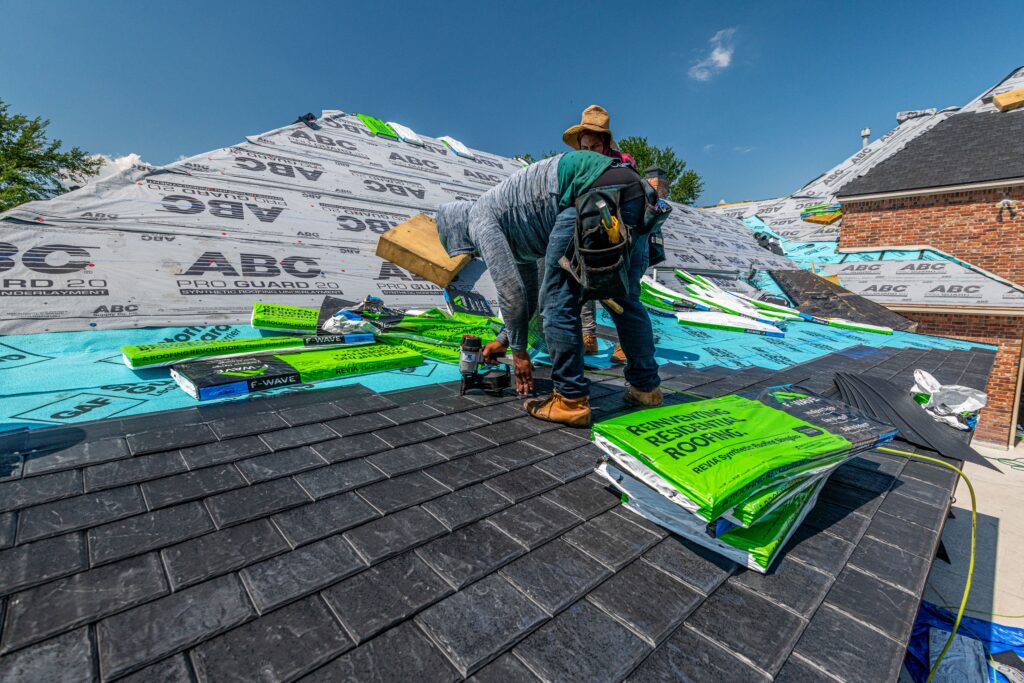
Newer master-planned communities with HOA approval requirements alongside older lakeside custom homes. Range of property types from larger custom builds in Rough Hollow to estate properties on elevated Lake Travis corridor lots.
Southwest Austin (78737, 78749, 78736)
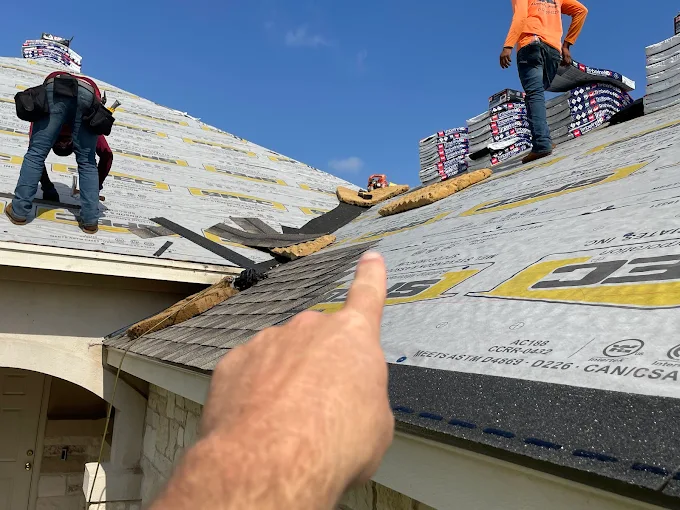
The core zip codes where older Hill Country custom homes from the 1980s and 1990s are concentrated. These properties are now entering the replacement window with clay tile, older concrete tile, or aged shingle systems.
Canyon Lake, New Braunfels and the southern Hill Country
The Guadalupe and Comal corridor, with a mix of lakeside custom homes and
acreage properties. Same material considerations, same storm exposure, and
the same shortage of contractors who work on complex rooflines.
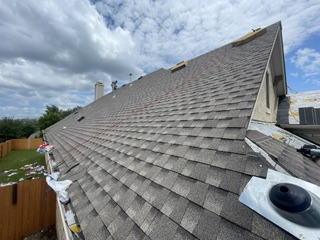
Recent Hill Country Custom Home Projects
Recent custom home projects, captured on-site, from framing details to the final reveal.
- Belterra, TX
Complete shingle roof replacement on a custom Hill Country home, from tear-off to final installation. Featuring quality underlayment, precision asphalt shingle installation, secure flashing, and a durable weather-resistant finish.
- Rim Rock, Driftwood TX
Complete metal roofing installation in the Rim Rock, Driftwood area. From roof preparation to final flashing, every step is completed with precision using durable metal panels, ensuring long-lasting protection, energy efficiency, and a clean, attractive finish built to withstand the Texas climate.
- Henly, Dripping Springs TX
Built to perform in the Texas Hill Country, this metal roofing project in Henly, Dripping Springs showcases expert installation from start to finish. Clean panel alignment, secure fastening, and carefully finished flashing create a strong, low-maintenance roof with lasting durability and a modern appearance.
Roofing Manufacturers We Work With
We are GAF Master Elite certified, which qualifies us to offer GAF’s strongest warranties including the Golden Pledge Limited Warranty on qualifying systems. We also work with the following manufacturers depending on project requirements and material specifications:
GAF
Primary manufacturer. Master Elite certification (top 2% of U.S. contractors). Golden Pledge warranty available on qualifying residential systems.
CertainTeed
Premium shingle and roofing systems for residential applications.
Owens Corning
Architectural shingle systems including Duration and Platinum-level products.
Atlas Roofing Corporation
Premium shingle systems including Class 4 impact-rated products.
Boral
Tile roofing systems including clay and concrete profiles.
IKO
Residential roofing systems for custom home applications.
TAMKO
Shingle systems for residential applications.
Why Credentials Matter on High-Value Hill Country Homes
On a standard residential replacement, certification and credentials are good signals but the gap between contractors is narrower. On a custom home with premium materials, a complex roofline, or a complicated insurance situation, the credential gap is where problems actually live.
GAF Master Elite -- top 2%
The most significant independent quality signal in the U.S. roofing market. GAF awards Master Elite status to contractors who meet requirements for licensing, insurance, continuing education, and customer satisfaction. Fewer than 2% of roofing contractors hold this certification. For a homeowner, it matters because it is the threshold required for GAF's Golden Pledge warranty -- the strongest residential warranty available.

20-plus years in the Hill Country
Not Central Texas generically -- the Hill Country corridor, Southwest Austin, and the specific communities where this type of housing stock is concentrated. Material behavior, local weather patterns, HOA approval processes in specific communities, and the particular challenges of older custom homes in this market are things that come from years of work in a specific place, not a general certification.
HAAG-certified inspection protocols
Edwin holds an all-lines insurance adjuster license and uses HAAG inspection protocols — the standard methodology insurance companies use. When a hail event damages your tile roof and you need to file a claim, we produce documentation in the format adjusters require. We have helped Austin homeowners win claims that were initially denied.
All-lines insurance adjuster license
Mr. Nichols holds an all-lines insurance adjuster license. On custom home projects where storm damage involves higher replacement values, multiple material types, and complex documentation requirements, this credential means the assessment and documentation we produce meets adjuster-grade standards. This matters at claim time more than most homeowners expect until they are in the middle of a disputed claim.
In-house crew, no subcontracting
On custom home projects, we use our own trained crew for every installation. Subcontracting adds a variable that is particularly problematic on complex work where coordination between tear-off, decking, underlayment, and installation is critical to the result. When one crew handles the full project, accountability is clear.
How We Approach a Hill Country Custom Home Project
Complex projects require more upfront work than a standard replacement. Here is how we handle it:
Step 1
Full-scope assessment
We start with a thorough inspection of the existing roof system -- not just the surface but the deck, the structure where relevant, all penetrations and transitions, and any existing damage. For tile projects, this includes evaluating the framing for load capacity. We document everything with photos before presenting a scope.
Step 2
Material recommendation meeting
Before any estimate is finalized, we walk through material options specific to your home's architecture, your HOA context if applicable, and your timeline. We do not default to a single recommendation -- we explain the actual trade-offs between standing seam metal, tile, and premium shingles in the context of your specific home.
Step 3
HOA pre-approval coordination
If your community requires material and color approval before installation, we handle the documentation and submission as part of the pre-project process. We know the approval processes in several Southwest Austin communities and build this into the project schedule.
Step 4
Installation by our own crew
No subcontracting on custom home projects. Our trained crew handles tear-off through final installation on every job. On standing seam metal projects, we bring the roll former on-site and fabricate panels to the exact dimensions your roof geometry requires.
Step 5
Documented final walkthrough
Before we call a job complete, we do a full walkthrough with the homeowner -- every flashing detail, every penetration, every valley transition. On high-value homes this is not a formality. We want you to see the work and have an opportunity to ask questions about anything on the roof before we leave the site.
Hill Country Roof Replacement Cost: What to Expect
Custom Hill Country homes sit at the upper end as larger roof footprints, steeper pitches, more roof planes and harder site access all add real hours to the job. Here is what that actually looks like.
Roofing System: Standing Seam Metal
Typical Hill Country Range: $24,000 – $40,000+
Compared to Shingle Replacement:
1.5x – 2x shingle cost
Roofing System: Clay Tile Replacement
Typical Hill Country Range: $22,000 – $45,000+
Compared to Shingle Replacement:
2x – 3x shingle cost
Roofing System: Concrete Tile Replacement
Typical Hill Country Range: $18,000 – $32,000+
Compared to Shingle Replacement:
1.5x – 2.5x shingle cost
Roofing System: Impact-Rated Designer Shingle
Typical Hill Country Range: $15,000 – $28,000+
Compared to Shingle Replacement:
Baseline — Class 4 rated, may lower your premium
These ranges vary based on roof size, pitch, number of roof planes and penetrations, site access on acreage properties, and the condition of the decking underneath. We provide a detailed written estimate after every inspection – line-itemed, no hidden costs. If something changes once we are in the tear-off phase, we call you before proceeding.
Serving Custom Homes Across the Texas Hill Country
Altitude Roofing is headquartered in the Belterra Village area of Southwest Austin (78737), inside the Hill Country rather than driving out to it. We work on custom homes across the Lake Travis corridor and the western Hill Country, from the hillside properties of West Lake Hills to the custom builds around Lakeway and the acreage homes of Dripping Springs and Driftwood. Most roof evaluations can be scheduled within a business days.
Frequently Asked Questions
My home has a complex roofline with multiple valleys, a turret, and covered porch sections. Can you handle that?
Yes. The Rim Rock project in the project examples above is a good illustration — a large stone Hill Country home with a conical turret, multiple steep-pitch planes, and a range of roof-to-wall transitions. Complex rooflines are where installation quality differences become visible. We bring a roll former on-site for standing seam metal projects, which lets us fabricate panels to exact lengths for each roof plane rather than working with pre-cut panels that require field seaming. For tile work, complex rooflines mean more transition and flashing details, and that is where our 20-plus years of experience in this specific type of housing stock matters most.
Is standing seam metal roofing the right choice for a custom home in the Hill Country or West Lake Hills?
For many of them, yes — but it depends on the architecture and the HOA context. Standing seam metal reads correctly on Hill Country modern, contemporary, and transitional architecture where clean lines and a durable finish material are part of the design language. On homes with French Country, Mediterranean, or traditional architecture, a metal panel can read out of place even if it performs well. HOA communities like Rough Hollow and The Hills of Lakeway have guidelines that govern whether metal is an approved option and which panel profiles qualify. We check the HOA requirements as part of the material recommendation process. If metal is the right call for your home and your community allows it, we will make that case clearly. If it is not, we will tell you that too.
I have a clay tile roof from the 1990s. What are my options?
Three paths: repair and continue, repair selectively and plan for replacement, or replace now. The right answer depends on the overall condition of the system, how many tiles are damaged or broken, whether matching tiles are available, and the underlying deck and flashing condition. Tile systems from the 1990s are now 25 to 35 years old — well within the range where a full assessment is warranted even without an obvious problem. Profile matching is a real constraint on 1990s tile systems. Some profiles from that era are discontinued. We source replacement tiles before committing to a repair scope and give you an honest answer when matching is not achievable at a reasonable cost. If matching is not feasible, we walk through full replacement options with current profiles.
How does your insurance adjuster background help on a Hill Country claim?
Custom homes are more complex to document for insurance than standard builds. Higher replacement values, multiple material types, custom details and the cost of matching premium materials all affect what a proper claim should include. Mr. Nichols holds an all-lines insurance adjuster license and performs assessments to HAAG inspection standards, which means the documentation we produce is the same documentation adjusters use. Where an initial assessment undervalues the work, that matters.
Is a metal roof better for rainwater collection?
Yes, metal is the preferred catchment surface for rainwater collection systems. It is smooth and inert, and it does not shed granules into your tank the way an asphalt shingle roof does. If your system supplies potable water, panel finish and flashing materials both matter, so those are worth specifying before installation rather than dealing with a compatibility issue afterwards.
What is the best roof for a Hill Country home?
For most Hill Country homes, standing seam metal is the strongest overall choice 35 to 50 years of service life in this climate, Class 4 impact resistance on qualifying systems, and a finish that reflects heat rather than absorbing it. Tile is the right answer where it is part of the home’s architecture, and a Class 4 premium shingle makes sense where an HOA restricts material or you are not planning to stay long term.
How much does a roof replacement cost in the Hill Country?
Standing seam metal typically runs $18,000 to $35,000, with clay and concrete tile above that range and premium Class 4 shingle below it. Roofline complexity moves the number more than square footage does – pitch, the number of valleys and penetrations, and site access on acreage all factor in. Every estimate is itemized and in writing before work is scheduled.
Find the Right Roofing Solution for Your Custom Home
If your home has a complex roofline, an existing tile or metal system, or a roofing project that requires more than a standard approach, start with a conversation about your project. We’ll understand your home’s requirements and determine whether an onsite assessment is the right next step.
Altitude Roofing. GAF Master Elite certified. 20-plus years in Austin and the Hill Country. 170-plus five-star reviews.