Skip to content
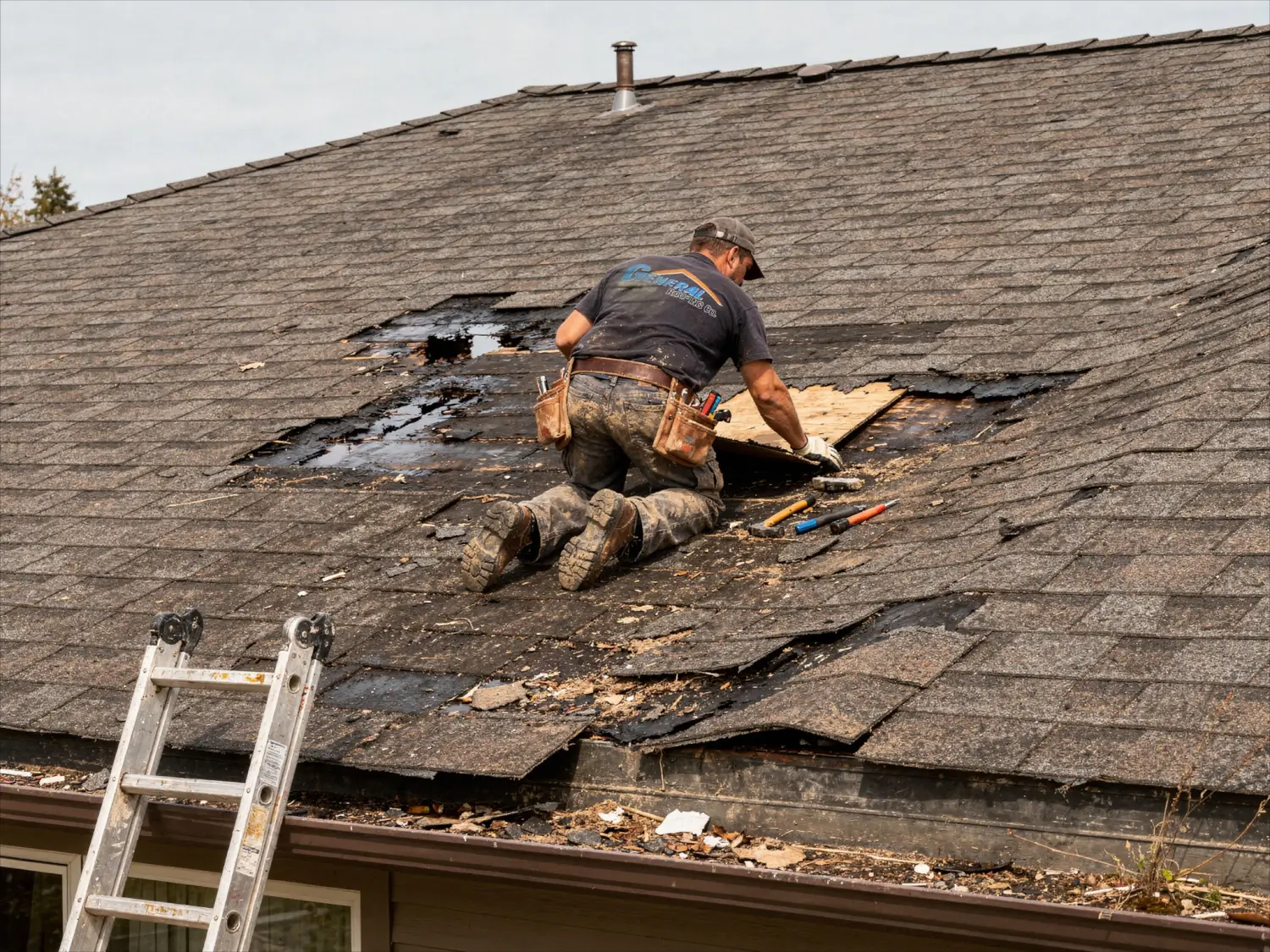
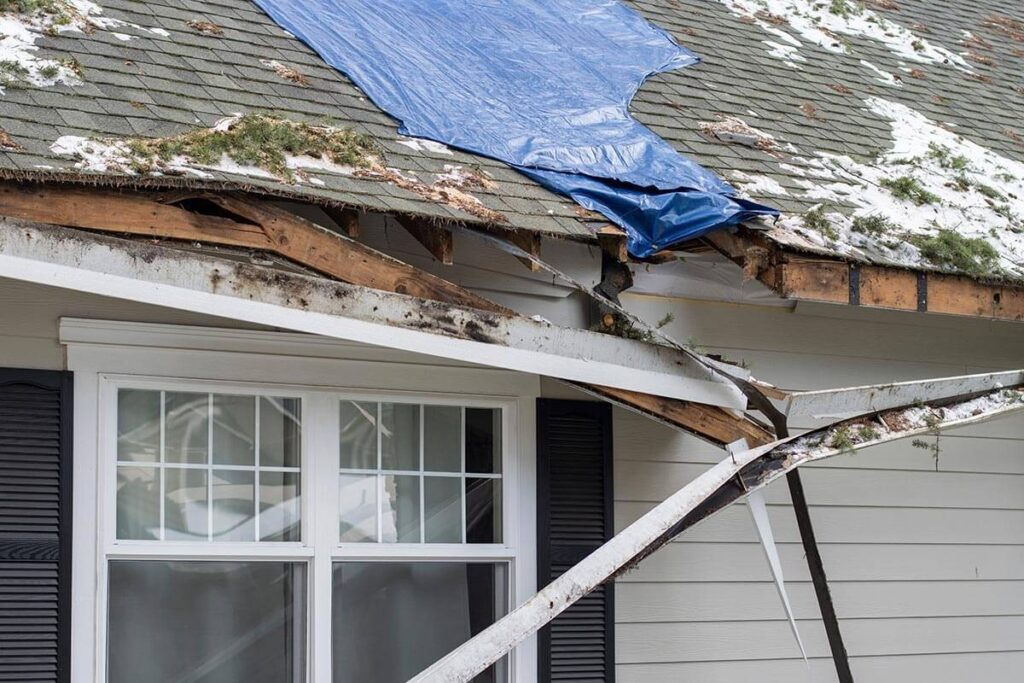
Austin storms do not give much warning. A fast-moving cell can drop golf ball-sized hail on Dripping Springs, push straight-line winds through Bee Cave, and be gone in 40 minutes. What it leaves behind on your roof is not always obvious from the street.
That is the part most homeowners miss. They walk outside, see no shingles on the lawn, and assume they came through fine. But the most costly signs of storm damage on your roof are often invisible from the ground, granule loss, bruised shingles, cracked flashing, and water quietly working its way into the deck.
After 20-plus years roofing across the Southwest Austin corridor, our team has seen what happens when homeowners wait. A small leak in May becomes a mold problem by August. A claim that should have been filed in March gets denied because the damage was considered too old. This guide covers what to look for, where to look, and what to do when you find it.
WHY AUSTIN ROOFS TAKE A DIFFERENT KIND OF BEATING
Central Texas is not gentle on roofs. The challenge here is not one season – it is two separate stress windows that hit back to back, and each one compounds the damage the last one started.
Spring: The Hail and Wind Window (March through June)
The Southwest Austin corridor sits in one of the more active hail tracks in Texas. Cold fronts pushing down from the Panhandle collide with Gulf moisture over the Hill Country and produce storms fast. Hail from 1-inch to 2.5-inch diameter is common across Belterra, Caliterra, and the older ranch neighborhoods west of Dripping Springs. Wind gusts during these events regularly reach 50 to 70 mph.
Summer: Heat Makes Everything Worse
By July, shingles that absorbed spring hail impact are baking in triple-digit heat. Granule loss accelerates. Micro-cracks widen. The adhesive strips holding shingles sealed soften and re-harden in distorted positions. What looked like minor storm damage in April is now allowing moisture into the deck, and Austin’s humidity does the rest from there.
The combination – impact damage followed by intense heat – is what makes roof storm damage repair more time-sensitive here than homeowners in cooler climates expect. Catch it in the right window and a repair often handles it. Wait too long and the conversation shifts to full replacement.
THE 7 SIGNS OF STORM DAMAGE ON YOUR ROOF
You do not need to climb on the roof to identify most of these. A careful ground-level inspection plus a quick attic check will surface the majority of what a storm leaves behind.
Sign 1: Missing or Lifted Shingles
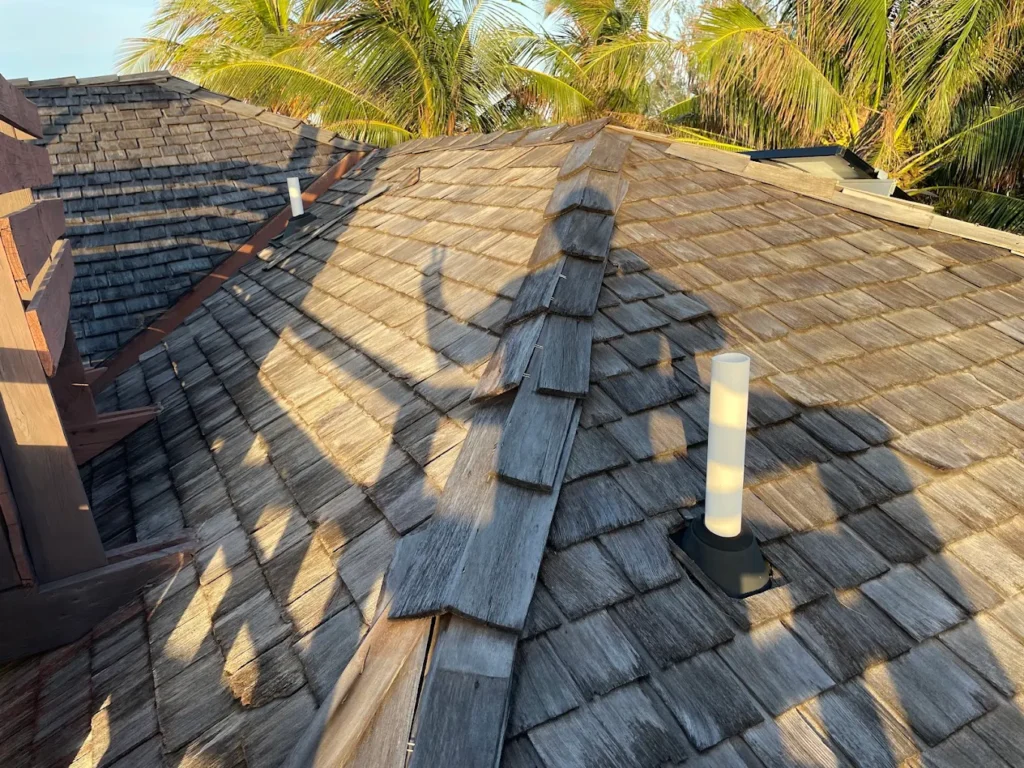
This is the most visible sign of storm damage on your roof. Wind speeds above 50 mph can lift shingles, break the adhesive seal, or pull them off entirely. Look along the downwind side of the roof – that is where wind pressure concentrates and where shingles most commonly fail during a strong storm event.
In newer subdivision builds like those in Belterra and Caliterra, single-layer shingle systems are common. They are faster to install but offer less resistance to wind uplift than older re-roofs with multiple layers. If your home was built between 2010 and 2020 and you had sustained winds above 60 mph, this is the first thing to check.
Sign 2: Granule Loss in Gutters and Downspouts
Granules are the ceramic coating on asphalt shingles. They block UV rays and give shingles their weather resistance. Hail impact – even from smaller stones – knocks granules loose. After a storm, look at what washes out of your gutters. Sandy, dark grit collecting in significant quantities is one of the clearest signs of storm damage on your roof.
Granule loss does not cause an immediate leak, which is exactly why homeowners underestimate it. Once the coating is stripped, the underlying asphalt degrades fast under Austin’s summer sun. A shingle that loses granule coverage in April may crack and allow water in by September. Insurance adjusters look for this specifically because it is measurable evidence of hail impact.
Sign 3: Bruised or Soft Spots on Shingles
Hail impact leaves circular soft spots on asphalt shingles where the granule coating is disturbed and the mat underneath is compressed. Press your thumb into a suspect spot and it feels spongy rather than firm. That softness is structural damage to the shingle mat.
Bruised shingles do not always fail immediately. The impact fracture weakens the material and creates a stress point that will crack under the next weather event. Adjusters mark each instance of bruising individually during a hail damage inspection. If your roof has enough of them across enough surface area, it typically qualifies for full replacement coverage under most standard homeowner policies.
Sign 4: Damaged Flashing Around Chimneys, Vents, and Skylights
Flashing is the thin metal that seals roof penetrations where a chimney, vent pipe, or skylight breaks through the shingle surface. These are always the most vulnerable points on any roof. Bent, cracked, or lifted flashing breaks the watertight seal and creates a direct path for water into the structure below.
On older custom homes in Driftwood and rural properties west of Dripping Springs, flashing that has gone through 25 or 30 years of thermal cycling is far more likely to fail under storm pressure. A repair caught early is a small job. Water damage from failed flashing that sat unaddressed for months is not.
Sign 5: Water Stains on Ceilings or Interior Walls
Brownish or yellow staining on a ceiling – especially in an upstairs room or near an exterior wall – means water has already been getting in. The stain you see today may not be from the most recent storm. It is often the result of slow intrusion that started weeks earlier and finally worked through enough material to become visible.
Do not assume the stain is directly below where water is entering. Water travels along rafters and roof decking before it drips. A stain in the center of a ceiling can trace back to failed flashing 12 feet away. Finding the stain confirms a problem. Finding the source requires a professional inspection.
Sign 6: Dents on Gutters, Fascia, and HVAC Units
If hail hits your roof, it hits everything else at the same time. Walk around the home and look at your gutters, aluminum fascia, and the fins on your outdoor HVAC unit. Denting on any of these surfaces confirms that hail was large and fast enough to have caused damage to your roofing above.
Insurance adjusters use soft metal damage as corroborating evidence during a hail damage claim assessment. Before you file, photograph any dents with something for scale next to them – a coin, your hand, a pen. This documentation supports your claim before anyone gets on the roof and can make a real difference in how the assessment goes.
Sign 7: Attic Evidence – Light, Moisture, or Musty Smell
Get into your attic with a flashlight 24 to 48 hours after a significant storm. Look for three things: daylight visible through the deck, moisture or wet spots on rafters and sheathing, and a musty smell that was not present before the storm. Any one of these confirms active storm damage to your roof system.
Austin’s heat makes this more urgent than in cooler climates. A damp attic in a Central Texas summer can show early mold growth within a few days rather than the weeks it might take elsewhere. Catching attic moisture right after a storm is the difference between a straightforward repair and a full remediation project.
The attic is also where less obvious impact damage shows up before any signs appear in the living space. Cracked underlayment and compromised sheathing are visible from inside. If you are comfortable doing a quick check after a storm, it is worth 10 minutes.
QUICK REFERENCE: WHERE TO LOOK FOR STORM DAMAGE
| Where to Check | What You Are Looking For |
| Gutters and downspouts | Granule buildup, grit in runoff, dents from hail |
| Roof surface (ground level) | Missing shingles, bare patches, uneven roofline |
| Soft metals (HVAC, fascia) | Dents and dings that confirm hail severity |
| Ceilings and upper walls | Brown or yellow staining, peeling paint near rooflines |
| Attic (within 48 hours) | Daylight, wet rafters or sheathing, musty smell |
| Flashing at penetrations | Bent, lifted, or cracked metal seals around chimneys and vents |
WHAT TO DO IN THE FIRST 48 HOURS
You do not need to climb on the roof. You do need to document quickly and contact a professional before the insurance filing window tightens.
Step 1: Document Before You Touch Anything
Take photos and video of the exterior, gutters, any interior staining, and the attic. Date-stamp everything. Pull the weather report for your zip code from weather.gov – it archives storm data by county and shows hail size and wind speed. That weather record is the foundation of any roof storm damage insurance claim and costs nothing to pull.
Step 2: Do a Ground-Level Walk, Not a Rooftop One
Most signs of storm damage on your roof are identifiable from the ground. Walk the perimeter. Focus on the downwind sides. Check the gutters, fascia, and HVAC unit. Getting on a damaged roof without the right safety protocol is unnecessary – leave the rooftop inspection to a professional.
Step 3: Call for a Professional Inspection Within 72 Hours
Most insurance policies have a prompt reporting requirement. Documented delay gives adjusters grounds to question or reduce a claim. Not every storm event results in a payout – but every valid claim starts with prompt documented notice and a professional damage report that meets adjuster documentation standards.
THE INSURANCE STEP MOST AUSTIN HOMEOWNERS SKIP
Most homeowners know to call their insurance company after a storm. Fewer know they have the right to have a roofing contractor present during the adjuster’s inspection – and that distinction matters more than most people realize.
Adjusters cover a lot of properties after a major storm event. A fast assessment on a complex roof can leave items undocumented. A contractor who understands how adjusters document damage – what they measure, what photographic evidence supports a full replacement, how policy language is applied – can make sure nothing gets missed when the adjuster comes out.
Mr Nichols, owner of Altitude Roofing, holds an all-lines insurance adjuster license. That is not common among roofing contractors. It means he understands the claims process from both sides – how damage is documented, how policies are read, and what a homeowner’s options are when a claim comes back lower than expected or gets denied outright.
We have fought denied claims and won. If your storm damage insurance claim was denied or underpaid, that is not necessarily the final word.
CONCLUSION
Storms are part of living in Central Texas. The damage they leave behind does not have to become a crisis. Most of the signs of storm damage on your roof are catchable early – granule buildup in the gutters, soft spots on shingles, moisture in the attic – if you know what to look for and act within the right window.
The homeowners who end up with the biggest bills are almost never the ones who had the worst storm. They are the ones who waited. By the time a stain appeared on the ceiling, a manageable repair claim had become a structural problem and a mold remediation project.
At Altitude Roofing, we serve homeowners across the Southwest Austin corridor -Dripping Springs, Driftwood, Bee Cave, Lakeway, Buda, and the surrounding communities. We do free inspections, document damage the way adjusters do, and we are expert roofing contractors in Austin, tx.
Visit us at altituderoofs.com or call (512) 809-3229 to schedule your free post-storm roof inspection. Do not wait for a stain on the ceiling to tell you there is a problem.
FREQUENTLY ASKED QUESTIONS
How soon after a storm should I check for signs of storm damage on my roof?
Within 24 to 48 hours is ideal. That window lets you document fresh damage before debris is cleared and weather changes the surface appearance. Most insurance policies expect prompt reporting, and the longer you wait, the harder it becomes to tie specific damage to a specific weather event. Early action protects both your claim and your home.
Can storm damage on my roof be invisible from the ground?
Yes, and it often is. Granule loss, shingle bruising, and cracked underlayment are all forms of hail damage that will not show up as obvious holes or missing shingles from street level. A ground inspection catches the most visible signs – missing shingles, gutter buildup, dented soft metals – but a professional rooftop inspection is needed to document the full picture. An attic check within 48 hours can also catch moisture intrusion before it reaches the living space below.
Does homeowner insurance cover storm damage to roofs in Austin?
Most standard homeowner policies in Texas cover sudden storm damage from hail, wind, and falling debris. What they do not cover is damage from deferred maintenance or gradual wear. The key is documenting that the damage ties to a specific storm event, which is why prompt inspection and weather record documentation matters. Coverage limits, deductibles, and replacement cost provisions vary by policy – reviewing yours before storm season is always the better move.
What if my roof storm damage insurance claim is denied?
A denial is not always the final answer. Claims are denied for missing documentation, incorrect damage assessment, or policy interpretation disputes – all of which can be challenged. Mr Nichols holds an all-lines insurance adjuster license and can review the denial, identify what was missing or disputed, and help you file a supplemental claim or appeal. We have successfully reversed denied claims for Austin-area homeowners. Visit our Insurance Claims page for more detail.
How long does it take for storm damage to turn into a roof leak?
It depends on the damage type and Austin’s seasonal conditions. A puncture or torn shingle can leak in the very next rain. Granule loss and bruised shingles are slower – a degraded shingle may hold for months before cracking, but that timeline compresses under summer heat. Flashing damage often causes slow, hard-to-trace leaks that do not become visible until water has traveled well into the structure. Early inspection is always less expensive than late discovery.