 Skip to content
If you’ve lived in Central Texas for any amount of time, you already know what the weather can do. The heat alone is brutal. Add spring hailstorms, strong winds, and intense UV rays – and your roof is working harder than almost any other roof in the country.
So the real question is: how long does a roof last in Austin, TX? The honest answer is shorter than the national average. Most homeowners expect their roof to last as long as the manufacturer says. But Austin’s climate changes that math in a real way. This guide breaks it all down – by material, by weather factor, and by what you can actually do to squeeze more life out of your roof.

Quick Answer: How Long Does a Roof Last in Austin?
Before we dig in, here’s the fast version. Austin’s climate shortens roof lifespans by 20–30% compared to national averages. The table below shows what you can realistically expect here in Central Texas:
| Roofing Material | National Average | Realistic Lifespan in Austin |
| 3-Tab Asphalt Shingles | 20–25 years | 12–18 years |
| Architectural Shingles | 25–30 years | 18–25 years |
| Class 4 Impact-Rated Shingles | 30+ years | 22–28 years |
| Steel Standing Seam Metal | 40–70 years | 40–60 years |
| Aluminum Standing Seam Metal | 40–70 years | 40–65 years |
| Clay / Concrete Tile | 50–100 years | 40–80 years |
| Wood Shakes | 20–30 years | 15–20 years |
| Flat Roofs (TPO / EPDM) | 15–30 years | 12–22 years |
| Synthetic Roofing (CeDUR, Brava) | 50–100 years | 40–80 years |
That gap between national and local numbers isn’t random. It comes from specific weather patterns that hit Austin harder than most cities. Let’s walk through exactly what’s causing the damage.
Why Austin’s Climate Shortens Roof Lifespan
This is the section most roofing blogs skip entirely. They tell you how long a roof lasts. They don’t tell you why Austin cuts that number down. Understanding the mechanisms helps you make smarter decisions – about materials, about maintenance, and about when to call a roofer.
Extreme UV Exposure
Central Texas gets some of the highest UV exposure in the continental United States. That’s not an exaggeration. Year-round sunshine hammers asphalt shingles, causing them to dry out, crack, and lose granules faster than they would in cooler climates. In fact, Austin’s UV intensity reduces asphalt shingle effectiveness by roughly 20–30% compared to northern states.
Metal roofs aren’t immune either. UV causes paint and coating to fade over time. Even durable tile roofing sees accelerated breakdown in the underlayment and flashing components when exposed to this level of radiation year after year.
Heat and Thermal Cycling
Austin summers regularly push past 100°F. That heat doesn’t just feel miserable – it physically stresses every component of your roof. Materials expand during the day and contract at night. Every single day. Over years, that constant thermal cycling fatigues fasteners, sealants, and flashing points in ways that aren’t always visible until something fails.
This is especially hard on asphalt shingles. They absorb heat rather than reflect it, which bakes them from the outside while a poorly ventilated attic bakes them from underneath simultaneously.
Spring Hailstorms
Hail is Austin’s most destructive recurring weather event. Golf-ball-sized hail is a real, documented threat in Central Texas – not a rare anomaly. A single severe storm can take years off a roof’s life even if you don’t see obvious damage from the ground. Hidden hail damage bruises the shingle’s granule layer, accelerating the aging process underneath.
This is one of the main reasons a post-storm inspection matters so much here. What you can’t see is often costing you more than what you can.
High Winds and Storm Season
April through September is storm season in Austin. Severe thunderstorms bring wind gusts that lift shingle edges, stress ridge caps, and expose the underlayment at the most vulnerable points of the roof. Wind damage almost always starts at the perimeter – edges, corners, and ridgelines – and spreads inward from there if left unaddressed.
Humidity and Moisture Swings
Austin’s humidity fluctuates sharply. A hot, dry summer can be followed by weeks of heavy spring rain. That back-and-forth moisture cycling works its way under aged shingles, accelerating rot, mold, and decking damage faster than in more consistently dry climates. Once moisture gets into the decking, the repair scope grows fast.
How Long Does a Roof Last in Austin, TX – By Material
Now let’s get specific. Every material performs differently under Austin’s conditions. Here’s what you need to know before you choose – or before you decide what to do with what you already have.
Asphalt Shingles
Asphalt is still the most common roofing material in Austin. It’s affordable and widely available. But Austin’s heat is harder on asphalt than almost any other material.
Homeowners considering shingle roofing Austin should know that 3-tab shingles are the lowest-cost option and also tend to have the shortest lifespan in Central Texas. Expect 12–18 years here in Central Texas. Most Austin roofers don’t recommend them for new installations anymore. Their wind resistance ratings simply don’t hold up to our storm patterns.
Architectural Shingles are the most popular choice for good reason. They’re thicker, handle wind better, and hold up longer – typically 18–25 years in Austin with proper maintenance. They’re the sweet spot for most homeowners balancing upfront cost against longevity.
Class 4 Impact-Rated Shingles are the top performer in the asphalt category. They’re built to absorb hail impacts without bruising the granule layer. In Austin’s hail-heavy environment, these make real financial sense. They can also reduce your homeowner’s insurance premium – worth checking with your insurer before you decide.
Metal Roofing
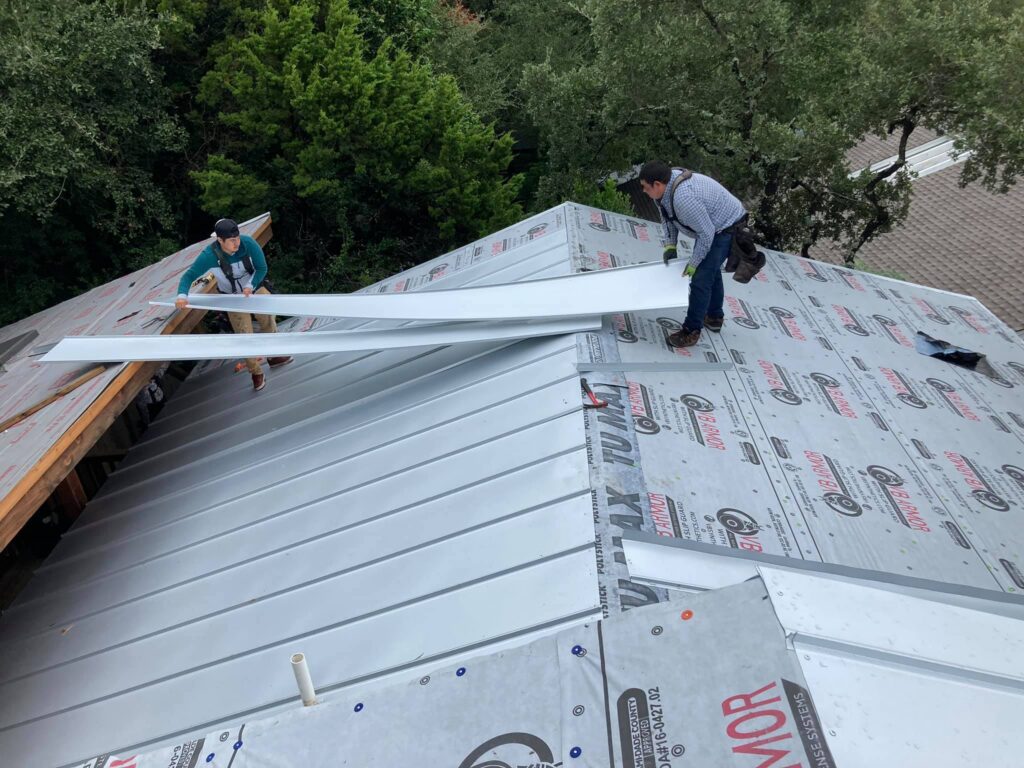
Metal Roofing in Austin has grown faster than any other roofing category in Austin over the past several years. It’s easy to understand why. Metal reflects heat rather than absorbing it, which reduces cooling costs during summer and cuts thermal stress on the roofing system itself.
Steel Standing Seam systems typically last 40–60 years in Austin. They handle hail and high winds better than any asphalt option. Homes on exposed hillside lots or open-lot neighborhoods see the biggest benefit. Aluminum Standing Seam is the better choice near Lake Travis and other high-moisture areas because aluminum resists corrosion far better than steel. Metal Shingles split the difference – they carry the same longevity as other metal systems but look closer to a traditional shingle aesthetic.
The one thing to understand about metal in Austin’s climate is thermal expansion. Metal expands and contracts with temperature swings. Proper installation accounts for this – which is why choosing an experienced contractor matters even more with metal.
Clay and Concrete Tile
Tile is the prestige pick in Austin. Both clay and concrete tile handle the heat exceptionally well, and they carry some of the longest lifespans of any roofing material – 40–80 years in this climate. They’re fire-resistant and virtually immune to UV degradation.
The catch is the underlayment. The tile itself may last decades, but the underlayment underneath typically needs replacing every 25–30 years. Budget for that when you’re calculating long-term cost. Clay tile can also crack under large hail, so your location and exposure level matter when making this choice.
Wood Shakes and Shingles
Wood shakes look beautiful. In Austin, though, they’re up against a climate that isn’t kind to them. Expect 15–20 years realistically. The combination of moisture cycles, intense UV, and Central Texas drought conditions accelerates decay and splitting. Fire risk during dry seasons is also a concern. Most Austin roofers steer homeowners away from wood unless aesthetics are a strong priority and the maintenance commitment is understood upfront.
Flat Roofs – TPO, EPDM, and Modified Bitumen
Flat roofs are common on commercial buildings and modern-style homes in Austin. Expect 12–22 years depending on the membrane. Heat is the primary enemy here. TPO membranes perform best in Austin’s UV environment because of their reflective white surface. Modified bitumen tends to degrade faster in sustained 100°F+ conditions.
Synthetic Roofing – CeDUR, Brava, DaVinci
Synthetic systems offer the best of both worlds: the visual appeal of cedar or slate with the performance of modern composites. They’re UV-stable, impact-resistant, and lightweight. In Austin’s climate, expect 40–80 years – and they hold that range more consistently than natural materials do. Premium homes in Westlake Hills and Lakeway have adopted these at a growing rate.
5 Things That Shorten a Roof’s Life in Austin Faster Than Anything Else
Most roof failures aren’t about the weather alone. They’re about factors that compound the weather damage. Here are the five biggest ones:
- Poor attic ventilation – Heat and moisture build up below the roof deck and bake shingles from the inside out. This alone can cut 5–8 years off an asphalt roof’s life.
- Subpar installation – Improper fastening, skipped underlayment, or rushed flashing work accounts for close to 40% of premature roof failures in Texas. The contractor matters as much as the material.
- Ignoring small repairs – A minor flashing issue ignored becomes a major decking repair after the next heavy rain. Austin’s storm seasons amplify every weakness, fast.
- Tree overhangs – Branches rubbing on shingles cause abrasion. Shade retains moisture. Falling limbs during storms cause immediate damage.
- Uninspected storm damage – After every significant hail or wind event, hidden damage starts a countdown. You won’t always see it from the ground, but it’s happening.
How to Make Your Austin Roof Last as Long as Possible
The right material helps. But what you do after installation matters just as much. These habits extend roof lifespan regardless of what’s on top of your home.
Get an Annual Inspection – and Always After a Storm
An annual roof inspection in Austin catches small issues before they grow. After a significant hail event or severe storm, don’t wait. Get someone up there within a few days. Hidden damage that goes uninspected starts costing you immediately, even if nothing is visibly leaking yet.
Keep Your Gutters Clean
Clogged gutters cause water to pool at the roofline and back up under shingles. Austin’s heavy spring rains make this a real, recurring risk – not just a general maintenance tip. Clean gutters twice a year at minimum, and after any storm that drops a lot of debris.
Fix Attic Ventilation Now
If your attic runs hot, your roof is aging faster than it should. Balanced ventilation – ridge vents and soffit vents working together – regulates both temperature and moisture under the roof deck. It’s one of the highest-value upgrades you can make without touching the shingles themselves.
Trim Trees Around the Roofline
This one is simple and often overlooked. Overhanging branches don’t just scratch shingles. They drop debris that holds moisture, and they become projectiles in Central Texas wind events. A $200 tree trimming job can prevent a $2,000 roof repair.
Fix Small Problems Immediately
Don’t wait on a loose flashing, a cracked pipe boot, or a handful of lifted shingles. Small issues in Austin’s climate have a short window before they compound. Addressing these problems early with professional roof repair Austin service can prevent a small flashing, shingle, or leak issue from turning into a full replacement..
Warning Signs Your Austin Roof Is Running Out of Time
Knowing the warning signs saves you money. Catching these early means repair options are still on the table. Ignoring them means replacement becomes inevitable faster.
Your roof is approaching its Austin lifespan. If your architectural shingles are 20 years old, or your 3-tab shingles are hitting 15, you’re in the planning window. Don’t wait for failure – start assessing now.
Granules collecting in your gutters. This is one of the clearest signals that asphalt shingles are aging out. The granules are the UV shield. Once they wash away, the underlying mat deteriorates quickly.
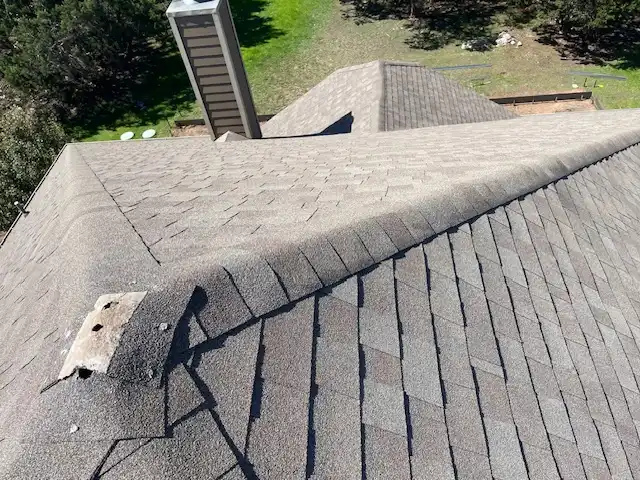
Cracked, curling, or missing shingles. Austin heat and hail cause this faster than most climates. Isolated damage can be repaired. Widespread curling or cracking across multiple areas usually means the entire system is going.
Active leaks or water stains in the attic. A single isolated leak can often be repaired. Multiple leak points signal systemic failure – patching them one by one becomes a losing financial strategy.
Sagging roofline or soft spots on the deck. This is a structural urgency. Rotted decking or compromised framing needs immediate attention. Don’t put this one off.
Energy bills climbing without explanation. Aged roofing loses its insulating and reflective properties. In Austin’s summers, that shows up on your electricity bill. If your cooling costs are rising and nothing else has changed, your roof may be part of the reason.
If you’re seeing any of these signs, a roof inspection is the fastest way to get a clear picture. And if you’ve recently had storm damage, our storm damage repair team can assess what happened and what it means for your roof’s remaining life.
Repair or Replace? How to Decide in Austin
This is the question most homeowners struggle with. The right answer depends on age, scope of damage, and what the inspection reveals.
Repair makes sense when damage is localized – a few shingles after a wind event, a flashing failure around a chimney, an isolated leak traced to a single point. If the roof is under 15 years old and the underlying structure is sound, a quality repair extends the life meaningfully. Our roof repair services are built around exactly this kind of targeted work.
Roof replacement Austin becomes the better option when damage is widespread, the roof has reached the end of its expected lifespan, or recurring leaks continue despite previous repairs.. A simple rule of thumb: if repairs would cost more than 50% of what replacement costs, replacement usually wins on long-term value.
When in doubt, an honest professional inspection gives you the information you need to make the right call – without guessing.
How Austin Compares to the Rest of Texas
Austin isn’t the harshest roofing environment in Texas – but it’s close. Dallas and Fort Worth see more frequent large hail events. Houston deals with higher sustained humidity and hurricane exposure. San Antonio’s climate is nearly identical to Austin’s.
What makes Central Texas particularly hard on roofs is the combination. High UV, sustained summer heat past 100°F, significant spring hail, and strong seasonal winds all hit the same roof year after year. Very few climates in the country stack that many stress factors simultaneously. That combination is why Austin roofs age faster than national averages suggest – and why material choice and maintenance matter more here than in most places.
How Long Roofs Tend to Last in Austin’s Neighborhoods
Austin isn’t one roofing market. The city’s neighborhoods have different risk profiles, and that affects how long roofs last in each area.
West Austin and Westlake Hills homes often have steep pitches, significant tree canopy, and larger roof footprints. Premium materials – metal, impact-rated shingles, synthetics – are common, and they perform well. Our team works regularly in West Lake Hills and sees the difference good materials and good maintenance make over time.
East Austin has a higher concentration of older homes. If your home was built before 1990, the roof has likely been replaced at least once. Decking issues are more common here, especially in homes with any history of slow leaks.
South Austin, Buda, and Kyle tend to be newer construction with more predictable timelines. Architectural shingles are the dominant material. Proper ventilation is the biggest variable in how long they hold up. We serve Buda homeowners regularly and see this pattern consistently.
Dripping Springs and Driftwood properties sit on larger lots with more wind exposure. Metal roofing has grown significantly in these areas because of its wind and hail performance. We’re one of the most active roofing contractors in Dripping Springs and Driftwood.
Lakeway and Bee Cave sit near Lake Travis, where moisture exposure is higher year-round. Aluminum metal roofing holds up better here than steel because of its corrosion resistance. We serve both Lakeway and Bee Cave and can help you choose the right system for your specific exposure.
Conclusion
Understanding how long a roof lasts in Austin, TX is the first step to protecting one of the biggest investments you own. Austin’s climate is demanding. The UV, the heat, the hail, and the storm season create conditions that shorten roofs faster than most homeowners expect. But the right material, a qualified installer, and consistent maintenance make a measurable difference.
You don’t have to guess where your roof stands. At Altitude Roofs, we serve Austin and the surrounding communities – fromDripping Springs and Driftwood to Lakeway, Bee Cave, and West Lake Hills. We’ll give you a straight assessment of what your roof has left, what it would take to extend it, and when replacement makes more sense than repair.
Contact us to schedule a professional inspection – no pressure, no guesswork, just honest answers about your roof.
Frequently Asked Questions
Q: How long does an asphalt roof last in Austin, TX?
Standard 3-tab shingles typically last 12–18 years in Austin’s climate. Architectural shingles perform better, usually lasting 18–25 years with proper maintenance. Austin’s heat and UV accelerate granule loss, which is the main reason lifespans here fall short of national estimates.
Q: Does Austin’s heat really shorten a roof’s lifespan?
Yes, significantly. Austin’s combination of intense UV exposure, sustained 100°F+ summer temperatures, and daily thermal cycling puts roofing materials under stress that doesn’t exist in cooler climates. Asphalt shingles in particular age 20–30% faster here than in northern states.
Q: Is metal roofing worth it in Austin?
For most homeowners planning to stay in their home long-term, yes. Metal roofing reflects heat instead of absorbing it, holds up to hail and wind far better than asphalt, and lasts 40–60 years in Austin’s climate. The higher upfront cost spreads across decades, making long-term value strong.
Q: How often should I have my roof inspected in Austin?
At minimum, once per year – and after every significant hail or wind event. Austin’s storm season runs April through September, so a post-storm inspection is one of the most valuable things you can do. Damage that isn’t visible from the ground is often causing hidden aging that adds up fast.
Q: Can I extend my roof’s life without replacing it?
Absolutely. Annual inspections, prompt small repairs, clean gutters, proper attic ventilation, and trimmed overhanging trees can add 5–10 years to a roof’s life in Austin. The key is consistency – maintenance has to be ongoing, not just reactive.
