Skip to content
A bad storm just rolled through Austin. Your neighbor lost shingles. Your gutters are full of granules. Someone knocks on your door and says your roof needs work. Now what?
Most homeowners in Austin, Dripping Springs, and Driftwood don’t realize one thing: a verbal opinion means almost nothing to your insurance company. What actually drives claim approvals is a proper roof storm damage inspection report – written, detailed, and tied to a specific storm date.
This guide breaks down exactly what that report should include. By the end, you’ll know what to look for, what to demand from your inspector, and how to avoid getting stuck with a denied claim.
Key Takeaways
- A roof storm damage inspection report is a written document – not a verbal estimate or a few phone photos.
- It must tie damage back to a specific Austin-area storm event with dates and weather data.
- A complete report covers the exterior roof, attic, interior, safety hazards, photos, and repair costs.
- Austin insurers rely heavily on this report to approve or deny hail and wind claims.
- Always request a written, itemized report – never accept only a verbal “you need a new roof” opinion.
- This guide applies to homeowners across Austin, Dripping Springs, Driftwood, Lakeway, Buda, and surrounding Central Texas areas.
What Is a Roof Storm Damage Inspection Report?
It’s a structured document created after a professional inspection of your home following a storm. Not a free estimate. Not a quick look from the driveway.
A real report names the storm. It includes photos, measurements, damage density, and repair recommendations. It’s the kind of document that can stand up to scrutiny from an insurance adjuster – or a city inspector.
There’s a big difference between a contractor saying “yeah, you’ve got damage up there” and handing you a written, itemized report with GPS-tagged photos and storm weather data. The first gets you nowhere with your insurer. The second gets your claim moving.
Why This Report Makes or Breaks Your Insurance Claim
Here’s what most homeowners don’t find out until it’s too late: Texas insurers don’t just take your word for it. They also don’t take a contractor’s word for it unless there’s documentation backing it up.
Your roof storm damage inspection report is the foundation of your claim. It tells the adjuster what was damaged, when it happened, and why it’s storm-related – not just wear and tear from years of Central Texas heat. Claims backed by detailed inspection reports are approved significantly faster than those without one.
If your report is vague, your claim stalls. If it’s missing storm dates, it gets denied. That’s just how the process works in Travis, Hays, and Williamson counties. Our team at Altitude Roofs has helped hundreds of Austin-area homeowners navigate the roof insurance claim process in Austin, TX – and documentation is always the deciding factor.
Property and Storm Event Details
Every solid inspection report starts with the basics. This section establishes who owns the property, what type of structure it is, and – most importantly – what storm is being evaluated.
The storm section can’t be vague. “Recent storm damage” won’t cut it. The report needs to read something like: “Hail and wind event on April 8, 2024, affecting North Austin (Travis County). Hail diameter: approximately 1.25 inches. Wind gusts recorded at 62 mph.”
This ties your inspection directly to a documented weather event. Insurers cross-reference this with NWS data, so precision matters. The inspection should happen within 48–72 hours of the storm whenever possible.
What this section should include:
- Full property address, including city and county
- Roof type, age, and any previous repairs
- Specific storm date and type (hail, wind, tornado)
- Hail size, wind speeds, and rainfall totals
- Data source (NWS, Stormersite, or similar)
Exterior Roof Damage Summary – The Core of the Report
This is where the real documentation begins. The inspector walks every slope of your roof – front, back, left, right – and records what they find.
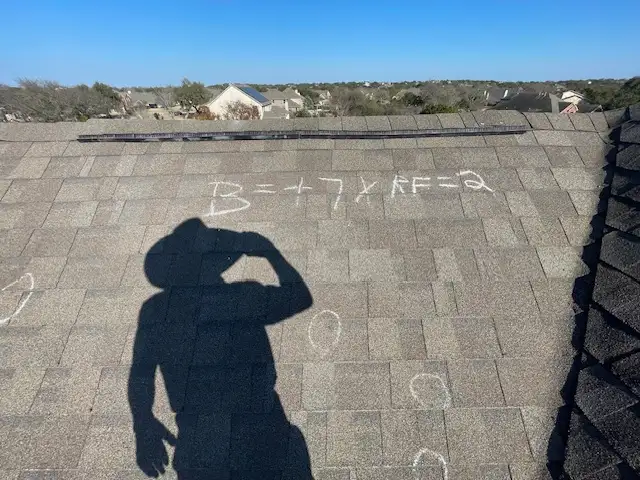
The report should rate overall roof condition and state clearly whether storm damage was found. Then it gets specific. How many hail impacts per 100 square feet? Which slopes took the worst hit? Are shingles lifted, bruised, cracked, or missing entirely?
Damage density matters more than most homeowners realize. Insurers use it to decide between repair and replacement. Generally, damage under 10% of the roof area points to spot repairs. Damage above 25–30% typically justifies a full replacement. A report without density measurements gives your adjuster too much room to lowball the claim.
Our residential roof repair services in Austin, TX always begin with this kind of slope-by-slope documentation before any work is quoted or started.
Component-by-Component Findings
A thorough roof storm damage inspection report doesn’t just describe the shingles. It goes component by component. This is where a real inspection separates itself from a quick estimate.
Field Shingles or Panels
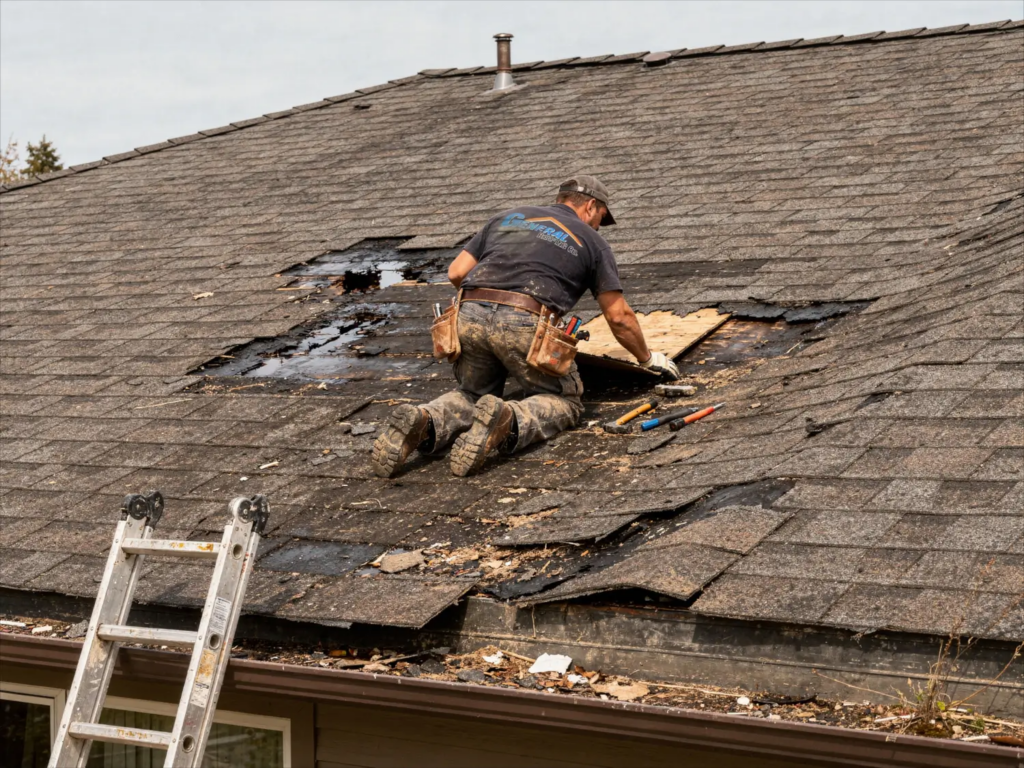
The inspector documents hail dents (typically 0.5–2 inches in diameter), wind-lifted tabs where seals have broken, and any cracked or displaced materials. They note whether damage looks fresh or pre-existing – that distinction matters enormously during the claims process.
Flashing
Step flashing, chimney flashing, and wall flashing all take a beating in high winds. The report should document any bending, lifting, or separation with specific measurements. Example: “25 linear feet of step flashing along the east wall – bent and lifted.”
Ridges, Hips, and Valleys
These areas often catch the worst wind damage. Look for granule loss, splits, lifted ridge caps, or complete failure along the hip lines.
Vents and Pipe Boots
Dented exhaust vents and cracked pipe boots are telltale signs of hail impact. A strong report counts them and notes which slope they’re on.
Gutters and Downspouts
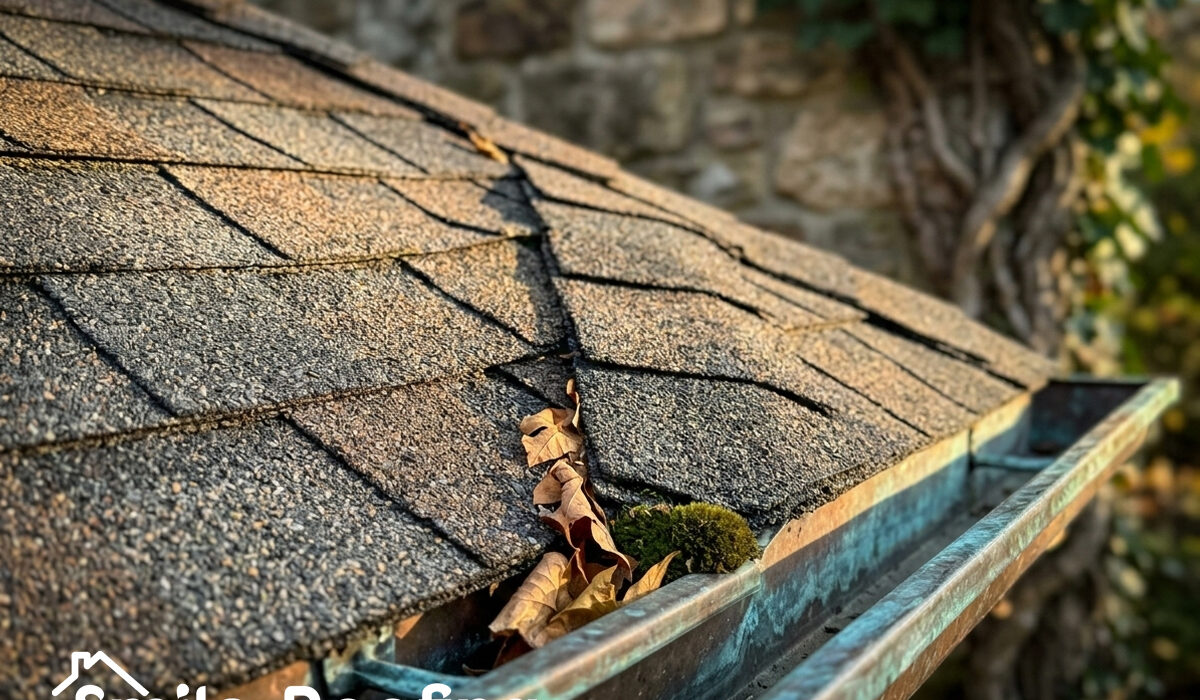
Granule accumulation in gutters is one of the clearest signs of shingle damage from hail. Dents, separation from fascia, and clogging all belong in the report too.
Attic and Interior Observations
Here’s something a lot of inspectors skip – and that’s a problem. A storm can compromise your roof without creating an immediate leak. Damage hides in the attic first.
A proper inspection includes going into the attic. The inspector checks for damp insulation, daylight visible through the decking, water staining on rafters, and signs of mold near exhaust vents. In Austin’s humid post-storm climate, mold can start forming within 48 hours when moisture gets in.
Inside the home, any ceiling stains, warped drywall, or peeling paint near valleys or skylights should be noted by room name. The report should clearly state whether these signs are fresh – tied to the current storm – or pre-existing. That distinction protects you if the insurer tries to call it prior damage.
If you’re already seeing interior signs of water intrusion, our roof leak repair team in Austin, TX can address both the source and the symptoms quickly.
Site Conditions, Safety Hazards, and Code Issues
The report should also document what the inspector finds on the ground. Fallen branches, loose debris on walkways, broken skylight glass – these are real hazards that belong in writing.
Safety concerns need to be flagged clearly. Partially detached gutters over entryways. Unstable roof sections. Loose fascia at the eaves. If a section isn’t safe for ladder access, that belongs in the report too.
For Austin and Travis County properties, the inspector should note any code compliance issues that will affect repairs. Missing drip edge. Inadequate ventilation. Non-compliant underlayment on older roofs. Williamson County (Round Rock, Cedar Park) enforces similar IRC amendments, so this matters whether you’re in the city or the suburbs.
If the damage is severe, the report should also include a recommendation for emergency tarping. Getting temporary protection on a compromised roof within 24 hours can prevent a manageable repair from turning into a full replacement.
Photographic Evidence – What Good Documentation Looks Like
A roof storm damage inspection report without photos is almost useless. Studies show that photo-backed claims are approved around 40% faster than those without solid visual documentation.
The photos need to be date-stamped, labeled, and organized by slope. GPS tagging adds another layer of credibility. A good report includes between 8 and 50 high-resolution images – not a handful of blurry phone shots.
Required photo types include:
- Wide-angle shots of each slope with directional labels (N/S/E/W)
- Close-ups of hail impacts with a ruler for scale
- Lifted or cracked shingles from multiple angles
- Damaged flashing, vents, and pipe boots
- Granule accumulation in gutters
- Any interior water staining, labeled by room
Roof diagrams that mark impact zones by slope add even more value. For larger Austin-area properties in places like Westlake Hills or Lakeway, drone photography can capture steep or hard-to-reach areas that a ladder inspection would miss.
What a Weak Report Looks Like – Red Flags to Watch For
This is the section your competitor doesn’t include. And it might be the most useful one.
Not every inspection report is worth the paper it’s printed on. Some contractors hand you a page or two with a few photos and a price. That won’t hold up to adjuster scrutiny.
Watch out for these warning signs:
- No specific storm date – just “recent storm damage”
- No hail impact density measurements (impacts per 100 sq ft)
- No attic inspection performed
- Photos without labels, scale references, or directional markers
- Vague repair language like “needs work” instead of specific scope
- No differentiation between storm-related damage and pre-existing wear
If you see these gaps in a report, ask for a more detailed one – or get a second opinion before filing your claim. A weak report can cost you the entire claim.
Repair Scope and Cost Estimates
A strong report transitions from findings to action. This section outlines exactly what needs to be done and what it costs – in plain language, not contractor jargon.
| Repair Type | When Recommended | Austin 2026 Cost Range |
| Spot shingle replacement | Under 5% damage | $150–$300 per square |
| Full slope replacement | Over 20% damage | $400–$600 per square |
| Flashing replacement | Bent or lifted sections | Per linear foot |
| Emergency tarping | Immediate protection needed | $500–$1,500 |
The report should also specify whether impact-resistant (Class 4) shingles are recommended. They add 20–30% to material costs, but many Texas insurers offer premium discounts for homes that upgrade. That’s worth knowing before your contractor orders materials.
Our storm damage roof repair services in Austin, TX include a full written scope of work with itemized pricing – so you know exactly what you’re paying for before anything starts.
The Insurance-Ready Summary
The last section of a well-written report wraps everything into a format your adjuster can actually use. Think of it as a cheat sheet for the person reviewing your claim.
This section restates the causation conclusion in plain terms: whether the damage found is consistent with the named storm event, supported by NWS radar data, and aligned with the storm’s documented trajectory. It also lists all supporting documents – weather printouts, photos, diagrams, moisture meter readings, and any prior inspection reports you’ve shared.
Adjuster Quick Reference:
| Key Fact | Detail |
| Storm Date | Specific event date |
| Most Affected Slopes | Note which slopes (N/S/E/W) |
| Damage Density | Impacts per 100 sq ft |
| Recommended Action | Repair or full replacement |
Keep a digital backup of this full package. Texas insurers often review prior claim history, so having organized records pays off – not just now, but for future storms too.
How to Use Your Report After the Inspection
Getting the report is step one. Using it well is step two.
Review it line by line. Flag anything unclear and ask your inspector to explain it before you file. Attach the complete report and all photos when submitting your claim to your insurer. Reference the storm by its specific date – not just “the recent hailstorm.”
When the adjuster comes out, hand them your report upfront. Walk the property with them and reference specific damage points from the document. If their findings differ significantly from yours, ask for a written explanation.
If your claim gets partially denied, don’t give up. Request itemized notes from the adjuster. Compare them to your report. Get a second opinion from another qualified inspector. About 15–20% of claims face initial denial – and many of those get overturned with proper follow-up documentation. You can also review what other Austin homeowners have experienced through our roofing insurance claim reviews.
Conclusion
A roof storm damage inspection report isn’t just paperwork. It’s the document that decides whether your insurance claim gets approved – or denied.
Austin, Dripping Springs, Driftwood, and the surrounding Central Texas region sit right in the path of some of the country’s most active hail corridors. After any significant storm, a thorough written report is your best protection. It documents what happened, proves it’s storm-related, and gives you leverage throughout the entire claims process.
At Altitude Roofs, we provide detailed, insurance-ready inspection reports for homeowners across the greater Austin area. Our reports include full photo documentation, damage density measurements, component-by-component findings, and a clear repair scope – everything your adjuster needs to move your claim forward.
Don’t wait on a verbal opinion. Contact Altitude Roofs to schedule your written storm damage inspection today.
Frequently Asked Questions
How long does a storm damage roof inspection take in Austin?
Most single-family homes in Austin, Dripping Springs, or Driftwood take 60–90 minutes for a thorough inspection, including the attic and photo documentation. Larger or steeper roofs can take up to two hours. The written report typically follows within 24–72 hours.
Do I really need a written report if the roofer already showed me the damage?
Yes – every time. Photos on a phone and a verbal opinion don’t satisfy insurance requirements. A written, dated report with measurements establishes the chain of evidence your insurer needs to process the claim. Without it, you’re negotiating blind.
Will my insurance company accept a report from any roofing contractor?
Most Texas insurers will review reports from licensed, insured contractors familiar with local building codes in Travis, Hays, and Williamson counties. They’ll still send their own adjuster to verify – but a strong report speeds up that process and reduces the chance of underpayment.
What if my report shows storm damage but my claim is still denied?
Request a written explanation from your insurer and compare it line by line against your inspection report. Obtain a second opinion from another qualified inspector. File an appeal with additional photos, updated weather data, and any new documentation. Many denied claims are overturned when homeowners push back with solid evidence.
How often should Austin homeowners schedule a roof inspection even without obvious leaks?
At minimum, once every one to two years – and after any storm with reported hail at 1 inch or larger, or sustained winds above 55 mph. Hail bruises and lifted shingles often don’t leak right away. They quietly reduce your roof’s lifespan by 5–10 years before turning into active problems. Catching them early is always cheaper than dealing with them later. You can schedule a professional roof inspection in Austin, TX through Altitude Roofs at any time.