 Skip to content
Texas weather does not play fair. One week you get triple-digit heat. The next week hail falls like rocks. Your roof takes the hit every time. So it makes sense to ask: is a metal roof worth it in Texas?
The short answer is yes, for most homeowners. But the real answer depends on your budget, your home, and how long you plan to stay. This guide walks through the costs, the benefits, and the trade-offs. By the end, you will know if metal roofing fits your home.
Homeowners comparing options can also learn more about metal roofing Austin, including available systems, installation considerations, and roofing options designed for Central Texas weather.
Is a Metal Roof Worth It in Texas? The Quick Answer
Yes, a metal roof is worth it in Texas for most homes. It costs more upfront. But it lasts longer, handles storms better, and saves money on energy bills. If you plan to stay in your home for more than five years, the investment usually pays off.
If you plan to sell soon, the math changes a bit. You may not recover the full cost before moving. Still, a new metal roof can boost your home’s resale value. Buyers in Texas know what a good roof means during hurricane season and hail season alike.
Metal Roof vs. Asphalt Shingles: What They Really Cost
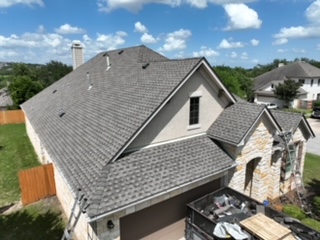
Let’s talk numbers. Asphalt shingles cost around $3.50 to $5.50 per square foot installed. Metal roofing runs about $7 to $12 per square foot. That gap scares off a lot of homeowners at first glance.
But price per square foot only tells half the story. Shingles last 15 to 25 years in Texas heat and storms. Metal roofs last 40 to 70 years, sometimes longer. That means you might replace your shingle roof two or three times before a metal roof needs its first replacement.
Here’s a quick side-by-side:
- Lifespan: Shingles last 15-25 years. Metal lasts 40-70 years.
- Maintenance: Shingles need regular upkeep. Metal needs very little.
- Energy savings: Shingles offer minimal savings. Metal roofing can cut cooling costs by up to 25%.
- Resale value: Shingles add modest value. Metal roofing adds significantly more.
When you spread the cost of a metal roof over its full lifespan, it often costs less per year than shingles. That is the real math behind whether a metal roof is worth it in Texas.
Why Texas Weather Changes the Equation
Texas is not one climate. It is several climates squeezed into one state. That matters when you pick a roof.
Hail Alley in North Texas
North Texas and the Panhandle sit in what many call hail alley. Storms here can drop hail the size of golf balls, or bigger. A metal roof with a Class 4 impact rating stands up to this punishment far better than shingles. Many insurance companies also offer discounts for impact-resistant roofing in these areas.
Hurricanes on the Gulf Coast
Homes near Houston and the coast face a different threat: wind. Metal roofing, especially standing seam styles, can handle winds over 140 mph when installed correctly. That is a serious edge during hurricane season.
Heat Across Central Texas
Central Texas deals with brutal, sustained heat. Metal reflects sunlight instead of absorbing it like shingles do. This keeps attics cooler and takes pressure off your air conditioner. Lighter colors reflect even more heat, which matters a lot in a Texas summer.
The Financial Upside of a Metal Roof
Energy savings add up fast in Texas. The U.S. Department of Energy notes that cool roofs, including many metal roofs, can lower cooling demand by 10 to 15%. Over a hot Texas summer, that adds up on your electric bill.
Insurance savings matter too. Many Texas insurers offer lower premiums for roofs rated to resist hail and wind damage. Ask your insurance company about discounts before you choose a roofing material. It could shift the cost comparison in metal’s favor.
Resale value is another piece of the puzzle. Homes with metal roofs often sell for more than homes with aging shingles. Buyers see a metal roof and think fewer repairs, lower bills, and years of peace of mind.
Types of Metal Roofing for Texas Homes
Not all metal roofs look or perform the same way. Picking the right type matters just as much as picking metal over shingles.
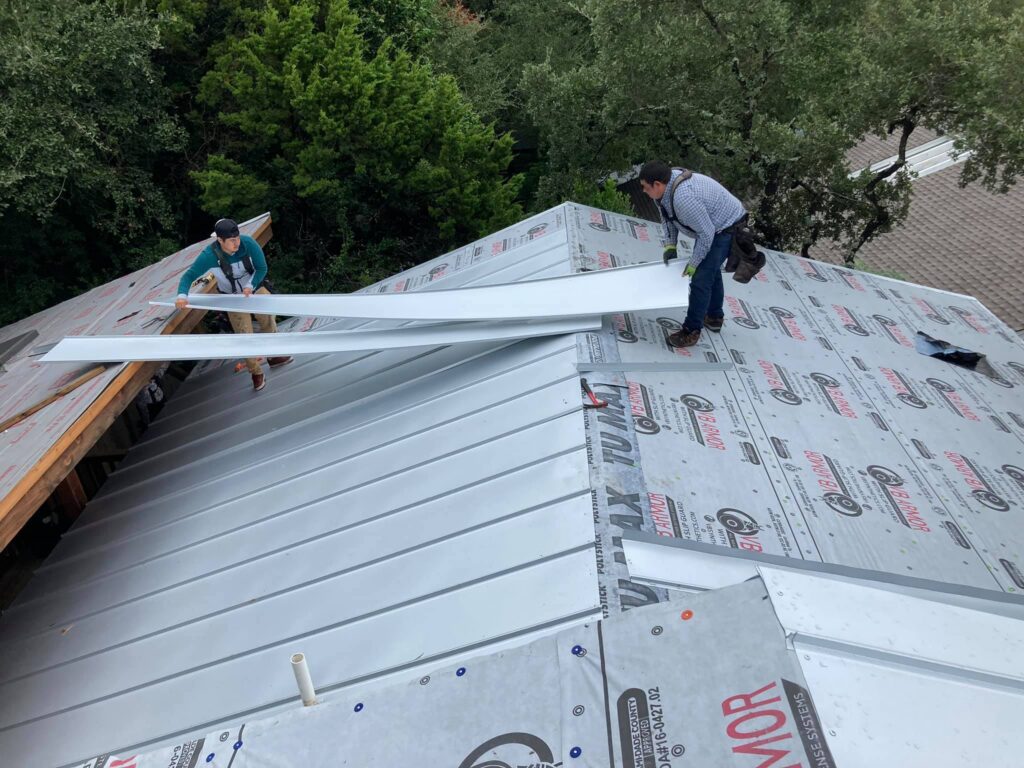
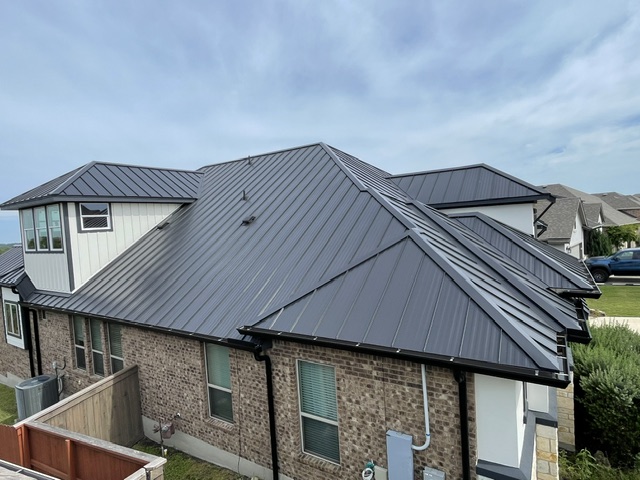
Standing seam metal roof is the most popular choice for Texas homes. For homeowners considering a metal roof replacement Austin, standing seam systems are especially attractive because the fasteners are concealed, helping the roof handle wind and rain while maintaining a clean, modern appearance.
Exposed fastener panels cost less upfront. They work fine for garages, barns, or budget builds. But the exposed screws can loosen over time, so they need more upkeep.
Stone-coated steel mimics tile or shake shingles. It gives you the classic Texas look with the strength of metal underneath. This is a strong pick if your neighborhood has strict style rules.
Gauge matters here too. Lower numbers mean thicker, tougher metal. A 24-gauge panel resists dents better than a 29-gauge panel. Ask your contractor what gauge they plan to use before you sign anything.
Common Myths About Metal Roofs
A lot of homeowners hesitate because of old myths. Let’s clear a few up.
Metal roofs are not loud. Modern installations use solid decking and underlayment, so rain sounds no louder than it does on a shingle roof. Metal roofs also do not rust easily. Today’s panels come with galvanized or galvalume coatings built to resist corrosion, even in humid Gulf Coast air.
And metal roofs are not boring anymore. Colors, panel styles, and finishes have exploded in the past decade. You can match almost any home style, from a modern build to a classic Texas ranch.
The Downsides You Should Know
No roof is perfect, and metal has its own trade-offs. The upfront cost is the biggest one. Not every homeowner has the budget for a jump from shingles to metal, even with long-term savings on the table.
Poor installation causes most metal roof problems. Leaks, oil canning, and loose panels almost always trace back to a rushed or inexperienced install. This makes your choice of contractor just as important as your choice of material.
If you plan to sell within a year or two, you may not fully recoup the cost. In that case, weigh your timeline honestly before committing to a metal roof.
How to Choose the Right Contractor
Look for roofing contractors in Austin with real experience installing and repairing metal roofing, not just shingles. If your existing system is leaking, damaged by hail, or has loose panels or flashing issues, working with a contractor experienced in metal roof repair Austin can help determine whether the roof can be repaired or if replacement makes more sense.
A contractor who knows Texas weather will guide you toward the right gauge, seam type, and color for your area. That local knowledge often makes the difference between a roof that lasts decades and one that fails early.
Conclusion
So, is a metal roof worth it in Texas? For most homeowners, the answer is yes. You get a roof built for hail, heat, and hurricanes, all things Texas throws at you every year. It costs more upfront, but it saves you money over time through energy bills, fewer repairs, and possible insurance discounts.
Every home and budget looks different, though. The best way to know for sure is to get your roof checked by someone who knows Texas weather and Texas homes. That’s exactly what we do at Altitude Roofs. Reach out today, and let’s find the right roof for your home and your budget.
Areas We Serve
Altitude Roofing is based in Austin, and we install and repair metal roofs across Central Texas. Our crews know how local weather, from Hill Country hail to Austin heat, affects roofing choices in each community we serve.
We proudly serve homeowners in Austin, Round Rock, Cedar Park, Georgetown, and Pflugerville. We also work in Dripping Springs, Bee Cave, Driftwood, Lakeway, and Buda. Our coverage extends to Kyle, San Marcos, New Braunfels, Leander, and Wimberley, plus Dripping Springs neighbors like Blanco, Canyon Lake, and Johnson City.
No matter where you are in our service area, you get the same free inspection and honest advice. If you don’t see your city listed, give us a call. There’s a good chance we already work in your neighborhood.
Frequently Asked Questions
Is a metal roof worth it in Texas if I plan to sell my home soon?
It can still help, since buyers value durability and lower bills. You may not recoup the full cost if you sell within a year or two. But a new metal roof still boosts curb appeal and resale value.
How long does a metal roof last in Texas?
Most metal roofs last 40 to 70 years with proper installation. That is two to three times longer than asphalt shingles in the same climate. Regular inspections help you get the most out of that lifespan.
Does a metal roof lower my insurance costs?
Often, yes. Many Texas insurers offer discounts for roofs with strong wind or hail ratings. Ask your provider directly, since discounts vary by company and region.
Can I install a metal roof over my existing shingles?
In many cases, yes, since metal panels are lightweight. This can save money by skipping a full tear-off. A licensed contractor can confirm if your roof structure supports it.
Are metal roofs noisy during rain or hail?
No, not with proper installation. Solid decking and underlayment absorb most of the sound. Most homeowners say it sounds about the same as a shingle roof.