 Skip to content
Roof decking (also called roof sheathing) is the layer of plywood or OSB panels nailed directly to your home’s rafters or trusses. Everything above it – underlayment, shingles, metal panels, flashing – depends on it for support. Decking needs to be replaced when it becomes soft, rotted, swollen, delaminated, or can no longer hold nails properly. In Austin, the most common causes are long-term leaks, poor attic ventilation, and storm or hail damage – and the full extent is often only visible after the old roof is torn off.
Key Takeaways
- Roof decking is the structural foundation of your roof – not just “the wood under the shingles”
- Decking and sheathing are the same thing; both terms are used interchangeably
- Most damage is caused by moisture: leaks, attic condensation, and poor ventilation
- Sound decking does not need to be replaced during a re-roof – only damaged sections do
- In Austin, extreme heat and inadequate ventilation accelerate decking failure
- Storm-damaged decking is often covered by homeowners insurance
- A reputable contractor will quote a per-sheet price for decking before work begins, so there are no surprises after tear-off
What Is Roof Decking?
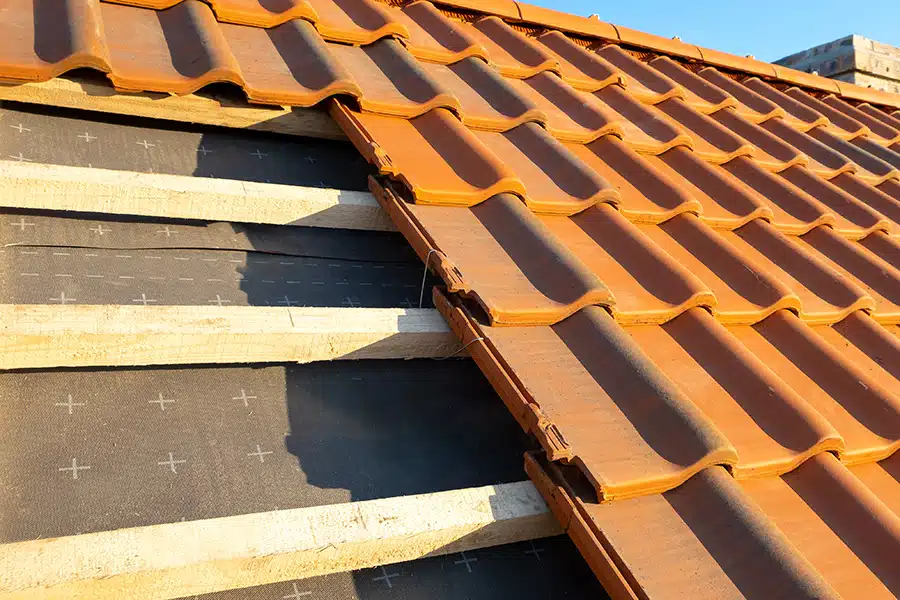
Every roof you see from the street is actually a system of layers, and roof decking is the layer doing the structural heavy lifting. It’s the flat surface of wood panels fastened directly to your home’s rafters or trusses. Underlayment, leak barriers, and your shingles or metal panels all sit on top of it.
Think of it like the subfloor in your house. You never see it, but if it rots, your hardwood buckles and your tile cracks. The same principle applies to your roof: when decking fails, shingles lose their grip, underlayment can’t seal, and the whole system is compromised.
One note on terminology: you’ll hear roofers use “decking” and “sheathing” interchangeably. They mean the same thing. (The only exception is commercial construction, where “decking” sometimes refers to corrugated metal panels – not relevant for residential homes.)
Where Roof Decking Sits in Your Roofing System
Your roof works as a stack of layers, each one depending on the one below it. Here’s the full assembly from the framing upward:
- Rafters or trusses – the structural skeleton of the roof
- Roof decking – the solid nailing surface (the focus of this guide)
- Underlayment – a water-resistant or waterproof membrane (felt or synthetic)
- Ice and water shield – self-adhering membrane at valleys, eaves, and penetrations
- Shingles or metal panels – the visible weatherproofing layer
- Flashing, drip edge, and ventilation – the details that keep water out and air moving
When any layer below the shingles fails, everything above it fails too. That’s why the condition of your decking is often the deciding factor in whether a roof repair in Austin will solve your problem – or whether a full replacement is the honest answer.
Types of Roof Decking Materials
Most Austin homes built after the 1970s have sheet decking (plywood or OSB). Older homes – common in neighborhoods like Hyde Park, Clarksville, and parts of East Austin – may still have plank decking.
| Material | Typical Thickness | Pros | Cons | Common In |
| OSB (Oriented Strand Board) | 7/16″–1/2″ | Most affordable, consistent quality, code-compliant | Edges swell permanently when wet | Most Austin homes built after 1990 |
| CDX Plywood | 1/2″–5/8″ | Better moisture resistance, holds nails longer | Costs 15–25% more than OSB | Higher-end builds, moisture-prone areas |
| Plank / Board Sheathing | 1×6 or 1×8 boards | Extremely durable when dry, found in historic homes | Gaps may not meet modern code, labor-intensive to repair | Pre-1970s Austin homes |
| Tongue & Groove | 1×6 or 1×8 | Premium strength, can be left exposed | Expensive, slow to install | Luxury and custom Hill Country homes |
OSB vs. plywood – which is better for Austin? Both meet structural code requirements. Plywood handles moisture better and is more dimensionally stable in humidity. OSB costs less and performs well when the roof has proper attic ventilation. In Central Texas’s heat-driven climate, ventilation matters more to decking life than the panel type – which is a point we’ll come back to.
What Causes Roof Deck Damage in Austin?
Decking is designed to last decades, but Austin’s climate works against it in specific ways:
1. Long-term leaks. Water that gets past failing flashing, cracked shingles, or backed-up gutters soaks into the decking. Wood that repeatedly gets wet and dries out eventually swells, delaminates, and rots. Leaks around chimneys, valleys, and pipe penetrations are the usual suspects – one reason chimney flashing repair shouldn’t be put off.
2. Poor attic ventilation. This is the silent killer in Central Texas. Many older Austin homes weren’t built to modern ventilation standards. Heat and moisture trapped in the attic bake the underside of the decking, accelerating deterioration from below. Poor ventilation can take years off your decking’s life before you ever notice a symptom.
3. Extreme heat and UV. Austin’s summer roof surface temperatures regularly exceed 150°F. Sustained heat dries and embrittles wood, weakens adhesives in OSB, and stresses every layer of the system through daily thermal expansion and contraction.
4. Hail and storm damage. Central Texas sits in one of the country’s most active hail corridors. Hail that bruises shingles can also crack decking, and wind-driven rain forces water into places it doesn’t belong.
5. Age and previous repairs. Decking on a 25–30 year old roof has survived decades of wet-dry cycles. And DIY patches or cut corners from a previous installer (skipped underlayment, wrong fasteners) often surface years later as decking problems.
Signs Your Roof Decking Needs to Be Replaced
Because decking is hidden, you have to read the symptoms. Some are visible from your attic; others only appear during a professional inspection or tear-off.
Signs you can check from the attic:
- Dark water stains or discoloration on the underside of the decking
- Visible sagging or dipping between rafters
- Black spots, mold, or a musty smell
- Daylight showing through gaps that aren’t intentional vent openings
- Soft spots you can flex by pressing upward gently
Signs visible from outside:
- A wavy, uneven, or newly sagging roofline
- Shingles that look buckled or out of alignment
- Recurring leaks or ceiling stains in the same location
Signs found during tear-off:
- Panels that crumble, flake, or delaminate when walked on
- Wood that a screwdriver pushes through with little resistance
- Fasteners that spin freely or won’t hold
- Rotted sections around chimneys, valleys, and penetrations
A safety warning: if you suspect soft decking, do not walk on the roof. A compromised deck may not support your weight. This is a job for a professional with the right equipment.
Does All the Decking Need to Be Replaced With a New Roof?
No – and you should be skeptical of any contractor who says otherwise without evidence. Sound, solid decking should stay in place. In a typical Austin re-roof, we replace only the damaged panels, which often means somewhere between two and eight sheets.
Full re-decking is justified only when:
- Damage is widespread (common after long-undetected leaks)
- The existing deck can’t provide a solid nailing surface
- You’re switching roofing materials (for example, from wood shakes to shingles, which require solid sheathing)
- The existing decking doesn’t meet current code
Replacing every panel “just to be safe” adds thousands in unnecessary cost. Covering damaged decking to save money creates warranty and safety problems. The honest answer is always based on what tear-off actually reveals.
Why Decking Damage Is Often Discovered After Tear-Off
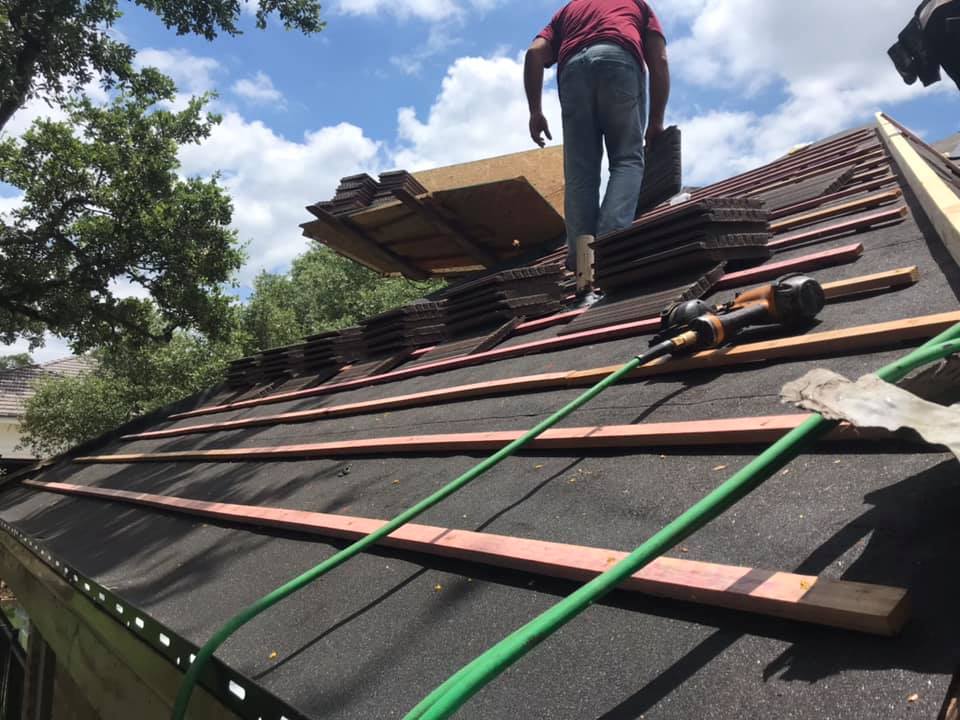
This surprises homeowners, but it’s completely normal: underlayment and shingles hide the top of the deck, and attic insulation hides the bottom. Neither a ground-level inspection nor an attic check can see everything. Tear-off is the first moment the entire deck is exposed – which is exactly why trustworthy estimates include a per-sheet decking price agreed upon before work starts.
At Altitude Roofing, when we find damaged decking during a tear-off, we photograph it, show it to you, and get your approval before replacing a single panel. No surprise line items, no vague allowances.
Roof Decking and Building Codes
The International Residential Code (IRC) requires asphalt shingles to be fastened to a solid, nailable deck. Key requirements include:
- Minimum deck thickness of 3/8″ (most modern installs use 7/16″ OSB or 1/2″ plywood)
- APA-rated sheathing panels
- Plank decking gaps no wider than 1/8″
- Proper nailing patterns – typically ring-shank nails at 6″ on edges and 12″ in the field
Installing new shingles over defective or out-of-spec decking can also void your manufacturer warranty – including GAF warranties, which is one reason we document deck condition on every project we install. As a GAF Master Elite contractor, we follow manufacturer decking requirements to the letter so your full warranty stays valid.
What Does Roof Decking Replacement Cost ?
Decking replacement is priced per sheet (a standard sheet is 4×8 feet). Your final cost depends on how many sheets need replacement – something only tear-off confirms.
| Item | Typical Austin Range |
| OSB replacement (materials + labor, per sheet) | $75 – $125 |
| CDX plywood replacement (per sheet) | $100 – $150 |
| Full re-deck (200-sheet average home) | $4,000 – $8,000+ |
| Rafter/truss repair (if framing is damaged) | Priced separately after inspection |
A note on older Austin homes: houses with plank decking sometimes need an overlay of OSB or plywood across the entire roof to create a uniform nailing surface for modern shingles. If your home was built before 1970, ask your contractor to check for this during the estimate.
Will Insurance Cover Roof Decking Replacement?
Often, yes – if the damage came from a covered event. When hail or wind damages your roof and an inspection documents compromised decking, the decking replacement is typically included in the claim. Some policies also include ordinance or law coverage, which pays to bring the deck up to current code during a covered replacement.
What insurance generally won’t cover is decking that deteriorated from age, neglect, or poor ventilation – that’s considered maintenance.
This is where working with a contractor who understands both sides of the table matters. Our owner is a licensed all-lines insurance adjuster in addition to being GAF Master Elite certified. If your decking damage traces back to a storm, our roof insurance claim help in Austin covers exactly how we document damage, meet your adjuster on-site, and make sure nothing gets undervalued.
One more Texas-specific reminder: most policies require claims to be filed within one year of the storm event. If you suspect hail damage, don’t wait.
Can Damaged Decking Be Repaired Without Replacing the Roof?
Sometimes. If the damage is localized – say, one soft panel above a chimney – a targeted repair can replace that section and restore the waterproofing around it. Whether it makes sense depends on the roof’s age, the extent of the damage, and whether the surrounding roofing is still serviceable.
If the roof is already near the end of its life, repairing decking underneath it is usually throwing good money after bad. The decking conversation almost always belongs inside the bigger repair vs. roof replacement decision.
Find Out What’s Under Your Roof
Roof decking is the silent foundation of everything above it, and in Austin’s climate – heat, hail, and aging ventilation in older homes – it’s under more stress than most homeowners realize. The good news: damaged decking is fixable, often covered by insurance when storm-related, and only ever replaced based on documented evidence rather than guesswork.
At Altitude Roofing,family-owned roofing company serving Austin and Central Texas decking evaluation is a standard part of every inspection and every tear-off. We document what we find, show you photos, quote per-sheet pricing upfront, and never replace a panel without your approval. Whether you need a small repair, a metal roof replacement in Austin, or help with a metal roofing system built on a solid deck.
Frequently Asked Questions About Roof Decking
Is roof decking the same as roof framing?
No. Framing (rafters and trusses) is the skeleton that carries loads and gives the roof its shape. Decking is the surface attached on top of the framing that everything else fastens to.
How long does roof decking last?
When kept dry and properly ventilated, plywood and OSB decking can last 40–50 years or more. Chronic moisture exposure – the most common issue in Austin – can cut that lifespan dramatically.
Can wet decking dry out and be saved?
Sometimes, if the moisture source is fixed quickly. But wood that has swollen, delaminated, rotted, or lost its ability to hold fasteners needs replacement regardless of whether it eventually dries.
Does a ceiling stain mean my decking is rotten?
Not necessarily. A stain confirms a moisture history, not current structural condition – but it absolutely warrants a professional inspection.
Can new shingles be installed over old or soft decking?
No. Shingles need a solid, nailable surface. Installing over compromised decking means poor wind resistance, premature failure, and a voided manufacturer warranty.
Is OSB or plywood better for roof decking?
Both are code-compliant. Plywood handles moisture better; OSB costs less. In Austin’s climate, proper attic ventilation matters more to decking longevity than which panel you choose.
How do I know if my Austin home has plank decking?
Homes built before roughly 1970 often have 1×6 or 1×8 boards instead of sheet panels. An attic inspection is the easiest way to confirm – and to check whether the gaps meet modern code.
Why is decking listed as an “extra” on my estimate?
Because the full extent of hidden damage can’t be confirmed until tear-off. A per-sheet unit price agreed on in advance keeps this transparent and manageable.
