 Skip to content
Bear Creek, TX Roofing Expert
Storm Damage Roof Repair in Bear Creek, TX
Storms can leave Bear Creek homes with damaged shingles, displaced ridge caps, broken flashing, fallen branches, damaged gutters, and other roofing problems that are not always obvious from the ground. Altitude Roofing provides storm damage roof repair in Bear Creek, TX, helping homeowners assess the damage, understand the appropriate repair or replacement options, and restore the roof after wind, hail, falling branches, or severe weather.
Whether you live on a wooded acreage property or in a Bear Creek subdivision, we start with a conversation about what happened and determine whether an onsite storm damage assessment is the right next step.
Schedule Your Free Storm Damage Evaluation Call
Please fill out the form below to schedule your roof inspection. Our team will contact you within 24 hours to confirm the details.
- Speak directly with a licensed insurance adjuster about your claim.
EXCELLENTTrustindex verifies that the original source of the review is Google. A pesar de la lluvia se logró la instalación en un solo día!!!Posted on GoogleTrustindex verifies that the original source of the review is Google. Edwin answered the phone after hours and came out the next morning to do an emergency repair when we spotted damage from a leak.Posted on GoogleTrustindex verifies that the original source of the review is Google. Great company, Edwin explains everything really wellPosted on GoogleTrustindex verifies that the original source of the review is Google. Edwin responded quickly after we reached out and was extremely knowledgeable as to what our issue was. The fix was completed at the same time as the inspection. Thank you for such great customer service!Posted on GoogleTrustindex verifies that the original source of the review is Google. I just moved to Belterra. The dryer exhaust vent on the roof came up on the inspection. I notified Edwin with Altitude and he promptly came out and fixed it at no charge. We appreciate the service even though we were not the owners that paid for new roof. Thanks!Posted on GoogleTrustindex verifies that the original source of the review is Google. If you’re a homeowner in the Dripping Springs area dealing with roof issues — storm damage, a nagging leak, or a full replacement — do yourself a favor and call Altitude Roofing. I don’t write reviews often, but my experience here was genuinely exceptional and I felt like I had to share it. Trust is everything when someone’s working on your home, and Altitude Roofing earned mine immediately. From the first conversation to the final walkthrough, everything was upfront and consistent. No hidden fees, no surprise add-ons, no runaround — just honest, straightforward communication the whole way through. A lot of that comes down to Edwin Nichols, the owner, who handled my project personally. Edwin knows roofing inside and out, and what really set him apart was how he managed the insurance side of things. If you’ve ever tried to navigate a homeowner’s insurance claim for roof damage, you know it can feel completely overwhelming. Edwin took that stress off my plate entirely. He knew exactly how to document the damage, what the insurance company needed to see, and how to communicate with the adjuster to make sure nothing was missed or shortchanged. He was professional, thorough, and clearly had done this many times before. I walked away with a settlement that actually covered the work — and I’m confident I wouldn’t have gotten there on my own. Beyond the insurance process, Edwin is just a pleasure to work with. He answered every question I had in plain English, never made me feel pressured, and gave me his honest recommendation rather than just telling me what I wanted to hear. The fact that he’s the owner and still shows up personally, stays involved, and follows through after the job is done says a lot about the kind of company Altitude Roofing is. The crew was equally impressive — on time, efficient, and they cleaned up completely when they were done. The finished roof looks great and feels solid. I’ve already sent neighbors Edwin’s way, and I’d recommend Altitude Roofing to anyone without hesitation.Posted on GoogleTrustindex verifies that the original source of the review is Google. Super helpful and thorough with our inspection. Made a path forward easy to understand.Posted on GoogleTrustindex verifies that the original source of the review is Google. I called Altitude after noticing a leak in my roof when it was raining. The owner Edwin took my call and agreed to come check it out as soon as the weather passed as we have a metal roof. Edwin was honest about what repairs were necessary to the roof and chimney and even told me I could do it myself if I wanted to get the supplies from Home Depot but I wanted it done right so I went through with his services. He did a great job and patched everything up for me. Would recommend to anyone in need of roofing repairs or installation.Posted on GoogleTrustindex verifies that the original source of the review is Google. Had them come out to assess a ventilation issue in my attic and couldn't be more impressed. Incredibly knowledgeable, responded fast, and didn't waste my time. They identified the problem quickly and walked me through several options to fix it. No upselling, no runaround, just straight answers and solid solutions. Would highly recommend to anyone needing roofing or ventilation work done right.
What We Assess After a Storm in Bear Creek
Branch impact and surface damage
The primary assessment priority on older Bear Creek rural properties after a significant wind event. We document the full impact zone crushed or displaced shingles, decking condition at the strike area, fascia and soffit damage at the overhang line and then work outward to assess secondary storm stress at surrounding flashing transitions that were exposed to the same wind event.
Hail impact - shingle bruising and granule loss
The primary damage type on Bear Creek Estates subdivision homes after a qualifying hail event. We assess all planes for impact bruising and displaced granules. On older rural acreage properties where granule reserves are depleted from age and UV exposure, the same hailstone produces more surface damage per impact than on a newer roof. Each property type requires a different baseline characterization before damage attribution.
Wind displacement - ridge caps and shingle edges
On older Bear Creek rural homes where sealant strips have aged over 30 to 50 years, wind speeds that leave newer subdivision roofs intact can lift ridge caps and edge shingles on exposed planes. Displaced ridge caps create immediate water entry points. On properties where branch drop occurred, wind displacement at ridge and edge is often documented on the same visit as the structural impact damage.
Flashing failure at storm-stressed transitions
Older Bear Creek custom homes have chimney, skylight, dormer, and valley transitions that have been through decades of thermal cycling. A significant wind or hail event applies additional stress at every one of these points. We inspect all flashing transitions on every Bear Creek rural storm visit — not just the ones that are visibly adjacent to the primary damage zone.
Gutter and fascia damage
Hail and branch impact both produce documentable damage to gutters and fascia that is often part of an insurance claim scope. On older Bear Creek rural properties, gutter systems that have been partially blocked by canopy debris may have been under additional stress during the storm event from overflow and weight. We document gutter and fascia condition on every storm inspection.
Our Storm Damage Roof Repair Process in Bear Creek
We make the roof repair process straightforward from the beginning. We start with a free roof evaluation call to understand your leak, damage, or other roofing concern and determine the right next step. When an onsite assessment is needed, we’ll explain any applicable inspection fee before scheduling, then evaluate the affected roofing system and provide a clear recommendation and written proposal. Once you approve the work, our in-house team completes the repair and finishes with a final walkthrough and applicable warranty documentation.
Step 1
Free Storm Damage Evaluation Call
We start with a conversation about what happened, when the storm occurred, and what damage you've noticed. This helps us determine the right next step.
Step 2
Onsite Assessment When Needed
When an onsite assessment is appropriate, our team evaluates the roof and accessible storm-affected components, documents relevant damage, and explains any applicable inspection fee before scheduling.
Step 3
Detailed Damage Assessment
We explain what we found, document the affected areas, and recommend whether the appropriate solution is repair, replacement, or another roofing service.
Step 4
Professional Storm Damage Repair
Once you approve the work, our in-house team completes the agreed repair or replacement according to the project scope.
Step 6
Final Walkthrough
After the work is completed, we review the finished project with you and provide applicable warranty documentation.
Roofing Services After Storm Damage in Bear Creek
Storm damage can affect more than one part of a roofing system. Altitude Roofing provides related roofing services for Bear Creek homeowners when storm damage involves repairs, replacement, or specific roofing components.
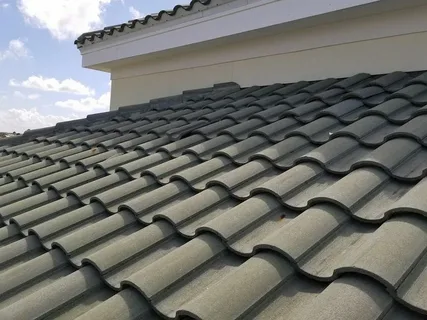
Tile Roof Repair & Replacement
Storms can crack or displace roof tiles and damage the flashing or underlayment beneath them. Altitude Roofing provides tile roofing services for Bear Creek properties with tile systems that need storm-related repair or replacement.
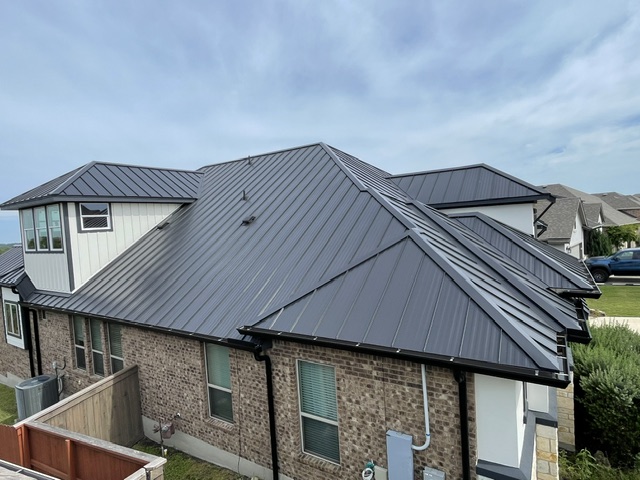
Metal Roof Repair & Replacement
Metal roofs can experience storm-related panel damage, loose fasteners, flashing problems, and other issues. Altitude Roofing also provides metal roofing services for Bear Creek homeowners who need repair or replacement of a metal roofing system.
Shingle Roof Repair & Replacement
Hail and wind can damage asphalt shingles, ridge caps, and exposed edges. Altitude Roofing provides shingle roofing services for homeowners who need localized repairs or a complete shingle roof replacement following storm damage.


Chimney Flashing Repair
Storms can expose weaknesses around chimney flashing and other roof-to-wall transitions. Altitude Roofing provides chimney flashing repair for Bear Creek homeowners experiencing water intrusion around a chimney.
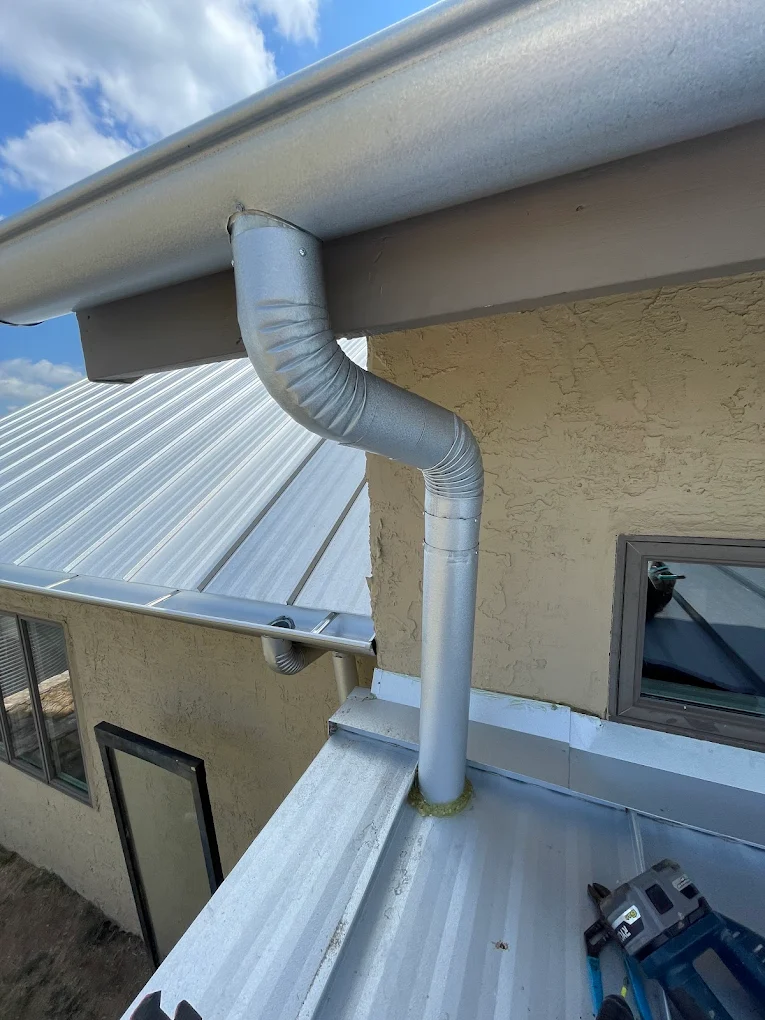
Gutter Installation & Replacement
Hail, branches, and heavy runoff can damage gutters and fascia during storms. Altitude Roofing provides gutter installation and replacement for Bear Creek properties where storm damage affects the drainage system.
Storm Damage Insurance Claims in Bear Creek
Edwin meets your adjuster on-site
With an all-lines insurance adjuster license and HAAG certification, Edwin attends the adjuster visit on Bear Creek properties and walks them through every documented damage point. If a settlement does not reflect the full scope, we prepare supplement documentation before installation begins.
Prior-condition challenge on older rural homes
Carriers will attempt to attribute storm damage findings on older Bear Creek acreage properties to deferred maintenance. HAAG inspection methodology distinguishes storm-event damage from pre-existing wear at every component. This is the documentation that holds up when a carrier disputes the claim.
Clean claim advantage on Bear Creek Estates homes
Standard subdivision homes without complicated prior-condition histories present the clearest storm damage documentation. Adjuster challenges about pre-existing wear are less applicable. If the damage is there, the claim is straightforward.
Document before any cleanup
On Bear Creek rural properties where branch impact is the primary damage mechanism, the debris itself is part of the documentation. Do not clear branches or debris before an inspection. We can tarp for emergency protection while documenting.
How Storm Damage Works Differently on Bear Creek Properties
Branch Drop and Direct Structural Impact on Rural Acreage
The older acreage properties along Bear Creek Road and Fitzhugh Road carry mature live oak and cedar that overhang the rooflines on large rural lots. These are not ornamental suburban trees managed at a distance from the structure. Many have canopies that extend directly over sections of the roof, and their branches are large enough to cause structural damage when a wind event brings them down.
A branch impact on an older Bear Creek rural property is not the same documentation event as hail on a subdivision home. It produces visible surface damage crushed or displaced shingles, compromised decking at the impact zone, damaged fascia or soffit at the overhang line but it can also mask or accompany secondary damage at nearby flashing transitions that were stressed by the same wind event. A thorough storm inspection on these properties works outward from the primary impact zone to assess whether the same storm produced additional compromise at chimney, skylight, and valley transitions on the same roof.
Prior-Condition Complexity on Older Acreage Homes
Older Bear Creek rural properties have repair histories that create prior-condition complexity on insurance claims. A carrier will attempt to attribute storm damage findings to deferred maintenance particularly on a steep-pitch multi-plane roof where flashing wear, shingle aging, and general weathering have accumulated over decades. The counter is HAAG-methodology documentation that identifies storm-event damage separately from pre-existing wear at every component assessed.
Edwin Nichols has held an all-lines insurance adjuster license since 2006 and follows HAAG engineering inspection standards. On older Bear Creek acreage properties, the inspection report distinguishes what the storm did from what was already there and that distinction is what holds up when a carrier pushes back on the claim.
Newer Bear Creek Estates Homes: Clean Claims, Undocumented Prior Seasons
Subdivision homes in Bear Creek Estates and similar communities built in the 2000s and 2010s do not carry the prior-condition complexity of older rural properties. Standard architectural shingles at 10 to 20 years old in a southwest Travis County storm corridor present clean storm damage documentation — impact bruising is unambiguous and the claim picture is clear. Many of these homes have been through Central Texas storm seasons without a professional post-event inspection. If prior season damage is present and within the insurance filing window, a current inspection documents it alongside any current event damage.
Frequently Asked Questions - Storm Damage Roof Repair in Bear Creek
What should I do after storm damage to my Bear Creek roof?
Avoid climbing onto the roof yourself. If it is safe, document visible damage from the ground and contact a roofing professional. Altitude Roofing starts with a storm damage evaluation call to understand what happened and determine whether an onsite assessment is needed.
Should I repair or replace my roof after storm damage?
It depends on the extent of the damage and the overall condition of the roofing system. Localized storm damage may be repairable, while widespread damage or significant deterioration may make replacement more practical. An onsite assessment can help determine the appropriate solution.
I have a Bear Creek Estates home. Can I still file a claim for storm damage from a year or two ago?
Possibly, if the damage is within your policy filing window. Most Texas homeowner policies allow one year from the storm event. If prior season hail or wind damage on your Bear Creek Estates home has never been professionally assessed, an inspection now can determine whether any of it is documentable and within that window. We check prior season conditions alongside any current event damage on every inspection.
Does Altitude Roofing serve the Bear Creek area?
Yes. Bear Creek is in southwest Travis County, about 15 minutes from our office in the 78737 zip code. We serve Bear Creek and surrounding communities throughout southwest Austin and the Hays County corridor regularly.
How long does a storm damage inspection take on an older Bear Creek rural property?
Typically 60 to 90 minutes on a complex older rural property with multiple roof planes, chimneys, and skylights. More than on a standard subdivision home, because thorough documentation of all penetration transitions and the full impact zone takes more time. We do not rush post-storm inspections on these properties incomplete documentation weakens the claim.
How much does storm damage roof repair cost in Bear Creek?
Costs depend on the type and extent of damage, roofing material, accessibility, and required work. We provide a written proposal based on the specific condition of the property. If an onsite assessment is needed, we’ll explain any applicable inspection fee before scheduling.
Serving Bear Creek and Nearby Central Texas Communities
Altitude Roofing serves Bear Creek and nearby Central Texas communities, including Dripping Springs, Driftwood, Bee Cave, Lakeway, West Lake Hills, Austin, and surrounding areas. Our team helps homeowners address storm and hail damage, roof leaks, repairs, replacements, and other roofing needs based on the property’s specific condition.
Protect Your Bear Creek Home After Storm Damage
If wind, hail, falling branches, or another storm event has affected your roof, start with a conversation about what happened and what you’ve noticed. We’ll understand the situation and determine whether an onsite storm damage assessment is the right next step.
If an onsite assessment is needed, we’ll explain the inspection process and any applicable fee before scheduling.