Skip to content
Hail falls hard in Central Texas. Golf ball sized ice can wreck a roof in minutes. Many homeowners wonder, can metal roofs handle Texas hail without breaking apart?
The short answer is yes. Metal roofs handle Texas hail better than almost any other material on the market today. However, not all metal roofs are built the same. A thin, cheap panel will fail where a thick, quality one stands strong.
Austin sits in the middle of a hail alley. Storms here bring wind, rain, and ice all at once. Your roof needs to survive all three.
If you are thinking about upgrading to a roof built for Central Texas hail, learn more about our metal roofing Austin options, including standing seam systems designed for local weather conditions.
The Short Answer
Can metal roofs handle Texas hail? Yes, they can. A quality standing seam metal roof with a Class 4 impact rating will outperform asphalt shingles in almost every hailstorm Central Texas sees.
Why Texas Hail Is Worse Than Most People Think
Texas sits in the middle of hail alley. Central Texas sees some of the biggest hailstones in the country. Austin, Dripping Springs, and Lakeway all get hit hard every spring. Wind often drives the hail sideways, which makes the impact even worse.
Hail season here runs from March through September. The worst storms usually hit in April and May. A single storm can drop ice the size of golf balls or bigger.
The National Weather Service records dozens of severe hail events in our area every year. Some storms produce hail larger than two inches across. That size of ice falls with enough force to crack windshields and dent car hoods. Your roof takes the same beating.
Roofing contractors in Austin see the worst damage in May. That is when warm Gulf air clashes with cold fronts from the north. The result is violent storms with large hail and tornadic winds.
How Hail Actually Damages a Roof
Hail damage depends on three things. Size matters most. Speed matters too, because wind drives the ice faster. The angle of impact changes how hard the roof gets hit.
Asphalt shingles crack and lose granules when hail strikes. The fiberglass mat underneath bruises and breaks. Water sneaks in later, long after the storm ends.
Metal roofs react differently. Thick steel or aluminum dents instead of cracking. The surface may show a ding, but the seal stays intact. That is why metal roofs handle Texas hail so much better than shingles.
Tile roofs can crack under large hail too. Wood shakes split apart. Only metal consistently takes the hit and keeps protecting your home.
Speed makes small hail dangerous too. A pea sized stone driven by sixty mile per hour wind hits like a bullet. That is why wind matters as much as size.
Not All Metal Roofs Are Equal
A cheap metal roof will dent easily. Thin panels, usually 29 gauge, fold under serious impact. Exposed fastener systems have weak points at every screw head. Hail can strike those screws directly and cause leaks over time.
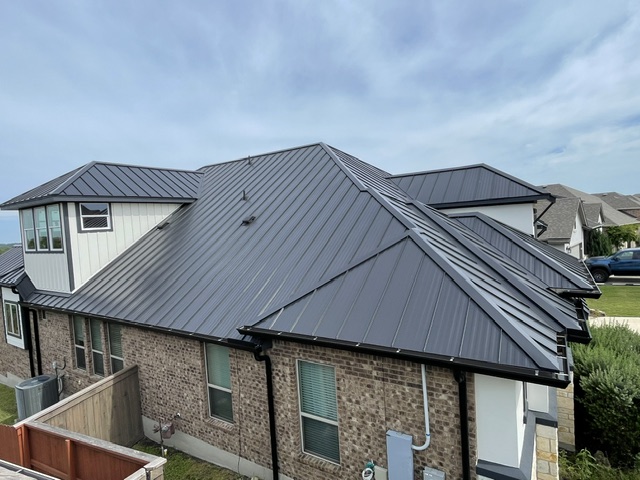
On the other hand, a 24 gauge standing seam metal roof is built tough. The panels interlock and hide the fasteners. This design spreads the force of impact across the whole system.
Homeowners considering a metal roof replacement Austin should pay close attention to panel gauge, fastening systems, and impact ratings, especially in hail-prone areas of Central Texas.
Here is what to look for in hail resistant roofing:
- 24 gauge steel or heavy aluminum
- Standing seam panel design
- Class 4 impact resistant rating
These three features make the biggest difference. They separate a roof that survives from one that needs repair. Always ask your roofing contractor about gauge and rating before you buy.
Gauge numbers work backwards. A lower number means thicker metal. Twenty four gauge is thick and rigid. Twenty nine gauge is thin and flexible, which is bad news in a hailstorm.
Paint matters too. A quality PVDF coating resists UV and minor scratches. Cheap paint chalks and fades within a few Texas summers.
What Does Class 4 Impact Resistant Mean?
UL 2218 is the test that matters. Labs drop a two inch steel ball from twenty feet onto the roofing material. To earn Class 4, the roof cannot crack, split, or open up. This is the highest impact rating available today.
Many insurance companies offer discounts for Class 4 roofs. You can save ten to thirty percent on the wind and hail portion of your premium. Ask your agent about discounts for impact resistant roofing.
Not every metal roof comes with this rating. You have to ask for it specifically. Your contractor should provide documentation from the manufacturer. If they cannot show you the certificate, you are not getting a Class 4 roof.
Some manufacturers test their whole system, not just the panel. That includes underlayment, fasteners, and trim. A system level test gives you better real world protection.
Steel vs Aluminum: Which Handles Hail Better?
Steel is harder than aluminum. It resists dents better when hail strikes. Most Austin homeowners choose steel standing seam for this reason. It holds up against everything except the rare softball sized stone.
Aluminum dents more easily because it is softer. However, it will never rust. That makes it a smart pick for homes near Lake Travis or other humid areas. Both materials beat asphalt shingles by a wide margin.
In short, steel wins on dent resistance. Aluminum wins on corrosion resistance. Either way, you get a roof that outlasts shingles in Texas weather.
Some homeowners ask about copper. Copper is beautiful but soft. It dents very easily in hail. We rarely recommend copper for hail prone areas like Central Texas.
Galvalume coated steel offers the best of both worlds. It resists corrosion better than standard galvanized steel. That is why most standing seam roofs in Austin use Galvalume.
What Does Hail Damage Look Like on a Metal Roof?
Most hail damage on metal is cosmetic. You will see small dents on the flat parts of the panels. These dings look bad, but they rarely cause leaks.
Functional damage is rare, yet possible. Large hail can puncture thin metal at weak spots, loosen exposed fasteners, or crack sealant at the seams. If you notice leaks, damaged panels, or other storm-related problems, professional metal roof repair Austin can determine whether individual areas can be repaired or whether more extensive work is needed.
Check your gutters and downspouts after a storm. Dented gutters mean your roof was in the hail field too. Do not climb on the roof yourself, because wet metal is slick and dangerous.
Look at your outdoor furniture and fence posts. If they show dents, your roof was hit. Take photos of everything from the ground. Date stamp the images for your insurance claim.
Can Metal Roofs Handle Texas Hail Better Than Asphalt Shingles?
Shingles absorb hail impact and crack underneath. The granules wash off, and the fiberglass mat breaks apart. You cannot always see this damage from the ground. Meanwhile, metal roofs handle Texas hail by denting instead of cracking.
A dented metal panel still sheds water. A cracked shingle does not. Over time, that difference saves you thousands in repair costs.
Metal also lasts longer in Austin heat. Asphalt shingles bake in the sun and get brittle. Brittle shingles break easier when hail hits. A metal roof stays strong for forty to sixty years, even in Texas.
Insurance companies know this difference. Many offer lower premiums for metal roofs with Class 4 ratings. The savings help offset the higher upfront cost over time.
Does Insurance Cover Hail Damage on Metal Roofs?
Insurance covers sudden storm damage, not age or wear. If hail punctures your metal roof or loosens the fasteners, your policy should pay. Cosmetic dents alone may not qualify. Some policies now exclude cosmetic damage, so read your declarations page carefully.
Class 4 impact resistant roofs often trigger discounts. Many Texas insurers reward homeowners who invest in stronger materials. The savings can add up over the life of the roof.
Document everything after a storm. Take photos of your gutters, fence posts, and outdoor furniture. Date stamp the images. Then call a local roofing contractor for a professional inspection before you file a claim.
In Texas, you typically have one year to file a claim. Do not wait too long. Memories fade and evidence disappears quickly after a storm.
Schedule a roof inspection with our team to document hail damage the right way.
Conclusion
Can metal roofs handle Texas hail? Yes, they can, and they do it better than any other material on the market. The key is choosing the right gauge, the right profile, and the right installer. Cheap panels and exposed fasteners will let you down when the storm hits.
At Altitude Roofing, we install standing seam metal roofs built for Central Texas weather. We are a GAF Master Elite roofing contractor in austin with over twenty years of local experience. Our crew knows how to build a roof that lasts through hail, heat, and high winds.
If you want to learn more, read our post on Is a metal roof worth it in Texas. Ready to talk about a new roof? call Altitude Roofs for a free inspection. We serve Austin, Dripping Springs, Lakeway, Bee Cave, and all of Central Texas. No pressure, no gimmicks, just honest answers about your roof. We treat every home like it is our own. That is the Altitude Roofing difference.
FAQs
Can metal roofs handle Texas hail better than shingles?
Yes. Metal dents but rarely cracks, while shingles break apart and let water in. A quality metal roof protects your home longer and needs fewer repairs after storms.
Will golf ball sized hail dent my metal roof?
It might leave small dents on flat panels. However, a 24 gauge standing seam system will not puncture or leak from golf ball hail. The damage stays cosmetic in almost every case.
Do I need a Class 4 impact rating in Austin?
You do not need it by law, but it is smart. Class 4 metal roofing earns insurance discounts and handles the worst hail Central Texas can throw at it.
Should I repair dents on my metal roof?
Cosmetic dents do not affect performance. You can leave them alone. If the coating is scratched, touch up the paint to prevent rust.
How soon after a hailstorm should I inspect my metal roof?
Check the ground level right away. Call a pro within a few days if you suspect damage. In Texas, you have one year to file an insurance claim, but sooner is always better.