Skip to content
If you’ve spotted a water stain near your chimney, you’re not alone. Chimney flashing leaks are one of the most common roof problems we see across Austin. They sneak up on homeowners. One day your ceiling looks fine. Next, there’s a brown ring spreading near the fireplace wall.
Austin’s weather is tough on roofs. Hot summers, sudden storms, and hail all take a toll. Your chimney sits right in the middle of that stress. This guide breaks down why chimney flashing leaks happen so often here, and what you can do about it.
What Is Chimney Flashing, and Why Does It Matter?
Flashing is a thin metal barrier. It seals the gap where your chimney meets your roof. Without it, water would pour straight into your attic every time it rains.
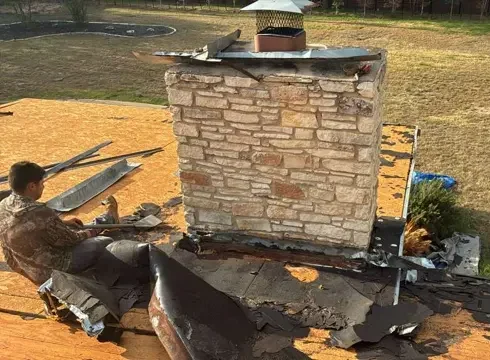
Most flashing systems use two parts working together. Step flashing runs along the sides of the chimney, tucked under each shingle row. Counterflashing sits above it, cemented into the mortar joints. Together, they push water down and away from the seam instead of letting it soak in.
Roofers use metals like galvanized steel, aluminum, or copper. Each one holds up differently under Austin sun and rain. Cheap or mismatched materials tend to fail years before the rest of your roof.
Why Austin’s Climate Makes Chimney Flashing Leaks So Common
This is the part most guides skip. Austin doesn’t just get rain. It gets extreme. And extremes are hard on metal and sealant.
Summer heat pushes roof surface temps well past 150°F on a sunny day. That heat makes the flashing expand. Then it cools fast at night and contracts again. Do that for years, and fasteners loosen. Seals crack. Small gaps open up right where you need a tight seal most.
Central Texas also sits in a heavy hail zone. A single spring storm can dent flashing or lift its edges just enough to let water in. Add Austin’s habit of long dry spells followed by sudden downpours, and you get a perfect setup for trouble. Sun-baked sealant meets a wall of water it was never built to hold back.
There’s one more factor people rarely mention: soil. Austin sits on expansive clay that swells and shrinks with moisture. That movement can shift your chimney’s masonry just slightly. Over time, this stress pulls at the flashing’s connection to the brick, breaking the seal from the inside out.
Common Causes of Chimney Flashing Leaks
Climate sets the stage, but installation quality decides the outcome. A well-installed system can survive years of Texas weather. A rushed one won’t last a single season.
Here are the mistakes we see most often on Austin roofs:
- Flashing installed with reverse overlaps, so water runs the wrong way
- Sealant used alone, with no real step or counterflashing underneath
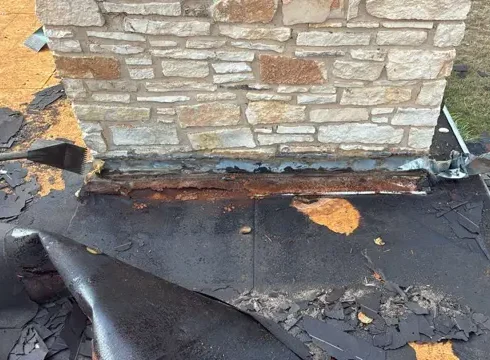
- Mismatched metals touching each other, causing corrosion
- Flashing sized too small to meet minimum overlap standards
- Cracked or missing counterflashing at the mortar line
- Old flashing left in place through multiple re-roofs
Any one of these can start a leak. Combine two or three, and it’s only a matter of time.
Signs You Have a Chimney Flashing Leak
Most leaks don’t announce themselves with a dramatic drip. They show up quietly, and they get worse the longer you wait. Watch for these warning signs.
Water stains on the ceiling or wall near the chimney are the clearest clue. A musty smell in the attic often means moisture has been sitting for a while. You might also notice rust streaks running down the chimney or shingles below it. From the ground, bent or lifted flashing is sometimes visible with a pair of binoculars.
Inside, check the chimney masonry itself. Damp bricks or a white, chalky buildup called efflorescence both point to water getting where it shouldn’t.
Why Small Leaks Turn Into Big Repairs
Water is patient. It doesn’t stop at the flashing. It follows the path of least resistance, often running along framing before it ever shows up as a stain.
By the time you see damage on your ceiling, the leak has usually been active for weeks or months. That means rotted decking near the chimney chase. It means soaked insulation, which stops doing its job and drives up your summer cooling bills. In the worst cases, it means mold growing quietly in the attic where nobody looks.
A flashing repair costs a fraction of what structural repairs cost later. Catching chimney flashing leaks early is one of the cheapest decisions a homeowner can make.
How Chimney Flashing Repair Actually Works
A proper repair starts with a full inspection, both from the attic and up on the roof. This step matters. You can’t fix what you can’t find.
From there, our team removes the damaged flashing completely. Patching over old, corroded metal never lasts. New step flashing gets woven into the shingle courses, and counterflashing gets set directly into the mortar joints, not just caulked on top of them. Sealant plays a supporting role here, not the main one. Mechanical overlap does the real work of keeping water out.
If you’re dealing with an active leak right now, our chimney flashing repair in Austin, TX team can assess the damage and walk you through exactly what’s needed.
Preventing Future Chimney Flashing Leaks
Prevention beats repair every time. A few simple habits go a long way in Austin’s climate.
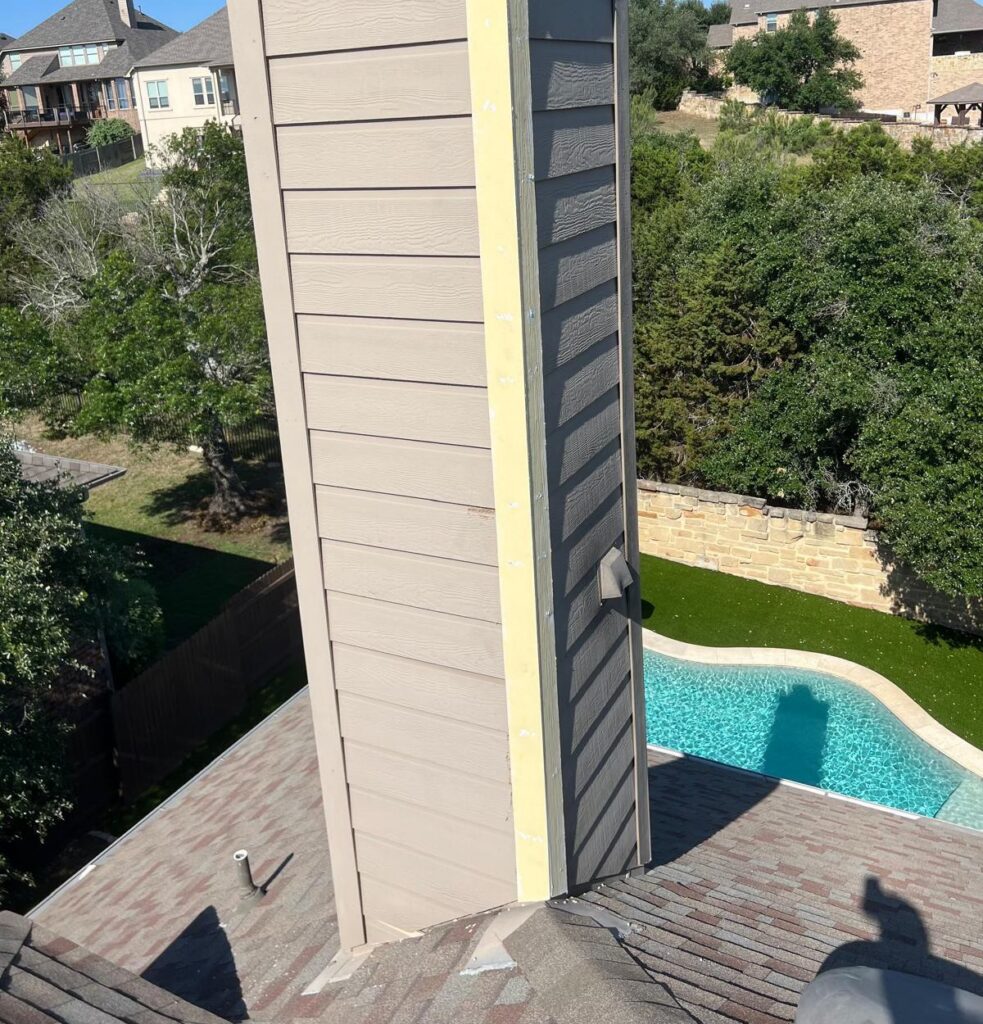
Check your roof after any major hailstorm. Schedule a professional look before summer heat peaks and again after it breaks. If you’re planning a re-roof, replace the flashing too, even if it looks okay. Old flashing rarely matches the lifespan of new shingles. Regular roof inspections in Austin, TX catch small flashing issues before they become expensive ones.
Repair or Replace? How to Decide
Not every flashing problem needs a full replacement. A little rust or a small gap can often be repaired on the spot.
Cracked, separated, or heavily corroded flashing is a different story. That calls for full replacement. And if water is already showing up inside your home, don’t wait for a quote. Get it looked at right away.
Conclusion
Chimney flashing leaks are common in Austin for a reason. Heat cycling, hail, sudden storms, and shifting soil all stack up against this one small seam on your roof. The good news is that most chimney flashing leaks are preventable with the right materials and a proper installation.
If you’ve noticed stains, rust, or a musty smell near your chimney, don’t wait for it to spread. The team at Altitude Roofing has spent years repairing chimney flashing leaks across Austin homes, and we know exactly where Texas weather likes to find weaknesses.Contact us today for an inspection, and let’s stop that leak before it turns into a bigger problem.
Frequently Asked Questions
How much does chimney flashing repair cost in Austin?
Costs vary based on the extent of damage and the metal used. Minor repairs often run a few hundred dollars. Full replacement costs more but prevents repeat leaks and bigger repairs down the road.
How long does chimney flashing last?
Quality flashing typically lasts 20 to 30 years. Austin’s heat cycles and hail can shorten that. Regular inspections help you catch wear before it becomes a leak.
Can I fix the chimney flashing myself?
Small sealant touch-ups are possible for handy homeowners. Full flashing repair involves roof access, mortar work, and precise metal fitting. Most people are better off hiring a pro.
Does insurance cover chimney flashing leak damage?
Storm and hail damage is often covered under most homeowner policies. Damage from age or poor installation usually isn’t. A roofing inspection report helps support any claim you file.
How often should I have my chimney flashing inspected?
Once a year is a good baseline for most Austin homes. Add an extra check after any severe hailstorm or major windstorm to catch damage early.