Skip to content
A Central Texas storm can go from dark clouds to serious roof damage in under an hour. Hail the size of a golf ball, straight-line winds, and falling branches are not rare here. They show up every spring, and sometimes more often than that.
When it happens to your home, the first 24 hours matter more than most people realize. The decisions you make right after the storm can protect your home from further damage, but they also determine whether your insurance claim succeeds or fails. This guide walks you through exactly what to do in the right order from the moment the rain stops to the point where a professional crew is on your roof.
If you are in Austin, Dripping Springs, Driftwood, Bee Cave, Lakeway, or anywhere in the surrounding area, this applies directly to you.
Step 1: Wait Until It Is Actually Safe to Go Outside
Do not rush outside the second the rain slows down. Texas storms often come in waves. A brief break can be followed by a second cell that is just as strong as the first. If there is lightning nearby, wait it out.
Once conditions are clear, start your initial check from the ground. Grab binoculars if you have them. You can see a lot from the yard: missing shingles, lifted ridge caps, displaced flashing, and debris sitting on the roof. That ground-level pass gives you a rough idea of what you are dealing with before you make any calls.
Do not climb onto the roof yourself. Wet shingles are slippery. Storm damage can compromise the structural integrity of sections you cannot see from the outside. A professional roof inspection is the right next step.
Step 2: Check Inside Before You Do Anything Else
Start in the attic. Look for wet insulation, dark water stains on the decking, or any sign that water came through. Then work your way down and check all ceilings on the top floor.
New water stains matter. If a stain was not there before the storm, that is potential insurance evidence. A ceiling stain does not always sit directly under the entry point because water travels along rafters and beams before it drips. So check a wider area around anything you find.
If water is actively coming in, use buckets and plastic sheeting to protect floors and furniture. That is the right call. Just do not let interior cleanup lead you to start patching or sealing things yourself before documentation is complete. That step comes next, and the order matters.
Step 3: Document the Damage Before You Touch Anything
This step is where most homeowners make a costly mistake. They clean up first, then call the insurance company. By that point, the evidence that establishes the storm as the cause of the damage is gone.
Your phone camera is the most important tool you have right now. Here is what to photograph:
- Hail on the ground or in gutters (hail melts fast, get these photos immediately)
- Fallen branches or debris on or near the roof before anything is moved
- Any visible damage on the roof surface, flashing, vents, or gutters
- Interior ceiling stains and attic damage
- Anything else that shows what the storm left behind
Photo timestamps matter. Your insurance company can use metadata to confirm the photos were taken on the day of the storm. Make sure your phone’s date and time settings are correct.
The goal is to document the property in the condition the storm left it. That evidence connects the damage to the weather event, which is what insurance coverage is based on. Cleaning up or making repairs before this step weakens your position significantly.
Step 4: Protect Your Home From Further Damage
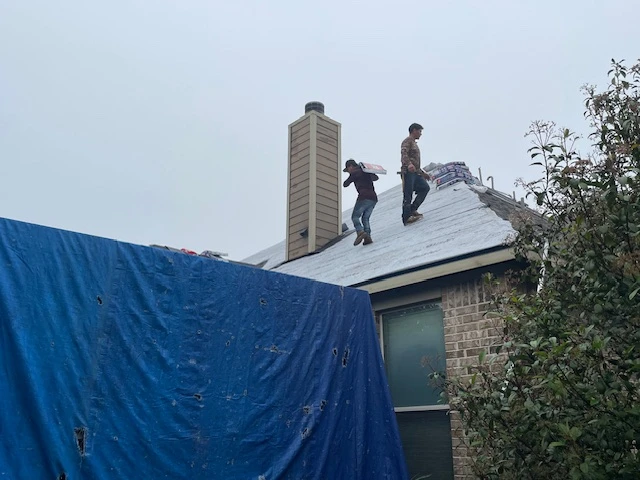
If your roof has an exposed area, water will find it during the next rain. You do not have to wait for a contractor to do something about that. Basic emergency tarping is something homeowners can handle on single-story roofs with a standard-pitch slope.
A heavy-duty plastic tarp from a hardware store, weighted down with sandbags or secured at the edges, is a legitimate short-term solution for smaller exposed areas. The goal is to keep water out until professional emergency roof repair can happen.
One important note: emergency protection costs are typically covered under your homeowner’s policy as part of the claim. Keep receipts for any materials you purchase. Document the tarped area with photos before and after.
What not to do: do not climb onto sections you cannot safely reach, and do not attempt to remove large debris from the roof yourself. Weight distribution after storm damage can be unpredictable.
What Does Emergency Storm Damage Repair Cost?
Costs vary widely depending on how much of the roof was affected. A contained repair, a section of missing shingles, a flashing failure, a small area of decking typically runs a few hundred to a few thousand dollars. If the storm caused widespread damage, insurance adjusters and roofers alike may determine that a full replacement makes more sense than a patchwork repair. If you’re weighing repair versus replacement, our guide to roof replacement cost in Austin breaks down full pricing by size and material.

Step 5: Contact Your Insurance Company and Know What to Say
What Counts as a Covered Event in Texas
Storm damage from wind, hail, falling trees, and storm-related water intrusion is covered under most Texas homeowner policies. These are classified as sudden events, which is the standard for coverage. What is not covered is gradual wear, deferred maintenance, or pre-existing damage that predates the storm.
The documentation from Step 3 is what establishes the connection between the storm and the damage. That connection is exactly what an adjuster is looking for.
How Long Do You Have to File in Texas?
Most Texas policies require you to file a storm damage claim within one year of the event. Some carriers have shorter windows, sometimes as little as 180 days for wind and hail coverage specifically. Do not assume you have a full year. Check your policy or call your agent as soon as possible.
Filing promptly also protects you if the damage turns out to be more extensive than it looked at first. Roofs often have secondary damage to gutters, fascia, soffits, and vents that only shows up on a thorough professional inspection.
What to Expect from the Adjuster Visit
Once you file, an insurance adjuster will schedule a visit to assess the damage. You should be there. Better yet, have your roofing contractor there with you. A contractor who understands how adjusters evaluate storm damage can walk them through every documented point and make sure nothing is missed or misclassified.

When It’s Time to Call a Professional for Storm Damage Roof Repair
The steps above will get you through the first day safely. But once the immediate danger has passed, most storm damage needs a professional crew, not a DIY fix to actually repair it correctly and keep your warranty and insurance claim intact. Our storm damage roof repair team handles everything from emergency tarping through full storm-damage restoration, and we coordinate directly with your insurance adjuster so the scope of repair matches what the documentation supports.
If the damage is widespread with multiple sections of missing shingles, structural exposure, or repeated leak points a full replacement is often the more cost-effective path than a series of repairs. See our roof replacement cost guide above for what that typically involves.
Watch Out for Storm Chaser Contractors
After any significant hail event in Central Texas, out-of-town roofing crews show up fast. They go door to door through affected neighborhoods within 24 to 48 hours, sometimes offering to start work the same day.
This is not a Central Texas rumor. It is a documented pattern. These contractors are often unfamiliar with local codes and disappear once the job is done, leaving homeowners with no recourse if something goes wrong. Some use assignment of benefits agreements, which transfer your insurance claim rights to the contractor. Signing one of those before you fully understand it can seriously complicate your ability to manage your own claim.
A legitimate local roofing company in Austin is already in your area before the storm hits. They have a physical address, manufacturer certifications (like GAF Master Elite), verifiable reviews going back multiple storm seasons, and the ability to stand behind their work long after the job is complete. That is what you should be looking for.
What to Do If Your Insurance Claim Gets Denied
A denial is not always the final word. Storm damage claims are denied most often because the documentation did not clearly establish the storm as the cause, not because the damage is not real.
If your claim is denied, start by requesting the specific reason in writing from your insurer. In many cases, a supplemental claim with additional documentation, more detailed photos, a professional inspection report, or weather-event data for your address and date directly addresses the stated reason for denial and can lead to a reversal.
Do not accept a denial without understanding why it was issued. A single call to a qualified roofer who understands how adjusters evaluate storm damage can clarify whether a supplemental claim or appeal is worth pursuing.
How to Tell How Urgent Your Situation Is
Not all storm damage is the same level of emergency. Here is a simple way to think about it:
- Water actively entering the home: same-day response needed
- Visible structural damage or a large exposed area: same-day tarping at minimum
- Hail bruising and granule loss with no active leak: urgent but not same-day, schedule within the week
- Minor shingle lift or flashing displacement: schedule within a few days
Even if there is no active leak right now, do not put off the inspection. The next rainfall after undocumented storm damage is when interior damage begins. The roof is compromised. It just has not shown you yet.
Why Central Texas Homeowners Deal With This More Than Most
The Austin corridor sits in one of the more active hail zones in the United States. The Hill Country geography plays a role. Storm systems moving northeast off the Edwards Plateau intensify as they gain speed across open terrain before hitting the Southwest Austin corridor and the communities around it.
Spring storm season runs roughly from March through June. That is the peak window for hail, straight-line winds, and the fast-moving supercell thunderstorms that cause the most roof damage in this region. Dripping Springs, Driftwood, Bee Cave, Lakeway, and Buda sit directly in that corridor.
If your home is in the 78737 zip code or anywhere in Southwest Austin, you are not in a low-risk area. A professional inspection after any significant storm event is not an overreaction. It is basic protection.
The Right Steps Make the Difference
Emergency roof repair is not just about stopping the damage. It is about doing things in the right order so your home is protected and your insurance claim holds up. Safety first. Then document. Then protect. Then call.
Central Texas storms are not going anywhere. But the homeowners who know what to do after one hits are in a significantly better position than those who figure it out as they go. Now you know what to do.
If your roof took a hit and you are not sure what you are dealing with, the safest move is a free professional inspection. At Altitude Roofing, we cover the full Southwest Austin corridor and surrounding communities. Our team documents damage the way insurance adjusters need to see it, and we meet your adjuster on-site to make sure nothing is missed.
Frequently Asked Questions About Emergency Roof Repair
How do I know if my roof needs emergency roof repair after a storm?
If water is actively entering your home, you have visible missing shingles, or a branch has hit your roof, you need emergency attention today. Even if nothing looks obvious from the ground, a professional inspection after any significant storm is the right call. Hail damage and flashing failure often have no visible signs until the next rainfall.
Will my homeowners insurance cover emergency roof repair in Texas?
Yes, in most cases. Texas homeowner policies cover storm damage from wind, hail, fallen trees, and storm-related water intrusion as sudden covered events. The key is proper documentation that connects the storm event to the specific damage. Gradual wear or deferred maintenance is not covered, which is why post-storm documentation matters.
Can I do temporary roof repair myself while waiting for a contractor?
You can safely tarp a small, accessible area on a single-story roof with a standard pitch. Use a heavy-duty tarp and secure it well. Keep your receipts because emergency protection is typically reimbursable under your claim. Do not attempt to work on steep sections, damaged structural areas, or anything you cannot safely reach from a stable ladder.
What is a storm chaser contractor and how do I avoid one?
Storm chasers are out-of-town roofing crews that travel to storm-hit areas and go door to door offering quick repairs. Many are unfamiliar with local codes, and some use assignment of benefits agreements that can compromise your insurance claim rights. Look for a local company with a physical address, manufacturer certifications, and reviews that go back more than one storm season.
What happens if my storm damage insurance claim gets denied?
A denial is not always final. Most storm claims are denied because the documentation did not clearly establish the storm as the cause, not because the damage is not real. Request the specific reason for denial in writing, then work with your roofing contractor on a supplemental claim with additional documentation. Properly structured supplemental claims and appeals have reversed denials for Central Texas homeowners.
How long does storm damage roof repair take in Texas?
A contained repair, a section of missing shingles or a flashing fix is often completed in a single day once a crew is on site. More extensive storm damage, or anything involving an insurance claim and adjuster visit, typically takes one to three weeks from initial inspection to completed repair, depending on how quickly the claim is processed.
Is it an emergency if I have storm damage but no active leak yet?
Yes, treat it as urgent even without an active leak. Hail bruising, lifted shingles, and damaged flashing often don’t leak immediately, but they compromise the roof’s protection. The next significant rainfall after undocumented storm damage is frequently when interior damage begins, so a professional inspection within days, not weeks, is the safer call.