Skip to content
A leaking roof never fixes itself , and every rainy day you wait, water is quietly damaging insulation, drywall, and even your home’s framing. The good news: most roof leaks are caused by small, localized problems (a cracked shingle, bad flashing, a clogged valley) that you can often repair yourself in an afternoon.
In this guide, we’ll walk you through exactly what to do when your roof is leaking, how to find the true source of the leak, how to repair it step by step , including how to stop a roof leak from the inside as a temporary fix , and how to decide when it’s time to call a professional roofer.
What to Do Immediately When Your Roof Starts Leaking
Before you grab a ladder, stop the water from spreading inside your home:
- Contain the water. Place buckets or towels under the drip. Move furniture, electronics, and anything that can be damaged.
- Relieve a bulging ceiling. If water is pooling behind drywall, place a bucket under the bulge and carefully poke a small hole in the center. This releases the water in a controlled spot instead of letting the ceiling collapse.
- Take photos. Document everything for insurance purposes , especially if the leak follows a storm.
- Don’t ignore it. Even a small leak can lead to mold within 24–48 hours and structural damage within weeks.
Common Causes of a Leaking Roof
Knowing why roofs leak helps you find the problem faster. Here are the most common culprits:
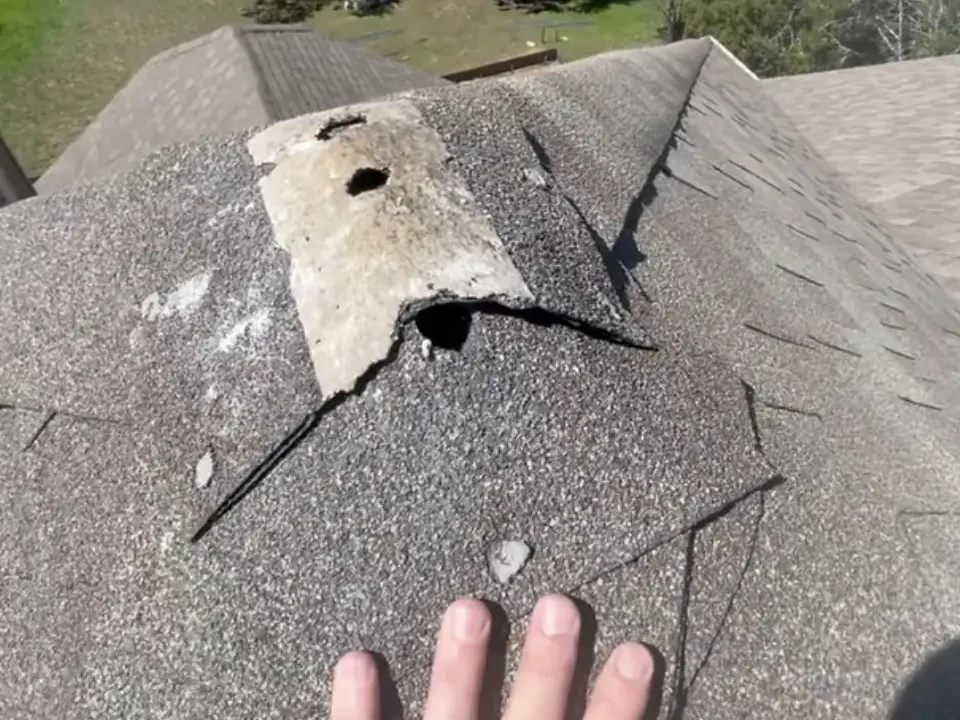
- Damaged or missing shingles – wind, hail, and age crack, curl, or blow shingles off
- Failed flashing – the metal around chimneys, vents, walls, and skylights corrodes, separates, or was installed wrong
- Clogged gutters – water backs up and gets under the roof edge
- Worn pipe boot / vent seals – the rubber gasket around plumbing vents dries out and cracks (one of the most common leak sources)
- Roof valleys – debris collects where two slopes meet, trapping water
- Skylight leaks – often actually a flashing problem, not the skylight itself
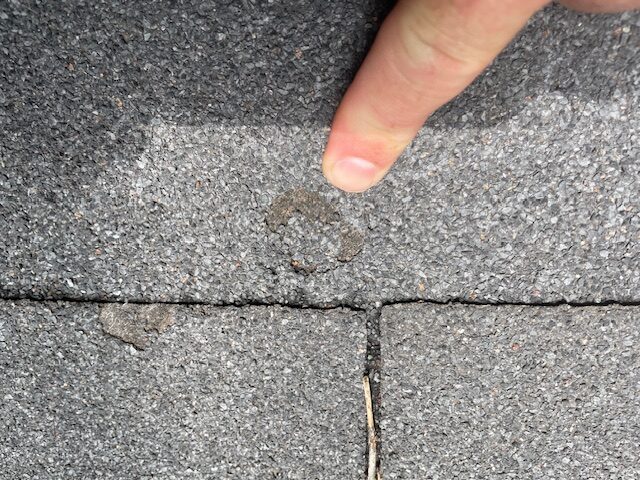
- Nail pops and holes – nails backing out or old satellite/antenna mounting points
- Age and heat damage – in Central Texas, extreme sun can bake shingles brittle years before their rated lifespan
How to Find a Roof Leak (The Hard Part)
The hardest part of roof leak repair isn’t the repair , it’s finding the leak. Water almost never drips straight down; it travels along rafters, sheathing, and insulation before showing up inside. The stain on your ceiling may be 5–10 feet away from the actual entry point.
1. Start in the Attic
Go up with a bright flashlight during or right after rain:
- Look for wet insulation, dark stains, mold, or water trails on the underside of the roof deck
- Follow any stains uphill along rafters , water runs down, so the entry point is above the highest point of the trail
- Check around vents, chimneys, and valleys first (they’re the most common sources)
2. Do a Hose Test (If You Can’t Find It)
On a dry day, have one person spray sections of the roof with a garden hose while another watches the attic:
- Soak one area for about 15 minutes, then check
- Work from the bottom of the roof upward so you don’t accidentally “seal over” the leak with water running downhill
- Mark the spot the moment water appears
3. Inspect from Outside
Look uphill from the interior stain for missing granules, cracked or curled shingles, lifted flashing, exposed nail heads, or debris buildup.
Tools and Materials You’ll Need
- Safety gear: sturdy ladder, non-slip shoes, gloves, safety harness for steep roofs
- Pry bar / flat bar
- Hammer and roofing nails (galvanized, 1¼–1½”)
- Utility knife
- Replacement shingles (match color and pattern)
- Roofing cement (in a caulk tube) and a caulk gun
- Flashing material and roofing tape (for patching)
- Chalk or marker
- Tarp and 2x4s (for emergency covering)
How to Fix a Leaking Roof: Step-by-Step Repairs
Replace a Cracked, Curled, or Missing Shingle
- Lift the tabs of the shingle row above the damaged one and pop the nails free with a pry bar (each shingle is nailed twice, about 6″ in from each end).
- Remove the damaged shingle and scrape away old roofing cement.
- Slide the new shingle in, aligning it with the surrounding rows.
- Nail it down through the nailing strip, then dab roofing cement over each nail head.
- Seal the tabs above with roofing cement and press them flat.
Reattach a Curled Shingle (Quick Fix)
If a shingle is curled but not cracked, spread roofing cement under the curled section, press it flat, and weigh it down with a brick for 24 hours. This works as a stopgap, but plan to replace the shingle , curled shingles usually mean the roof is aging.
Fix Leaking Flashing Around a Chimney, Vent, or Wall
- Clean the area , remove debris, old caulk, and rust.
- Check the step flashing , if metal pieces are bent, corroded, or missing, lift the overlapping shingles and slide in new flashing pieces, layering each one over the one below.
- Seal the joints with roofing cement or exterior-grade polyurethane sealant.
- Never rely on caulk alone on a large gap , sealant fails under UV exposure; proper flashing overlap is what keeps water out.
Repair a Leaking Pipe Boot
Plumbing vent boots often leak where the rubber cracks. Either replace the boot entirely (best) or install a rubber boot repair collar/sleeve over the existing one , it’s an inexpensive fix that solves one of the most common roof leaks.
Patch a Roof Hole or Small Area
For a puncture or small damaged area:
- Clean and dry the area.
- Cut a patch of matching shingle or roll roofing larger than the hole by at least 2″ on all sides.
- Apply a generous coat of roofing cement, press the patch down, and seal the edges.
- Cover the patch edges completely with cement , water wicks under exposed edges fast.
How to Stop a Roof Leak From the Inside (Temporary Fix)
Fixing a roof leak from the inside is an emergency measure only , it buys you time until a proper repair, ideally within days, not months.
- Locate the drip point on the underside of the roof deck (in the attic).
- Dry the area and scrape off loose material.
- Apply roofing tape or a bituminous patch over the leak point, or spread roofing cement and press a piece of plywood or tar paper over it.
- From outside, cover the area with a heavy tarp, tucked under the shingles above and secured with 2x4s, so water sheds over it.
Note: interior patches fail fast because the roof expands and contracts with heat , treat this strictly as a bridge to a real repair.
Quick Fixes for a Leaky Roof (When You Can’t Repair Right Now)
- Roofing tar/patch over small cracks , holds weeks to months
- Roofing tape on flashing seams and around vents , a good short-term seal
- Tarp the roof for anything larger than a few square feet
- Waterproof sealant in a caulk gun for nail pops and tiny gaps
How Soon Should You Fix a Roof Leak?
Immediately , and we mean it. Here’s why:
- Mold can begin growing in 24–48 hours in damp insulation and drywall
- Water saturates framing and sheathing, turning a $300 shingle repair into a $3,000+ structural repair
- Insurance can deny claims for damage deemed “neglect” after you knew about the leak
- Electrical wiring near the leak becomes a shock/fire hazard
If you can’t fix it within a day or two, at minimum tarp it and get a professional inspection scheduled.
Can You Patch a Roof Yourself? (DIY vs. Hiring a Pro)
You can safely handle roof leak repair yourself if all of these are true:
- The roof is low-slope and you can work safely (dry, not steep, solid footing)
- The damage is small (a few shingles, one boot, a flashing joint)
- You can match materials and follow proper sealing steps
- The roof is otherwise in good condition
Call a professional when:
- The leak source isn’t obvious after attic and hose inspection. If you’re having trouble locating the source, Altitude Roofing provides professional roof leak detection to help identify the underlying problem.
- Multiple areas are damaged or shingles are failing across the roof.
- Your roof is steep, high, wet, or fragile.
- Leaks keep returning, which may indicate an underlying issue with flashing, decking, or ventilation.
- You suspect storm or hail damage and need professional documentation.
No repair is worth a hospital trip , falls from roofs are one of the leading causes of serious home-injury incidents, and in Central Texas, roof surfaces in summer regularly exceed 150°F.
How Much Does Roof Leak Repair Cost?
Table
| Repair type | Typical DIY cost | Typical pro cost |
| Replace shingles | $50–150 | $150–400 |
| Pipe boot repair/replacement | $15–40 | $150–350 |
| Flashing repair | $50–150 | $300–800 |
| Patching (small area) | $30–100 | $200–500 |
| Emergency leak stop + inspection | , | $150–600 |
Rule of thumb: if professional repair quotes exceed roughly 30% of a full replacement and your roof is near the end of its life, replacement is usually the smarter money.
How to Prevent Future Roof Leaks
- Inspect twice a year (spring and fall) and after major storms
- Clean gutters , clogged gutters cause edge leaks and fascia rot
- Keep valleys and flashing clear of leaves, branches, and debris
- Trim overhanging branches , they scrape shingles and drop debris
- Check attic ventilation , heat and moisture buildup cooks shingles from below
- Don’t ignore small issues , one lifted shingle today is an interior stain next storm
- Schedule professional inspections annually , pros catch soft decking, failing boots, and hail bruising you can’t see from the ground
Frequently Asked Questions
What should I do if my roof is leaking?
Contain the water with buckets, relieve any bulging ceiling spots with a small puncture, take photos, and get the roof inspected within a day or two. Tarp the area if more rain is coming.
How do you find a leak in a roof?
Start in the attic during rain with a flashlight, looking for wet insulation or stains on the roof deck, and follow water trails uphill to their source. A controlled hose test on a dry day works when the attic shows nothing.
How do you stop a roof leak from the inside?
Dry the leak point on the roof deck, apply roofing cement or a self-adhesive bituminous patch, and reinforce with a board if needed. This is temporary , it only buys time until an exterior repair.
Can I patch a roof myself?
Yes, for small, localized damage on a safely accessible roof , replacing a few shingles or a cracked pipe boot is a reasonable DIY job. Anything steep, widespread, or recurring warrants a professional.
How long can you leave a leaking roof?
As little time as possible. Mold can start within 24–48 hours, and structural damage compounds fast. Even a slow drip gets expensive quickly.
Is a ceiling leak always a roof leak?
No , leaks can also come from plumbing, AC condensation lines, or bathrooms. The attic inspection usually settles it: water trails on the roof deck mean roof leak; dry decking points elsewhere.
Does homeowners insurance cover roof leak repair?
Usually yes if the leak is caused by a sudden event like a storm, hail, or fallen limb. Damage from neglect or age is typically excluded. Document everything and consider a professional inspection before filing.
How much does it cost to repair a leaking roof?
Small shingle or boot repairs typically run $150–$500 professionally; flashing and larger patches run $300–$800+. DIY material costs are often under $100.