 Skip to content
If you’ve ever looked across a standing seam metal roof and noticed subtle waves or ripples in the flat parts of the panels, you may have wondered whether something is wrong with the roof.
That appearance is commonly called oil canning.
Oil canning is a visible waviness or slight distortion that can occur in the flat areas of metal roofing panels. It is most noticeable on broad, relatively flat panel surfaces and can become more or less visible depending on sunlight, viewing angle, time of day, panel color, and finish.
For Austin homeowners considering standing seam or another architectural metal roof, understanding oil canning before installation can help set realistic expectations and lead to better decisions about panel design, material selection, and installation.
What Is Oil Canning in a Metal Roof?
Oil canning is the term used to describe visible waviness, rippling, or shallow distortion across the flat portion of a metal roofing panel.
It can appear in steel, aluminum, zinc, and copper roofing systems. The effect is often easier to notice when sunlight reflects across the surface at a particular angle. A roof can therefore look relatively smooth in the morning and show more visible waviness later in the day simply because the angle of the light has changed.
That can be confusing for homeowners who assume the roof has suddenly changed.
In many cases, the metal itself has not suddenly developed a new problem. The viewing conditions are simply making an existing surface variation easier to see.
Is Oil Canning a Problem With a Metal Roof?
Usually, oil canning is primarily an appearance issue rather than evidence of structural failure.
That does not mean every wavy-looking metal roof should be ignored. If the waviness is accompanied by loose panels, damaged seams, poor attachment, unusual movement, water intrusion, or other visible roofing problems, the roof should be evaluated to determine whether a separate installation or roofing issue is involved.
The important distinction is between normal visual variation in a metal panel and a condition that is affecting the performance of the roofing system.
A professional evaluation can help determine which situation you’re dealing with.
Why Does Oil Canning Happen?
There is rarely one single cause of oil canning.
The Metal Construction Association notes that production, material selection, panel design, fabrication, handling, installation, substrate conditions, and thermal movement can all influence the likelihood and visibility of oil canning.
Panel Width
Wide, flat panels tend to make surface waviness more noticeable because there is a larger uninterrupted area where small variations can be seen.
Panel width and profile should therefore be considered when selecting an architectural metal roof.
Metal Thickness
Metal thickness can influence panel stiffness, but it is not the only factor involved.
Simply choosing a thicker panel does not guarantee a perfectly flat appearance. Panel width, profile, substrate flatness, fabrication quality, installation practices, and thermal movement all need to be considered together.
Manufacturing and Roll-Forming
Metal roofing begins as material that is processed, slit, formed, and shaped into roofing panels.
Stresses introduced during manufacturing or roll-forming can contribute to visible waviness. That is one reason material quality and experienced fabrication matter when appearance is important.
Roof Deck or Substrate Conditions
The surface underneath the metal panels matters.
If the roof deck is uneven, bowed, or otherwise irregular, the metal panel may reflect those conditions after installation. A roofing system should therefore be evaluated for substrate flatness and preparation before the new metal panels are installed.
Fastener and Clip Installation
Standing seam systems are designed to move with changing temperatures. Installation methods that restrict intended movement or place unnecessary stress on the panels can contribute to distortion.
Clips, fasteners, seams, and related components should be installed according to the requirements of the selected roofing system and manufacturer.
Thermal Movement
Metal expands and contracts as temperatures change.
A standing seam roof needs to be designed and installed so the panels can accommodate the thermal movement expected for the system. Restricting that movement can increase stress on the panels and may contribute to oil canning.
Material Handling and Storage
Metal roofing panels can be affected before they are ever installed.
Improper storage, twisting, inadequate support, or rough handling can introduce stresses or distortion into the material. Following the manufacturer’s handling and storage requirements helps reduce avoidable problems.
Panel Alignment
Panels need to be installed in the correct position and alignment.
Forcing a panel into place or correcting significant misalignment through unnecessary stress can affect the finished appearance. Proper layout and installation are especially important on highly visible architectural roofs.
Why Does Oil Canning Look Worse at Certain Times of Day?
This is one of the most common questions homeowners ask after noticing waviness on a metal roof.
Metal has a reflective surface. When sunlight strikes a smooth panel evenly, the surface can appear relatively uniform. When the angle of the sun changes, slight variations in the panel can reflect light differently, making the same roof appear more wavy.
The viewing angle can have a similar effect.
That means a roof that looks smooth from the driveway in the morning may show more visible rippling from a different location in the afternoon.
Color and finish also matter. Darker colors and higher-gloss finishes can make surface variations more noticeable because reflected light creates greater visual contrast.
Is Oil Canning Common on Standing Seam Metal Roofs?
Oil canning can occur on metal panel systems generally, and it is especially noticeable where a roof has broad, flat panel areas.
Standing seam roofs are architectural systems with long panels and relatively large flat surfaces between the raised seams. Because of that design, homeowners may notice subtle waviness depending on the panel profile, width, finish, lighting, and installation conditions.
That does not mean every standing seam roof will have obvious oil canning.
The goal should be to minimize the visibility and contributing conditions, rather than promising that every panel will remain perfectly flat under every lighting condition. Industry guidance specifically notes that total prevention cannot be guaranteed.

Can Oil Canning Be Prevented?
There is no single technique that guarantees complete prevention.
However, careful decisions during product selection, fabrication, handling, roof preparation, and installation can reduce the likelihood or visibility of oil canning.
Some of the most important considerations include:
Choose an Appropriate Panel Profile
Panel geometry affects how much broad flat surface is visible. Profiles with ribs, striations, or other stiffening features can make waviness less noticeable, although they do not eliminate the underlying causes completely.
Consider Panel Width
Narrower panels can reduce the amount of uninterrupted flat surface between seams. Panel width should be chosen based on the roofing system, architecture, and project requirements rather than appearance alone.
Use Quality Roofing Material
Material quality and manufacturing consistency matter. Homeowners should ask what product is being proposed, who manufactures it, how it will be formed, and what specifications apply to the selected system.
Prepare the Roof Deck Properly
Metal roofing reflects the surface below it, so the substrate should be evaluated before installation.
An uneven deck may affect the finished appearance and can create additional stresses in the panel system.
Plan for Thermal Movement
Standing seam systems need to accommodate the natural expansion and contraction of metal. The clips, seams, fasteners, and panel layout should be designed and installed according to the requirements of the selected system.
Handle and Store Panels Correctly
Keeping the material dry, supported, protected, and handled according to manufacturer instructions can help prevent unnecessary deformation before installation.
Pay Attention to Finish Selection
If minimizing visible waviness is a major concern, finish selection is worth discussing. Lighter colors and lower-gloss finishes may make surface variation less noticeable than darker or highly reflective finishes.
Do Striations or Ribs Prevent Oil Canning?
Not completely.
Striations, ribs, and similar profile features can break up the broad flat area of a metal panel and make waviness less noticeable. They can be useful when appearance is a priority, but they do not eliminate every factor that can contribute to oil canning.
The right panel profile should therefore be chosen based on the complete roofing system, the architectural design, manufacturer requirements, and the homeowner’s expectations.
Does a Thicker Metal Panel Eliminate Oil Canning?
Not necessarily.
A thicker metal panel can provide greater stiffness, but thickness alone does not solve every condition associated with oil canning.
Panel width, profile, substrate flatness, manufacturing, thermal movement, installation, and material handling can all play a role. The Metal Construction Association specifically cautions against treating thickness as a standalone solution.
A better approach is to evaluate the entire system rather than choosing one specification in isolation.
Can You Fix Oil Canning After a Metal Roof Is Installed?
There is no universal repair method for oil canning once a metal roof has been installed. If the issue is limited to one or two severely affected panels, panel replacement may sometimes be considered. In other cases, attempting to modify an installed panel can create additional damage or expense.
Because of that, the most effective strategy is usually to address panel selection, roof preparation, fabrication, handling, and installation before the roof is completed.
If you’re seeing significant waviness on an existing roof, the first step should be determining whether it is simply an aesthetic condition or whether there is another roofing issue that needs attention.
When Should You Have a Wavy Metal Roof Inspected?
Not every visible ripple requires repair, but an inspection can make sense when:
- The appearance changed suddenly
- Only a small area is severely distorted
- Panels appear loose or improperly attached
- You notice damaged seams or flashing
- There is water entering the home
- The roof has recently been repaired or modified
- You believe the panels were improperly installed
- You are concerned that the roof deck may be uneven
The purpose of an inspection is not automatically to recommend replacement.
A roofing contractor should first determine what is actually happening and whether the condition is cosmetic or connected to another part of the roofing system.
Does Oil Canning Affect a Metal Roof’s Warranty?
Warranty treatment varies.
Oil canning is often considered an aesthetic condition rather than a roofing performance failure, so it may not be covered in the same way as problems involving leaks, defective materials, or other covered conditions. The exact answer depends on the manufacturer, product, warranty language, and circumstances of the installation.
Before selecting a metal roofing system, homeowners should review the manufacturer’s warranty and understand what is-and is not-covered.
What Austin Homeowners Should Know Before Choosing Metal Roofing
If you’re considering standing seam metal roofing for an Austin home, oil canning is worth discussing before the panels are ordered.
Ask your roofing contractor about:
Panel width: What panel width and profile are being proposed?
Material: What metal, thickness, coating, and finish are being used?
Substrate: Has the existing roof deck been evaluated for flatness and condition?
Thermal movement: How is the standing seam system designed to accommodate expansion and contraction?
Finish: Will the selected color and gloss level make surface variations more noticeable?
Installation: How will panels, clips, seams, flashing, and other components be installed?
Expectations: What level of visual variation should you realistically expect from the selected system?
These questions can help you make a better-informed decision before installation begins.
Oil Canning vs. Other Metal Roof Problems
It’s also important not to confuse oil canning with every type of visible problem on a metal roof.
Oil Canning
Usually appears as broad, shallow waviness across the flat areas of a panel and may become more noticeable under certain lighting conditions.
Denting or Impact Damage
Usually produces localized depressions or marks caused by hail, falling objects, or other impact.
Loose Panels
Can indicate an attachment or installation problem and should be evaluated.
Damaged Seams
A damaged seam is different from ordinary surface waviness and may affect the roofing system’s ability to manage water.
Rust or Corrosion
Corrosion is a material or finish concern and should not automatically be classified as oil canning.
If you are unsure what you’re seeing, a professional roof evaluation can help distinguish cosmetic waviness from damage or another roofing concern.
Why Proper Metal Roof Installation Matters
Metal roofing is a system, not just a set of panels. The appearance and performance of a finished roof can depend on the relationship between the panels, clips, fasteners, underlayment, flashing, roof deck, trim, ventilation, and other components.
That is especially true for standing seam roofing, where thermal movement, panel alignment, and installation details are part of the system’s design.
A contractor who understands these details can help identify potential concerns before they become more expensive problems.
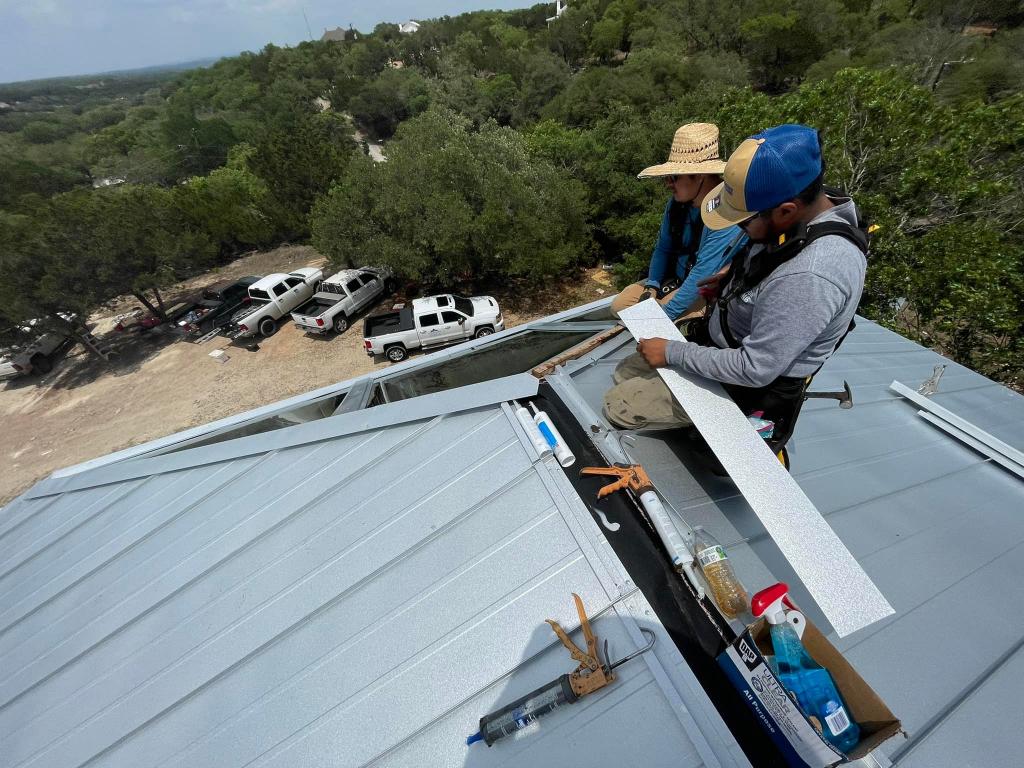
Altitude Roofing evaluates the existing roof and project requirements before recommending a metal roofing system. We can discuss standing seam options, installation considerations, and other roofing materials based on the home and the goals of the project.
Frequently Asked Questions About Oil Canning in Metal Roofing
What is oil canning on a metal roof?
Oil canning is visible waviness or rippling in the flat areas of a metal roofing panel. It is usually an appearance-related condition and can become more noticeable depending on lighting, viewing angle, panel width, color, and finish.
Is oil canning on a standing seam roof normal?
Some visible surface variation can occur with standing seam and other metal panel systems. It is not possible to guarantee a perfectly flat appearance under every lighting condition, so the goal is generally to minimize the causes and visual impact.
Does oil canning mean my metal roof is damaged?
Not necessarily. Oil canning is generally a visual condition. However, significant waviness accompanied by loose panels, damaged seams, leaks, or other problems should be investigated.
What causes oil canning in standing seam metal roofing?
Possible contributing factors include panel width and design, manufacturing and roll-forming stresses, roof deck conditions, handling and storage, installation practices, thermal movement, panel alignment, and finish selection.
Can oil canning be completely prevented?
No. Industry guidance does not consider total prevention realistic. Careful product selection, design, fabrication, substrate preparation, handling, and installation can reduce the likelihood or visibility of oil canning.
Does sunlight make oil canning worse?
Sunlight can make oil canning easier to see because reflected light emphasizes small changes in the panel surface. The same roof may therefore look different depending on the time of day and viewing angle.
Do dark metal roof colors show more oil canning?
They can. Darker colors and higher-gloss finishes may make surface variations more noticeable because reflected light creates greater visual contrast.
Can a thicker metal roof prevent oil canning?
Not by itself. Thickness is only one consideration. Panel width, profile, substrate, manufacturing, thermal movement, and installation practices also matter.
Can oil canning be repaired?
There is no universal repair for oil canning. In limited cases, a severely affected panel may be replaced, but the appropriate response depends on the roofing system and the reason for the visible distortion.
Is oil canning covered by a metal roof warranty?
Coverage varies by manufacturer and product. Because oil canning is often treated as an aesthetic condition, homeowners should review the specific warranty before selecting a system.
Should I be worried about a wavy standing seam metal roof?
Not automatically. If the roof is otherwise performing properly, the waviness may simply be oil canning. An evaluation is appropriate when the appearance is severe, new, accompanied by other problems, or causing concern about installation quality.
How can I minimize oil canning when installing a new metal roof?
Discuss panel width, profile, material, finish, substrate preparation, thermal movement, handling, and installation practices with your roofing contractor before the materials are ordered. No single choice guarantees a perfectly flat appearance.
Considering Standing Seam Metal Roofing in Austin?
Oil canning is one of the details worth understanding before investing in a new metal roof. Knowing what it is, what can contribute to it, and what a contractor can realistically do to minimize it can help you make a better roofing decision.
Altitude Roofing provides standing seam metal roofing in Austin and surrounding Central Texas communities. We can evaluate your home, discuss your roofing options, and explain the considerations that apply to your specific project.
Start with a free roof evaluation call. When an onsite assessment is needed, we’ll explain any applicable inspection fee before scheduling the visit.
