Skip to content
Dripping Springs sits at roughly 1,450 feet elevation in the Texas Hill Country, where geology, weather, and the surrounding live-oak canopy create a roofing environment unlike anything in central Austin. The limestone substrate causes differential foundation settling, and that movement travels upward into roof structures. The elevation adds approximately 4–6 additional significant hail days per year compared to Austin proper, according to historical NOAA data for Hays County. Summer temperatures routinely hit 102–106°F on black asphalt shingle surfaces, accelerating UV granule loss by an estimated 15–20% compared to the same shingles in a cooler climate. Mountain cedar and live oak shed debris year-round, clogging gutters faster than most markets.
None of this is cause for alarm. It is a reason to maintain your roof on a schedule calibrated to where you actually live, not a generic national checklist written for Ohio.
This guide covers what your roof needs in Dripping Springs specifically, what you can safely inspect yourself, what requires a licensed roofer, and which warning signs mean a repair is overdue. If at any point you want a professional set of eyes on your roof, Altitude Roofing serves Dripping Springs with free, no-pressure inspections.
Why Dripping Springs Roofing Is Different From the Rest of Austin
The three primary stressors on a Dripping Springs roof are each more aggressive here than in most Texas markets. Understanding them is the starting point for any maintenance plan.
| Stressor | What Happens in Dripping Springs | Maintenance Implication |
| Thermal Cycling | Roof surface hits 160–170°F on summer afternoons, then drops 40–60°F after a thunderstorm. Repeated daily for 4–5 months. | Sealant strips crack; flashing lifts; shingles cup and curl. Ventilation is not optional. |
| Hail Frequency | Hays County averages 3–6 significant hail events/year (≥1 inch). Golf-ball hail (2 inch+) occurs roughly every 18–24 months. | Functional shingle damage that does not leak immediately but accelerates degradation. Post-storm inspection is critical. |
| Cedar & Oak Debris | Mountain cedar sheds pollen and debris year-round. Live oaks drop heavily in spring. Fastest gutter-clog rate in the metro. | Wet decomposing debris holds moisture against flashing and shingles, promoting algae and accelerating oxidation. |
| Foundation Movement | Cretaceous limestone and clay subsoils cause differential settling in Hill Country foundations. | Foundation movement can translate into rafter spread, ridge sag, and flashing separation unrelated to weather. |
The Dripping Springs Seasonal Roof Maintenance Calendar
What follows is calibrated to Central Texas weather patterns. The storm risk, tree behavior, and temperature profile here are distinct enough from national averages to warrant a local-specific schedule.
At a Glance: What to Do Each Season
| Season | Primary Threat | Homeowner Tasks | Pro Tasks |
| Spring (Mar–May) | Hail, high-wind thunderstorms, cedar debris | Clear gutters, trim branches, photograph roof | Flashing inspection, post-storm assessment |
| Summer (Jun–Sep) | UV degradation, thermal cycling, algae | Ground-level visual check for cupping, algae streaking | Ventilation audit, algae treatment |
| Fall (Oct–Nov) | Live oak debris, late-season storm prep | Clear gutters after oak drop, check attic | Professional inspection, best window of year |
| Winter (Dec–Feb) | Rare freezes; Uri-style events possible | Document post-freeze, check attic for daylight | Ice dam assessment if sustained freeze occurs |
Spring: March through May, Storm Season Preparation
The highest-risk period for Dripping Springs roofs runs late February through May. The jet stream creates the collisions between Gulf moisture and dry continental air that produce the hail events Hays County is known for.
Before storm season, what you can do yourself:
- Clear gutters and downspouts of winter cedar debris. Blocked gutters during a 3-inch/hour rain event, common in March through May, force water under the eaves. This is classified as a maintenance failure by most insurers and is not covered.
- Trim overhanging branches to a minimum 6-foot clearance from the roof surface. Ice-loaded cedar branches (recall February 2021) can fall with enough force to crack decking. Preventive trimming also reduces year-round debris accumulation.
- Photograph your roof from the ground with your phone, date-stamped. These photos are admissible evidence in an insurance claim and establish pre-storm baseline condition.
- Verify ridge vents and soffit openings are unobstructed. Wasps and mud daubers build nests in ridge vent openings during late winter. A blocked ridge vent entering summer is a ventilation failure that accelerates shingle aging.
After any hail event:
Do not climb your roof. Inspect fences, aluminum gutters, and painted wood trim from the ground, these surfaces show hail pockmarking at the same impact threshold as your shingles. If your fence posts are dimpled, your roof almost certainly sustained functional damage. Contact a qualified local roofer before filing any insurance claim.
Texas insurance timing: Most homeowner policies require hail damage claims to be filed within 1 year of the event. After that, carriers can deny the claim as untimely regardless of visible damage. If you experienced a significant hail event and have not had a professional inspection, act within the calendar year.
Summer: June through September, Heat and UV Management
Summer maintenance is about cumulative damage management, not storm response. The threats are slower and build over multiple seasons.
UV and granule loss, what to watch for:
Asphalt shingles protect their mat with ceramic granules embedded in modified asphalt. UV radiation and thermal cycling cause the asphalt binder to harden and granules to dislodge. You will see this as dark sandy material in your gutters and as bald or thin spots on shingle surfaces. Some granule loss is normal on shingles over 10 years old. Accelerating or patchy loss, especially on west and south-facing slopes, indicates the shingle has reached end-of-life in those zones.
Safe ground-level checks this summer:
- Look for shingles that appear cupped (edges turning up) or curled (tab corners lifting). Cupping indicates moisture imbalance in the mat; curling indicates thermal stress and aging.
- Scan the ridge line with binoculars. Any waviness or sagging in the ridge is a structural concern and warrants professional inspection.
- Check north-facing and shaded sections for dark streaking. Black or dark-green streaking is algae (Gloeocapsa magma), cosmetic but accelerates surface degradation if untreated. Blue-green or gray patches may be moss, which holds moisture and causes more serious damage over multiple seasons.
Important: Pressure washing an asphalt shingle roof strips granules and voids most manufacturer warranties. The correct algae treatment is a low-pressure sodium hypochlorite solution, or installation of zinc or copper ridge strips that inhibit regrowth during rainfall. Call a roofer, not a pressure washing service.
Fall: October and November | Best Window for Professional Inspection
October and November are the optimal months to schedule a professional roof inspection in Dripping Springs. Storm season has ended, temperatures are moderate, and you have time to complete repairs before any winter freeze risk.
Fall checklist:
- Clear gutters after the October live oak drop, the largest single debris event of the year. Gutters packed with wet leaf matter through December become a continuous moisture source against fascia boards.
- Inspect pipe boot gaskets around plumbing vents. Neoprene boots degrade faster in Central Texas UV and heat; expected service life is 10–15 years. A failed boot is one of the most common sources of interior leaks that appear unrelated to any storm event.
- Check attic insulation depth and condition. The recommended R-value for Central Texas attics is R-38 to R-49. Insufficient insulation means heat loss in winter and increased summer cooling loads.
- If your last professional inspection was more than 2 years ago, schedule one now.
A qualified inspector can assess shingle condition, flashing integrity, decking flatness, and ventilation in 45–60 minutes on a typical single-story Dripping Springs home. Repairs found in fall cost a few hundred dollars. The same deferred maintenance, after water infiltration causes interior damage, typically runs $2,000–$8,000 in combined roofing and drywall repair.
Winter: December through February, Freeze Preparedness
Dripping Springs averages fewer than 5 days per year below 28°F. But the February 2021 Uri event demonstrated that sustained 5–7 day freezes are within the range of possibility, long enough to cause ice dam formation and pipe-related roof damage.
- Ice dams form when attic heat melts upper-roof snow, water runs to the colder eave, and refreezes. In a properly ventilated and insulated attic, this is rare. In an under-insulated or ventilation-blocked attic, it is a real risk during an extended freeze.
- Pipe boot failures produce visible ceiling stains most commonly during heavy winter rain events, not summer showers. A new stain after winter rain almost always traces to a failed pipe boot, not shingle failure.
- After any ice or freeze event: check from the ground for fallen branches. Do not access the roof surface while frost or ice is present.
What You Can Do Yourself vs. What Requires a Professional Roofer
The line between safe homeowner maintenance and professional work is determined by two factors: whether the task requires stepping onto the roof surface, and whether it involves the water-sealing or structural components of the roof system.
| Safe DIY, Ground Level or Ladder to Gutter Only | Requires a Licensed Roofer |
| Gutter cleaning from a ladder at the eave line (no roof surface access needed) | Any work on the roof surface, shingle replacement, flashing repair, re-sealing around penetrations |
| Visual inspection from the ground using binoculars | Post-hail damage assessment and insurance documentation |
| Trimming overhanging branches from the ground or a ladder (not reaching onto roof) | Leak source diagnosis, water travels along rafters before dripping; entry point is rarely directly above the stain |
| Checking attic from inside for daylight penetrations, moisture, blocked soffit vents | Ventilation modifications, adding ridge vents, installing power ventilators, cutting new soffit openings |
| Photographing and documenting roof condition after a storm | Any work within 3 feet of a chimney, skylight, or parapet wall, flashing details are critical here |
Do not hire a contractor who “just goes up and checks” without a scheduled inspection and written assessment. A drive-by visual or a 10-minute walkover with no documentation is not a professional inspection. A qualified inspector provides written findings with photos.
5 Warning Signs That Require Professional Attention Now
These are not watch-and-wait items. Each indicates active or imminent failure. Deferred action results in interior damage and a repair bill significantly larger than the underlying roofing work.
| Warning Sign | What It Means | Risk if Deferred |
| Ceiling stain, even if dry | Water entered the building envelope. Source is rarely directly above the stain. | Damp insulation promotes mold. Hidden structural damage to decking and rafters. |
| Missing or displaced shingles after a wind event | Open penetration in the roof deck. Underlayment is not designed for ongoing exposure. | First rain event causes several thousand dollars in drywall and insulation damage. |
| Large granule accumulation in gutters after a specific storm | Impact-related granule loss from hail, not normal aging. Insurance filing window is open now. | Claim window closes. Full replacement cost shifts to homeowner rather than deductible. |
| Daylight visible in attic during daytime | Active penetration in decking. Pathway for water, insects, and wildlife. | Ongoing water infiltration; pest infestations in attic insulation. |
| Sagging or deflection in the roof plane | Decking damage, rafter damage, or moisture-related structural compromise. | Risk of section failure under rain load or branch weight. Not a maintenance item. |
How Maintenance Affects Roof Longevity in the Hill Country
GAF publishes installation and maintenance data across U.S. climate zones. In a high-UV, high-thermal-stress environment like Central Texas (ASHRAE Climate Zone 2), a standard architectural shingle rated for 30 years has an expected functional life significantly shorter than that rating implies, and maintenance decisions move that number substantially.
| Maintenance Action | Cost Range | Estimated Life Extension | Return on Investment |
| Adequate attic ventilation (correction/upgrade) | $400–$1,200 | 3–6 years on shingle life | High, largest single driver of premature aging in this climate |
| Pipe boot replacement at 12–15 years | $200–$400 per boot | Prevents $2K–$8K interior damage event | Very high, most common preventable leak source |
| Algae treatment or zinc strip installation | $150–$400 | 1–3 years surface integrity | Moderate, prevents moisture retention damage |
| Post-storm professional inspection within claim window | Free (Altitude Roofing) | Captures covered replacement at deductible cost | Potentially $8K–$18K savings vs. self-pay replacement |
| Biennial professional inspection | $150–$300 (or free) | Catches small repairs before they become large ones | High, $200 repair vs. $5K+ repair after water damage |
A roof replacement on a 2,000 sq ft Dripping Springs home runs $12,000–$20,000 depending on pitch, material, and complexity. Extending roof life by 5 years through maintenance represents $2,400–$4,000 in deferred annual capital expenditure, an ROI on maintenance that is difficult to match elsewhere in the home.
Dripping Springs-Specific Roofing Considerations
The 78620 Hail History
Hays County sits in a secondary hail corridor running from the Balcones Escarpment westward into the Edwards Plateau. NOAA’s Storm Events Database shows 47 recorded significant hail events in Hays County between 2000 and 2023, roughly 2 per year, with golf-ball-sized events (2 inches or larger) occurring approximately every 18–24 months. Homes in the 78620 zip code built between 2010 and 2015 are now in the window where cumulative hail damage is catching up with original builder-grade shingles.
HOA Material Requirements
Belterra, Caliterra, Headwaters, and Reunion Ranch all have HOA guidelines affecting material and color choices for roof replacements. If you are replacing after hail damage, your HOA’s approved shingle list narrows the options. Altitude Roofing handles HOA approval documentation on every Dripping Springs replacement project, this is not something homeowners need to navigate alone.
Foundation Movement and Roof Stress
Dripping Springs sits on Cretaceous limestone formations with some expansive clay subsoils. Differential foundation movement, common in Hill Country homes on shallow slab or pier-and-beam foundations, can translate into rafter spread, ridge sag, and flashing separation that has nothing to do with weather. If your doors have begun sticking, gaps have appeared around window frames, or interior drywall cracks have developed in the past 18 months, have both a structural engineer and a roofer assess the building before attributing the issue solely to the roof.
Choosing a Local Contractor vs. Storm Chasers
After significant hail events in the Hill Country, out-of-state roofing companies move into the Dripping Springs market with aggressive door-to-door solicitation. Two things to know: offering to waive your deductible is insurance fraud under Texas law, and out-of-state contractors have no reputational stake in the local market. Ask any contractor for their Texas contractor registration number, certificate of insurance, and manufacturer certifications, then verify each independently.
Altitude Roofing’s office is in the 78737 zip code, about 10 minutes from Dripping Springs. Edwin Nichols, the owner, holds an all-lines insurance adjuster license, a credential almost no roofing contractor in this market carries, which means he can read your policy, assess the claim, and communicate directly with your adjuster. He has 20+ years of operating in Central Texas, with 170+ Google reviews from local homeowners.
Free Roof Inspection for Dripping Springs Homeowners
Altitude Roofing offers no-cost roof inspections for homeowners in Dripping Springs and the surrounding Hill Country. The inspection includes a visual assessment of shingle condition, granule loss, cupping, and curling; flashing inspection at all penetrations; gutter and fascia condition review; attic ventilation check; and written findings with photos, no obligation attached.
Altitude Roofing is a GAF Master Elite certified contractor, a designation held by fewer than 2% of U.S. roofers. Family-owned, Austin-based, 20+ years in Central Texas, in-house crews only.
To book a free inspection: visit Altitude Roofing or call (512) 809-3229. Inspections in the 78620 zip code are typically scheduled within 1–2 business days. For full details on our Dripping Springs services, including roof repair, storm damage response, and replacement, see our Dripping Springs Location.
Frequently Asked Questions:
These are the questions Google surfaces most frequently alongside roof maintenance searches for the Dripping Springs and Hays County area.
How often should I have my roof inspected in Dripping Springs?
Every 2 years is the minimum for proactive maintenance. After any significant hail event, defined as stones 1 inch or larger, a professional inspection should happen within the same calendar year to preserve your insurance claim options. Fall (October–November) is the best scheduling window: storm season has passed, roofers can work comfortably, and you have time to complete repairs before any winter freeze risk.
What does hail damage actually look like on a roof?
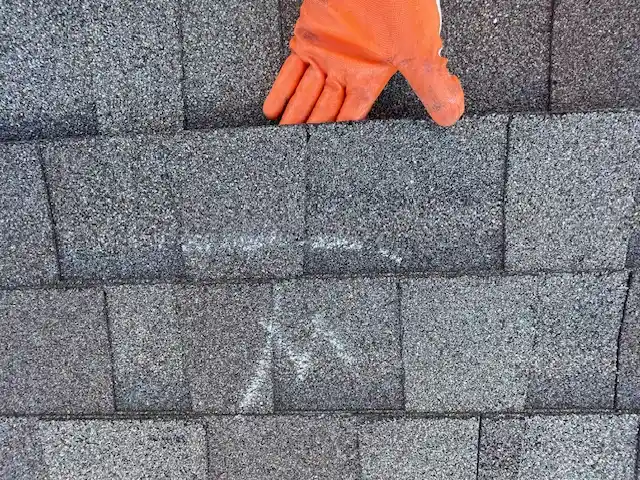
Functional hail damage is often invisible from the ground and not immediately obvious even on the roof surface. What to look for: circular bruise-like depressions in shingle granules (the asphalt mat is compromised beneath); exposed dark substrate where granules have been knocked loose in a pattern consistent with impact; dented aluminum gutters, fascia trim, or window sills (these are the most visible ground-level indicators). A professional inspection using HAAG assessment protocols documents this damage in the format insurers require.
How long do roofs last in Central Texas?
Standard architectural asphalt shingles rated “30 years” have a realistic functional life of 18–22 years in the Central Texas climate without active maintenance, and 22–27 years with consistent ventilation management, timely minor repairs, and periodic algae treatment. The primary shortening factors in Dripping Springs specifically are: inadequate attic ventilation (most impactful), cumulative hail damage, and deferred pipe boot replacement. Metal roofing in this climate performs significantly better, with 40+ year lifespans on standing seam installations.
Is it safe to walk on my roof to inspect it?
For most homeowners: no, and it is not necessary. You can identify the majority of roof problems from the ground with binoculars, missing shingles, sagging sections, algae streaking, obvious debris accumulation. Attic inspection from inside is safe and effective for identifying daylight penetrations and moisture. Reserve roof surface access for licensed roofers who carry the appropriate liability insurance and know how to walk a roof safely without causing additional damage.
What causes roof leaks in Dripping Springs specifically?
In order of frequency based on inspection data from this market: (1) failed pipe boot gaskets, neoprene degrades faster in Central Texas UV and heat; expected service life is 10–15 years; (2) flashing separation at chimney bases and skylight curbs from thermal cycling; (3) clogged gutters causing water backup under eaves, especially after cedar and oak debris seasons; (4) hail-damaged shingles that do not leak immediately but lose water-shedding capacity over 12–24 months; (5) missing or improperly installed starter shingles on builder-grade subdivision homes from the 2012–2018 build cycle.
How do I find a trustworthy roofer in Dripping Springs after a hailstorm?
Three checks: (1) Verify the contractor has a physical Texas address and has been operating locally before the storm, not an out-of-state crew that arrived afterward. (2) Ask for their Texas contractor registration number and certificate of insurance, then verify both independently. (3) Read Google reviews from homeowners in Dripping Springs and Belterra specifically, and look at the review dates, a long review history pre-dating any recent storm indicates a legitimate local operation. Altitude Roofing’s Dripping Springs lists the services we provide in the 78620 area.
Can I claim hail damage on my homeowners insurance in Texas?
Yes, hail damage is a covered peril under standard Texas homeowner’s policies, subject to your deductible. The critical variables are: (1) The claim must typically be filed within 1 year of the event date. (2) The damage must meet your carrier’s threshold for functional impairment, cosmetic damage alone may not qualify. (3) Proper documentation is essential, a professional inspection using HAAG protocols, with photos and a written assessment, gives your adjuster the documentation needed to process the claim correctly. Altitude Roofing’s owner holds an all-lines insurance adjuster license and assists Dripping Springs homeowners through this process at no additional cost.
What is the best roofing material for Dripping Springs homes?
It depends on the property type. For subdivision homes in Belterra, Caliterra, Headwaters, and Reunion Ranch: Class 4 impact-resistant architectural shingles are the highest-value choice, combining HOA approval eligibility with insurance premium reductions available from many Texas carriers for qualifying impact-resistant products. For custom properties on acreage west of town along RR 12 and Fitzhugh Road: standing seam metal roofing has the strongest long-term case, 40+ year lifespan, superior hail resistance, and meaningful summer energy savings from reflectivity. Tile is available but uncommon in new Dripping Springs construction.
How much does a roof inspection cost in Dripping Springs?
Altitude Roofing provides free roof inspections with no obligation in the Dripping Springs and 78620 area. A written report with photos is provided after the inspection, you keep it regardless of whether you proceed with any work. Paid inspection services from third-party inspectors typically run $150–$300 in this market.
What is GAF Master Elite certification and why does it matter?
GAF is the largest shingle manufacturer in North America. Master Elite is their highest contractor designation, held by fewer than 2% of roofing contractors in the U.S. To achieve it, a contractor must maintain proper licensing, carry adequate insurance, demonstrate a track record of quality installations, and commit to ongoing training. Practical benefit for homeowners: Master Elite contractors can offer GAF’s System Plus and Golden Pledge warranties, which are manufacturer-backed and significantly more comprehensive than a contractor-only warranty.
What are Class 4 impact-resistant shingles and should I upgrade?
Class 4 is the highest impact-resistance rating under UL 2218 testing, the standard used to classify roofing products for insurance purposes. Class 4 shingles resist cracking from a 2-inch steel ball dropped from 20 feet. In Central Texas’s hail corridor, many insurance carriers offer premium discounts of 15–30% for homes with qualifying Class 4 systems. At replacement time, the upgrade cost from standard architectural to Class 4 is typically $500–$1,500 on a standard Dripping Springs home, often less than the annual premium savings over a few years.
My roof is only 8 years old. Why does it need maintenance already?
Age is one factor, but the Central Texas environment is the bigger driver. Eight-year-old builder-grade shingles installed during the 2015–2018 Dripping Springs subdivision boom have been through 8 hail seasons, thousands of thermal cycles, and continuous UV exposure in a high-elevation environment. Pipe boots installed at construction are now approaching the lower end of their service life window (10–15 years). And if there has been a significant hail event in the last few years, functional damage may exist that does not yet manifest as a leak, but is shortening the remaining lifespan of the roof system.
How long does a professional roof inspection take?
For a typical single-story Dripping Springs home (1,500–2,500 sq ft), 45–60 minutes for the exterior inspection and attic check. A two-story home or one with multiple roof planes and penetrations (skylights, solar, complex chimney configurations) may take 75–90 minutes. Written findings are typically provided within 24 hours of the inspection.
Quick Reference: Dripping Springs Roof Maintenance Checklist
| When | Task | Who |
| Every spring (Mar–Apr) | Clear gutters and flush downspouts; trim branches to 6 ft clearance; photograph roof before storm season; check ridge and soffit vents for blockages | Homeowner |
| After any significant hail | Check fence posts and gutters for pockmarking; photograph from ground; call a roofer if impact evidence is present, do not climb the roof | Homeowner then Roofer |
| Every summer (Jun–Aug) | Ground-level check for cupping, curling, algae streaking; assess attic temperature (should not exceed 130–140°F with adequate ventilation) | Homeowner |
| Every fall (Oct–Nov) | Clear gutters after live oak drop; inspect attic for daylight and moisture; schedule professional inspection if last one was 2+ years ago | Homeowner + Roofer |
| Every 2–3 years | Professional inspection with written report; pipe boot condition assessment; ventilation adequacy review; flashing integrity check at all penetrations | Roofer |
| At 12–15 years | Pipe boot replacement (proactive, before failure); full shingle condition and granule assessment; evaluate attic ventilation upgrade | Roofer |