Skip to content
If you’ve lived in Austin long enough, you already know what Texas weather does to a roof. Spring hailstorms strip granules off shingles before summer even starts. Then came three straight months of 100-degree heat. By fall, you’re calling a roofer and wondering why the number on the estimate looks so much higher than you expected.
That’s exactly why understanding roof replacement cost in Austin matters before you pick up the phone. Prices in 2026 are not what they were two or three years ago. Material costs have gone up. Skilled labor is harder to find. And Austin’s tight construction market keeps pushing local prices above the state average. This guide breaks all of it down real numbers, real factors, and real ways to save so you can walk into this project with confidence.
What Does Roof Replacement Cost in Austin ? (Quick Answer)
A full roof replacement in Austin typically costs between $9,500 and $30,000 in 2026. That range covers everything from a standard asphalt shingle job on a modest home to a premium standing seam metal roof on a larger property.
Here’s a fast snapshot before we dig in:
- Average total cost (2,000 sq. ft. home): $9,500–$18,000 for architectural shingles
- Installed cost per square foot: $4.25–$14.00
- Labor’s share of the total: roughly 50%
Roof Squares vs. Home Square Footage: Why Your Estimate Doesn’t Match Your Floor Plan
Before pricing anything, it helps to know that roofers measure in squares one square equals 100 square feet of actual roof surface. Your roof’s surface area is almost always larger than your home’s floor plan because it includes overhangs, slope, and every roof plane. A 2,000 sq. ft. single-story home typically carries 2,200–2,800 sq. ft. of actual roof area (22–28 squares) once pitch and overhangs are factored in.
This is also why a two-story home often has a smaller roof than a single-story home of the same floor square footage; the footprint is split across two levels instead of spread across one.

Roof Replacement Cost in Austin by Roof Size (Squares)
| Roof Size | Architectural Shingles | Metal (Standing Seam) |
| 1,500 sq. ft. roof (15 squares) | $7,500–$12,500 | $15,000–$24,000 |
| 2,000 sq. ft. roof (20 squares) | $9,500–$16,500 | $19,000–$28,000 |
| 2,200 sq. ft. roof (22 squares) | $10,500–$18,000 | $21,000–$30,500 |
| 2,500 sq. ft. roof (25 squares) | $12,000–$20,000 | $24,000–$34,000 |
| 3,000+ sq. ft. roof (30+ squares) | $14,500–$24,000+ | $28,000–$40,000+ |
Ranges assume standard tear-off, new synthetic underlayment, and quality materials. Complex roofs, steep pitch, and decking repairs add cost. Multi-level homes and properties with complex layouts, multiple roof planes, steep pitches, or a mix of dormers and skylights land at the higher end every time. West Austin and Westlake Hills homes are a good example: beautiful architecture, but that complexity shows up on the estimate.
Free Austin Roof Cost Calculator – Get an Instant Estimate

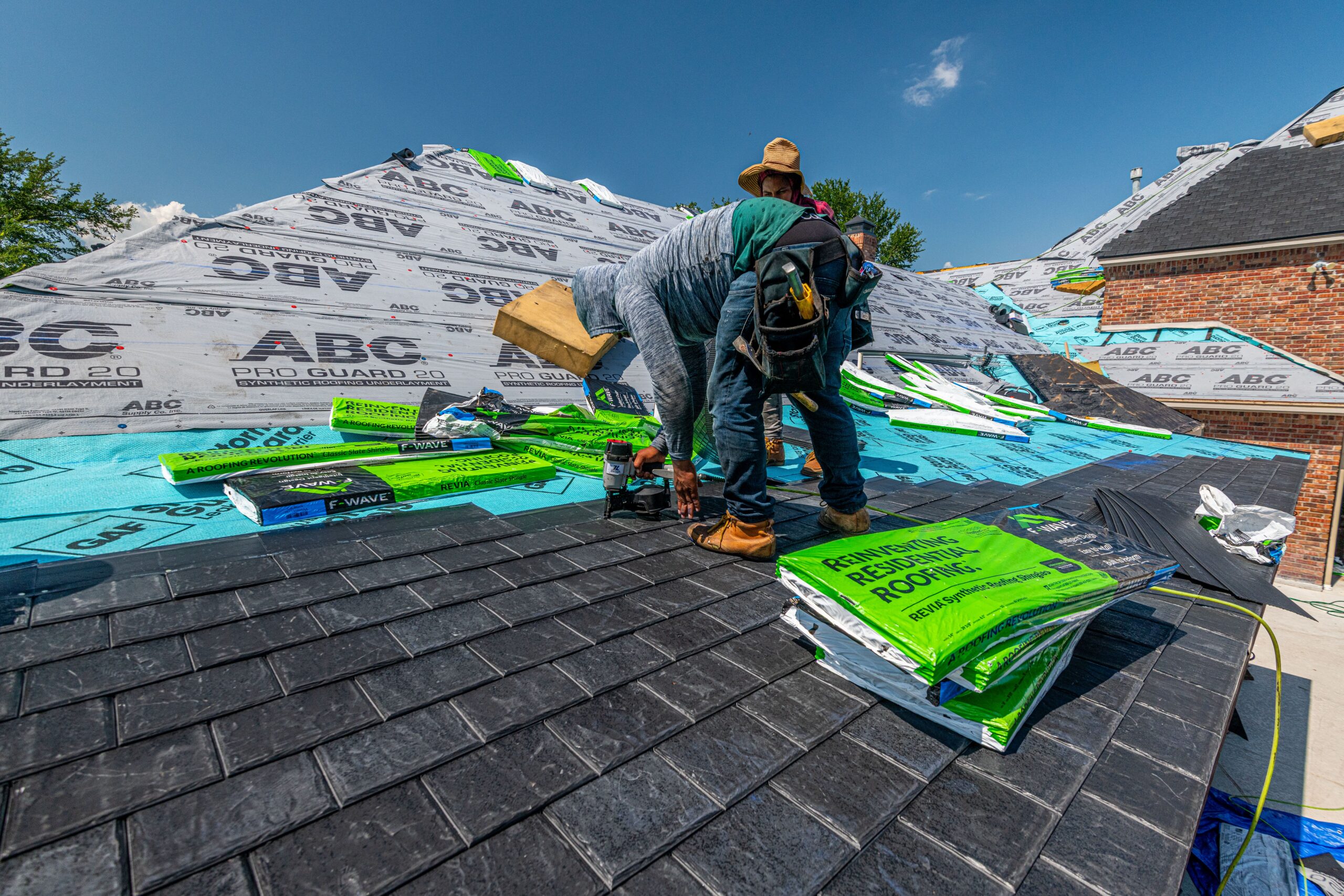
Important: This estimate is for budgeting purposes only. Final costs depend on decking condition, ventilation, flashing, skylights, roof overhangs, and other factors assessed during an in-person inspection. All inspections are free with zero obligation.
Thank You!
Your estimate request has been submitted. We'll be in touch soon.
Your Estimate: $0.00
These ranges cover most Austin homes, but your number depends on your roof’s actual size, pitch, and complexity. Our free roof cost calculator gives you a ballpark in about a minute. This is a budgeting estimate, not a quote. Decking condition, ventilation, flashing, skylights and overhangs all move the final number, and those only get assessed in person.
Roof Replacement Cost in Austin by Material Type
Material choice is where the numbers really spread apart. Austin’s climate, brutal UV exposure, spring hail, and sudden wind events makes this decision more than just a budget call. It’s a durability call too.
Asphalt Shingles Roof Replacement Cost in Austin
Asphalt is still the most popular roofing material in Austin, and for good reason. It’s affordable, widely available, and easier to install than metal or tile. But not all asphalt shingles are created equal.
3-Tab Shingles are the entry-level option, running $4.25–$6.50 per square foot installed (roughly $8,500–$13,000 total). Most Austin roofers don’t recommend them anymore. Their wind resistance just doesn’t hold up to Central Texas storm patterns.
Architectural Shingles are the sweet spot for most homeowners. They cost $5.75–$8.25 per square foot installed, or $11,500–$16,500 for a typical 2,000 sq. ft. home. They handle wind better, look sharper, and last 15–30 years with proper maintenance.
Premium / Impact-Rated Designer Shingles step it up further at $7.50–$10.00 per square foot, or $15,000–$20,000 total. These thicker, Class 4 impact-rated systems are worth serious consideration in hail-prone areas. They can also reduce your homeowner’s insurance premium worth asking your insurer about.
Homeowners considering asphalt for their replacement can compare architectural and impact-resistant options through our shingle roofing Austin services.
Metal Roofing
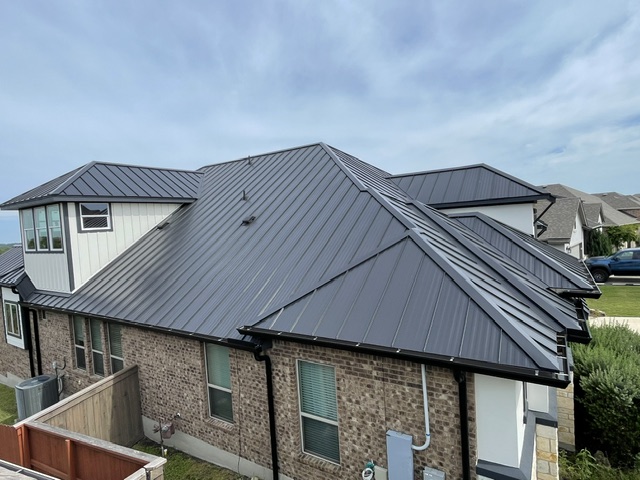
Metal roofing has grown fast in Austin. It handles heat reflection well, stands up to hail and wind better than asphalt, and lasts 40–70 years. The tradeoff is a higher upfront investment.
Steel Standing Seam runs $8.00–$12.00 per square foot installed, landing most projects at $16,000–$24,000. It’s the go-to for homeowners who want maximum durability on exposed hillside lots or open-lot neighborhoods.
Aluminum Standing Seam costs a bit more at $9.50–$14.00 per square foot ($19,000–$28,000 total). Aluminum is lighter and highly corrosion-resistant, making it a smart call for homes near Lake Travis or in areas with higher moisture exposure.
Metal Shingles split the difference they look like traditional shingles but perform like metal. Expect $7.50–$11.50 per square foot, or $15,000–$23,000. A great option if you like the aesthetic of asphalt but want the longevity of metal.
Homeowners comparing long-term durability and upfront investment can explore our metal roofing Austin options before deciding whether the higher initial cost makes sense for their home.
Tile and Premium Materials
Tile is the prestige pick in Austin, especially on Mediterranean or Spanish-style homes. It performs exceptionally in heat. The weight is the one caveat some homes need structural reinforcement before tile can go on.
Concrete Tile runs $6.50–$10.00 per square foot, or $13,000–$20,000 total, with a lifespan of 30–50 years. Clay Tile costs $8.00–$15.00 per square foot ($16,000–$30,000) and can last 40–80 years but it can crack under large hail, so your location matters.
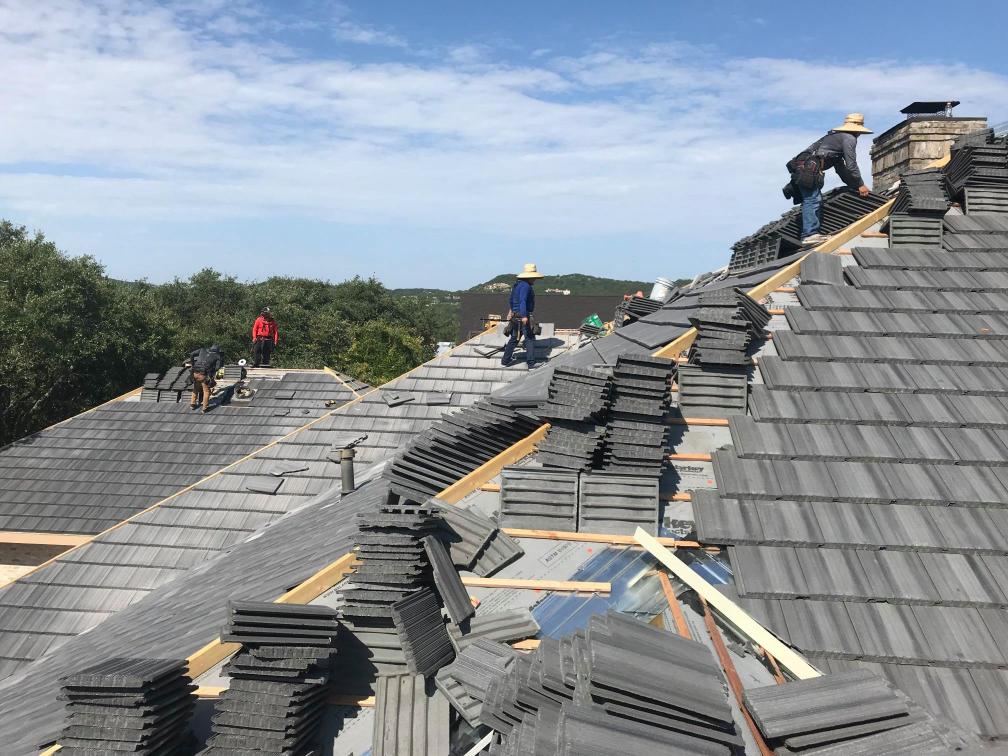
Synthetic Roofing (brands like CeDUR, Brava, and DaVinci) gives you the look of cedar or slate without the weight. At $7.00–$12.00 per square foot ($14,000–$24,000), with advertised lifespans of 50–100 years, these systems are becoming a serious option for discerning Austin homeowners.

At-a-Glance Comparison Table
| Material | Installed Cost/Sq. Ft. | Typical Total Cost | Lifespan |
| 3-Tab Asphalt | $4.25–$6.50 | $8,500–$13,000 | 12–20 yrs |
| Architectural Shingles | $5.75–$8.25 | $11,500–$16,500 | 15–30 yrs |
| Impact-Rated Designer Shingles | $7.50–$10.00 | $15,000–$20,000 | 20–30+ yrs |
| Steel Standing Seam | $8.00–$12.00 | $16,000–$24,000 | 40–70 yrs |
| Aluminum Standing Seam | $9.50–$14.00 | $19,000–$28,000 | 40–70 yrs |
| Metal Shingles | $7.50–$11.50 | $15,000–$23,000 | 40–70 yrs |
| Concrete Tile | $6.50–$10.00 | $13,000–$20,000 | 30–50 yrs |
| Clay Tile | $8.00–$15.00 | $16,000–$30,000 | 40–80 yrs |
| Synthetic (CeDUR, Brava) | $7.00–$12.00 | $14,000–$24,000 | 50–100 yrs |
These ranges cover most Austin homes, but your number depends on your roof’s actual size, pitch, and complexity.
10 Factors That Drive Roof Replacement Costs in Austin
This is where homeowners often get surprised. The material price is just the starting point. Several other variables can push your final number higher and knowing them in advance puts you in a much better position when reviewing bids.
1. Roof Size and Square Footage
The roof’s actual surface area not your home’s floor plan square footage determines material and labor quantities. A two-story home often has a smaller roof than a single-story home of the same square footage, because the footprint is split across two levels.
2. Roof Pitch and Steepness
This one catches homeowners off guard. Steep slopes (8/12 pitch or greater) require additional safety measures, slower work, and more labor hours. That translates directly to cost typically a 20–30% labor increase over a standard-pitch roof. West Austin homes with dramatic architecture almost always fall into this category.
3. Roof Complexity and Design Features
Every skylight, chimney, dormer, and valley adds time and custom flashing work. Each penetration point typically adds $500–$2,000 to the job. A simple gable roof is the fastest and cheapest to replace. A multi-plane roof with six valleys and two skylights is a different thing entirely.
4. Tear-Off and Disposal
Old roofing material has to come off before the new system goes on. Tear-off runs $1.50–$3.25 per square foot in Austin right now. Homes with two existing layers of shingles cost more because there’s twice the material to remove and haul away. Dumpster fees add another $200–$400 in most cases.
5. Decking Condition
Once the old roofing is stripped, sometimes the decking underneath tells a different story. Rotted, water-damaged, or structurally compromised decking has to be replaced before anything else goes on. In older Austin neighborhoods and homes with long-term slow leaks, this is a real possibility. Budget an extra $1,200–$4,500 if your home has any history of moisture issues.
6. Flashing and Ventilation
New flashing around every penetration point chimneys, vents, skylights, pipe boots is best practice on a full replacement. Skipping it is where future leaks start. Austin’s updated 2026 building codes also tighten requirements around ventilation systems, so older attic setups sometimes need upgrading during the project.
7. Solar Panel Removal and Reinstallation
If you have solar panels, they need to come off before the roof goes on and get reinstalled after. This adds cost and often requires a specialist. It’s not a small line item factor it in before you get your first estimate.
8. Gutters
Gutter removal and reinstallation is standard during most replacements. If your gutters are at the end of their life, many homeowners bundle a full gutter replacement into the same project to save on mobilization costs.
9. Austin’s Labor Market
Based on what we’re quoting this year, skilled roofing installers in the Austin market are earning roughly $45–$75 per hour. The labor pool hasn’t kept pace with demand, and storm backlogs from 2024 and 2025 are still working through the system. During peak months April through September wait times of 4–8 weeks are common. That demand pressure keeps prices elevated year-round.
10. Material Price Inflation in 2026
Based on what we’re seeing in supplier pricing this year, asphalt shingle costs have moved up roughly 8–10% compared to 2025, and metal roofing especially standing seam systems has climbed further, in the range of 12–15%. Underlayments, fasteners, and ventilation components are also up modestly. Delivery fees have ticked up too, adding $200–$500 to most Austin jobs. Altitude’s own quotes continue to run above the statewide average, which tracks with Austin’s tighter labor market and construction demand.
Does Insurance Cover Roof Replacement in Austin?
If hail, wind, or storm damage caused the problem, your homeowner’s insurance may cover most or all of the replacement but three details in your policy decide how much you actually receive.
Replacement Cost Value (RCV) vs. Actual Cash Value (ACV)
RCV pays today’s price minus your deductible. On a $15,000 replacement with a $2,000 deductible, RCV pays $13,000. ACV subtracts depreciation for the roof’s age first the same $15,000 claim on a 12-year-old roof might pay out only $7,000–$9,000. Check your declarations page before storm season, not after.
Percentage-Based Deductibles
Many Texas carriers have moved from flat-dollar to percentage-based wind/hail deductibles. On a $400,000 home, a 1% deductible is $4,000 out of pocket; 2% is $8,000 which can be nearly half the cost of the roof.
Roof-Age Payout Schedules
Some newer policies pay on a sliding scale based on the roof’s age at the time of damage:
| Roof Age at Time of Damage | Share of Replacement Cost Covered |
| 0–5 years | 100% |
| 6–10 years | 70–80% |
| 11–15 years | 50–60% |
| 16–20 years | 30–40% |
| 21+ years | 10–20% |
One important note: it is illegal in Texas for a contractor to offer to waive your deductible. If anyone makes that offer, walk away.
We can help you navigate a claim, but we don’t act as your public adjuster Texas law doesn’t allow a contractor providing the roofing work to also represent you as the adjuster on that claim. We can provide estimates and documentation to support your claim with your insurer.
Roof Repair vs. Roof Replacement: Which Do You Actually Need?
This is worth thinking through before you call anyone. A lot of homeowners assume they need a full replacement when a quality repair would hold for several more years and vice versa.
Repairs make sense for isolated damage: a handful of missing shingles after a wind event, a flashing failure around a chimney, a small leak traced to a single weak point. Repairs typically run a few hundred to a few thousand dollars and can extend a roof’s useful life significantly if the overall system is still sound. If the damage is isolated and the rest of the roofing system is still in good condition, roof repair Austin may be a more cost-effective option than replacing the entire roof.
Roof Replacement Austin is the right call when the damage is widespread, when the roof is approaching or past its expected lifespan, or when you’re dealing with persistent leaks that don’t respond to repairs. If your asphalt shingles are 20+ years old, showing widespread granule loss, or sagging in spots, that’s a replacement conversation, not a repair one.
The honest answer is that you often can’t tell without a professional inspection. An experienced roofer will look at the entire system decking, underlayment, flashing, ventilation and give you a clear picture of where things stand. If you’re not sure, a roof inspection in Austin is the best first step.
What Roof Repairs Actually Cost in Austin
Minor roof repairs in Austin like a few missing or damaged shingles, a single pipe boot, a small flashing fix – typically run $150 – $600. Moderate repairs covering a larger damaged section, valley flashing, or multiple leak points generally land between $600 and $1,800. Storm-related repairs involving structural damage, significant sections, or emergency tarping usually start around $1,800 and run to $5,000 or more.
The honest test is proportion. Once a repair quote passes roughly 30% of what a full replacement would cost on a roof that’s already past two-thirds of its expected life, replacement is usually the better spend.
How Long Will a New Roof Last in Austin?
Austin’s climate is hard on roofing materials. Intense UV exposure, heavy spring rains, sudden hail, and summer heat cycles all shorten roof life faster than in more temperate climates. Here’s a quick look at what to expect:
| Material | Expected Lifespan in Austin |
| 3-Tab Asphalt | 12–20 years |
| Architectural Shingles | 15–30 years |
| Impact-Rated Shingles | 20–30+ years |
| Metal (Steel or Aluminum) | 40–70 years |
| Concrete Tile | 30–50 years |
| Clay Tile | 40–80 years |
| Synthetic Materials | 50–100 years |
Proper installation, quality underlayment, and adequate attic ventilation can all push your roof toward the top end of these ranges.
How Austin Compares to Other Texas Markets
If you’ve gotten quotes in other Texas cities and Austin’s numbers seem high, they’re not inflated; they reflect real market conditions.
Austin consistently runs above the Texas statewide average. Rapid population growth, continuous construction activity, and a tight labor pool are the main drivers. Homeowners here also tend to invest in upgraded systems, better underlayments, impact-resistant shingles, energy-efficient materials which raises the average.
San Antonio typically comes in slightly lower thanks to more scheduling flexibility and less seasonal backlog. Hill Country and rural areas can offer lower labor rates, but limited contractor availability means longer wait times and sometimes travel surcharges. Coastal Texas markets trend higher because of hurricane-rated material requirements. Austin sits firmly above mid-range and the gap isn’t narrowing anytime soon.

What a Legitimate Austin Roofing Estimate Must Include
Every serious Austin roofing estimate should itemize the same core items. When comparing bids, line these up side by side:
- Complete tear-off and disposal of the existing roofing
- New synthetic underlayment
- Starter strip and drip edge on all eaves
- Roofing material specified by manufacturer and product line not just the brand name
- Ridge cap shingles
- Pipe boots and penetration flashing
- Valley flashing, with ice-and-water shield in the valleys
- Step and counter-flashing at walls and chimneys
- Ventilation scope (ridge vent, box vents, or powered ventilation)
- A written decking-repair allowance per sheet
- Warranty terms covering both materials and workmanship, in writing
Red flags: an unusually low bid often means one of these line items is missing or downgraded lower-grade materials, no tear-off, skipped ventilation. Ask every contractor for proof of insurance and licensing before signing anything. A low price today can mean a five-figure problem in two years.
Collecting 4–5 written estimates gives you a real picture of the market. If one quote is significantly lower than the rest, ask what’s different and you deserve a clear answer.
6 Smart Ways to Lower Your 2026 Roof Replacement Cost in Austin
Costs are high, but there are legitimate ways to keep them from running away from you.
- Book in the off-season. January through March and October through November are Austin’s slowest roofing months. Crews have availability, and many contractors reduce pricing by 10–15% to keep the schedule full.
- Bundle exterior work. Adding gutters, siding, or exterior painting to the same project lowers mobilization costs. One crew, one setup, better pricing.
- Watch for manufacturer promotions. February and August are historically when shingle and roofing system manufacturers run rebate and warranty upgrade programs. Your contractor should know about these.
- Get 4–5 written estimates and compare them carefully. Don’t just compare the bottom line, compare what’s included. One quote may be “cheaper” because it skips the ice-and-water shield or uses a lower-tier underlayment.
- Explore financing options. Many quality contractors now offer 0% promotional financing for 12–24 months. For larger projects, a home equity loan may offer better long-term terms. Financing makes it easier to choose the right material rather than just the cheapest one.
- Don’t skip maintenance on a roof that still has life left. Annual inspections, prompt flashing repairs, and clean gutters extend your roof’s life. If your roof has a few good years left, a $300 inspection and $500 in targeted repairs is still the cheapest option on the table.
Neighborhood Notes: What Austin Homeowners Actually Pay
Austin isn’t one market it’s a dozen micromarkets stacked on top of each other.
West Austin / Westlake Hills
Homeowners here consistently land at the higher end of pricing. Steep pitches, large roof footprints, and a strong preference for premium materials (standing seam metal, designer shingles) push totals north of $20,000 routinely. Our team works regularly in West Lake Hills and knows what these roofs take.
South Austin / Buda / Kyle
Homes here tend to be newer and simpler in design, landing more predictably in the $11,000–$18,000 range for architectural shingles. We serve homeowners across Buda and Kyle and the surrounding communities regularly.
Dripping Springs and Driftwood
Projects here often involve larger lot homes with both asphalt and metal roofing requests. Dripping Springs and Driftwood are two of our most active service areas right now.
Lakeway
Most architectural shingle replacements in Lakeway land between $14,000 and $22,000. Standing seam metal typically runs $24,000 to $38,000, and aluminum is the common specification here – it resists corrosion better than steel in the higher moisture near the lake, at roughly $1.50 to $2.00 more per square foot.
Bee Cave
Bee Cave sits between the Lake Travis corridor and West Austin, and the housing stock reflects that mix, newer master-planned subdivisions alongside larger custom builds. Shingle replacements generally run $12,000 to $19,000; metal follows the same per-square- foot ranges above
East Austin
Homes here are often older, which means decking repairs are more likely to surface during tear-off. Budget some contingency $1,500–$3,000 if your home was built before the 1990s.
Round Rock, Pflugerville, and Cedar Park
These fast-growing suburbs share a similar profile: newer housing stock, simpler roof geometry, and slightly more competitive pricing than homes closer to the Hill Country. Most architectural shingle replacements in Round Rock, Pflugerville, and Cedar Park land in the $9,000–$16,000 range for a typical 1,800–2,200 sq. ft. home, with fewer of the decking-repair surprises that show up in older Austin neighborhoods.
Leander and New Braunfels
Homes in Leander and New Braunfels tend to run slightly larger lots with a mix of asphalt and metal requests. Expect $10,000–$19,000 for architectural shingles, with metal roofing pricing following the same per-square-foot ranges outlined above. We regularly serve both areas and can provide a same-week inspection.
Conclusion
Roof replacement cost in Austin in 2026 is real money and it’s not going down anytime soon. But knowing what drives the numbers gives you a real advantage. You can plan better, compare bids more effectively, and avoid the surprises that catch most homeowners off guard.
The most important first step is an honest assessment of your roof’s actual condition by someone who knows Austin’s climate, knows Austin’s codes, and will give you a straight answer. That’s exactly what we do at Altitude Roofing. We serve Austin and the surrounding communities from Dripping Springs and Driftwood to Lakeway, Bee Cave, and beyond.
Ready to get a clear picture of what your roof actually needs? Contact us for a professional inspection and a transparent, written estimate with no pressure, no surprises.
Frequently Asked Questions About Roof Replacement Cost in Austin
How much does it cost to replace a roof on a 2,000 sq. ft. house in Austin in 2026?
For a 2,000 sq. ft. home, most Austin homeowners spend $9,500–$18,000 for architectural shingles and $19,000–$28,000 for metal roofing. The final number depends on roof complexity, pitch, and material choice.
How much does it cost to replace a roof on a 1,500 sq. ft. house in Austin?
Most 1,500 sq. ft. homes fall between $7,500–$12,500 for architectural shingles. Simpler roof shapes on smaller homes tend to land toward the lower end of that range.
How much does it cost to replace a roof on an 1,800 sq. ft. house in Austin?
Expect roughly $9,000–$15,500 for architectural shingles, depending on pitch and the number of roof planes, chimneys, or skylights.
How much does it cost to replace a roof on a 2,200 sq. ft. house in Austin?
Most 2,200 sq. ft. homes run $10,500–$18,000 for architectural shingles, or $21,000–$30,500 for standing seam metal.
Does homeowner’s insurance cover roof replacement in Texas?
It depends on the cause of damage. Texas homeowner’s insurance typically covers sudden storm damage hail, wind, lightning but not wear and tear or age-related deterioration. Whether you’re paid on Replacement Cost Value or Actual Cash Value, and any roof-age payout schedule in your policy, significantly changes what you receive. See the insurance section above for the full breakdown.
What is the best roofing material for Austin’s climate?
Architectural shingles with a Class 4 impact rating are the best balance of cost and performance for most Austin homes. Metal roofing, especially standing seam, is the top performer for longevity and weather resistance, though the upfront cost is higher. The right answer depends on your budget, your timeline, and how long you plan to stay in the home.
How long does a roof replacement take in Austin?
Most residential roof replacements take 1–3 days once the crew is on site. Scheduling and wait times are the bigger variable during peak season (April–September), a 4–8 week wait is common. We break the full timeline down day by day in our guide to how long a roof replacement takes in Austin.