Skip to content
Your roof works hard in Austin. It fights off blazing sun, sudden hailstorms, and heavy spring rain, often in the same week. Over time, that stress adds up. Many homeowners wait too long to act, and small problems turn into big ones.
This guide walks you through the clearest warning signs your roof needs replacement. You’ll learn what to check outside, what to check inside, and when a simple repair just won’t cut it anymore. Each sign below explains what it looks like, why it happens, and what it usually means for your home.
How Long Does a Roof Really Last in Austin?
Every roof has a shelf life. Asphalt shingles usually last 20 to 25 years, but Austin’s heat can cut that shorter. Intense UV rays bake the shingles year after year, drying out the oils that keep them flexible. Metal roofing holds up better, often lasting 40 to 70 years with proper care and far less sun damage.
Age alone doesn’t tell the whole story, though. A 15-year-old roof with storm damage may need replacing sooner than a well-maintained 20-year-old one. That’s why the physical condition of your roof matters more than the number on the calendar. The signs below are what actually decide the timeline.
Signs Your Roof Needs Replacement: Exterior Warning Signs
These are the signs you can often spot from the ground, or with a quick walk around your yard. Each one points to a different kind of wear, so it helps to understand what’s really going on underneath.
Curling or Buckling Shingles
Shingles are supposed to lie flat against your roof. When the edges start to curl upward or the middle begins to buckle, the shingle has lost its flexibility. This usually happens after years of heat exposure and sun damage. Once shingles curl, they no longer seal tightly, which lets wind and water sneak underneath.
Missing Shingles That Keep Reappearing
Losing a shingle or two after a big storm is normal, and it’s often an easy repair. The real warning sign is when shingles keep going missing in different spots over time. This pattern usually means the adhesive and nailing have weakened across the whole roof, not just in one area. At that point, patching one section won’t stop the next one from failing.
Granules Piling Up in Your Gutters
Asphalt shingles are coated with small granules that protect them from sun and rain. As shingles age, those granules start to wear off and collect in your gutters and downspouts. A little granule loss is normal, but heavy buildup after every rain is not. Once the granules are gone, the shingle underneath is exposed and ages much faster.
Dark Streaks, Moss, or Algae
Dark streaks across your roof are often algae, which feeds on the limestone in some shingles. Moss goes a step further and holds moisture directly against the shingle surface. Over time, that trapped moisture weakens the shingle and the layers beneath it. Shaded, north-facing roof sections in Austin tend to show this first.
A Sagging Roofline
This is one of the most serious signs your roof needs replacement. A sagging line, dip, or wave in the roof usually means the decking underneath has been weakened. Trapped moisture, rot, or excess weight are the most common causes. A sagging roof should never wait for a “someday” fix, since the structure itself is at risk.

Signs Your Roof Needs Replacement: Interior Warning Signs
Some of the most telling clues aren’t on the roof at all. They’re inside your attic and on your ceilings. Water often travels sideways before it drips down, so the stain you see may be far from where the actual leak started.
Water Stains on Ceilings or Walls
Brown or yellow rings on your ceiling are a clear sign water has found its way inside. These stains often show up long after the leak actually started, since water can travel along rafters before it soaks through drywall. Even a small, faint stain is worth investigating right away.
Daylight in the Attic
Head into your attic on a sunny afternoon and look up. If you see pinpricks of daylight coming through the roof boards, water can get in through those same gaps. This is one of the clearest interior signs your roof needs replacement, since it means the roof deck itself has holes or separated seams.
Musty Smells or Damp Insulation
A musty smell in your attic or upper floors often means moisture has been sitting somewhere for a while. Damp or matted insulation loses its ability to keep your home warm or cool, which can also raise your energy bills. Mold and mildew tend to follow soon after if the moisture isn’t addressed.
Sagging or Soft Spots in the Ceiling
A soft, spongy spot in your ceiling is one of the most urgent signs on this list. It usually means water has been pooling above the drywall for some time. Left alone, this can lead to a full ceiling collapse. Treat this as a same-week priority, not something to monitor.
Repair or Replace? How to Tell the Difference
Not every issue on this list means a full roof replacement. The real question comes down to three things: how widespread the damage is, how old the roof already is, and whether water is actively getting inside. A cracked shingle here and there, caught early, is usually a quick and affordable fix.
Widespread granule loss, several leaks in different rooms, or a sagging deck tell a very different story. At that point, repeated repairs start costing more than they’re worth, and the roof as a system is failing rather than one small part of it. If you’re unsure which category your roof falls into, our guide on roof repair vs. roof replacement breaks the decision down step by step.
Hail Damage and Roof Replacement in Austin
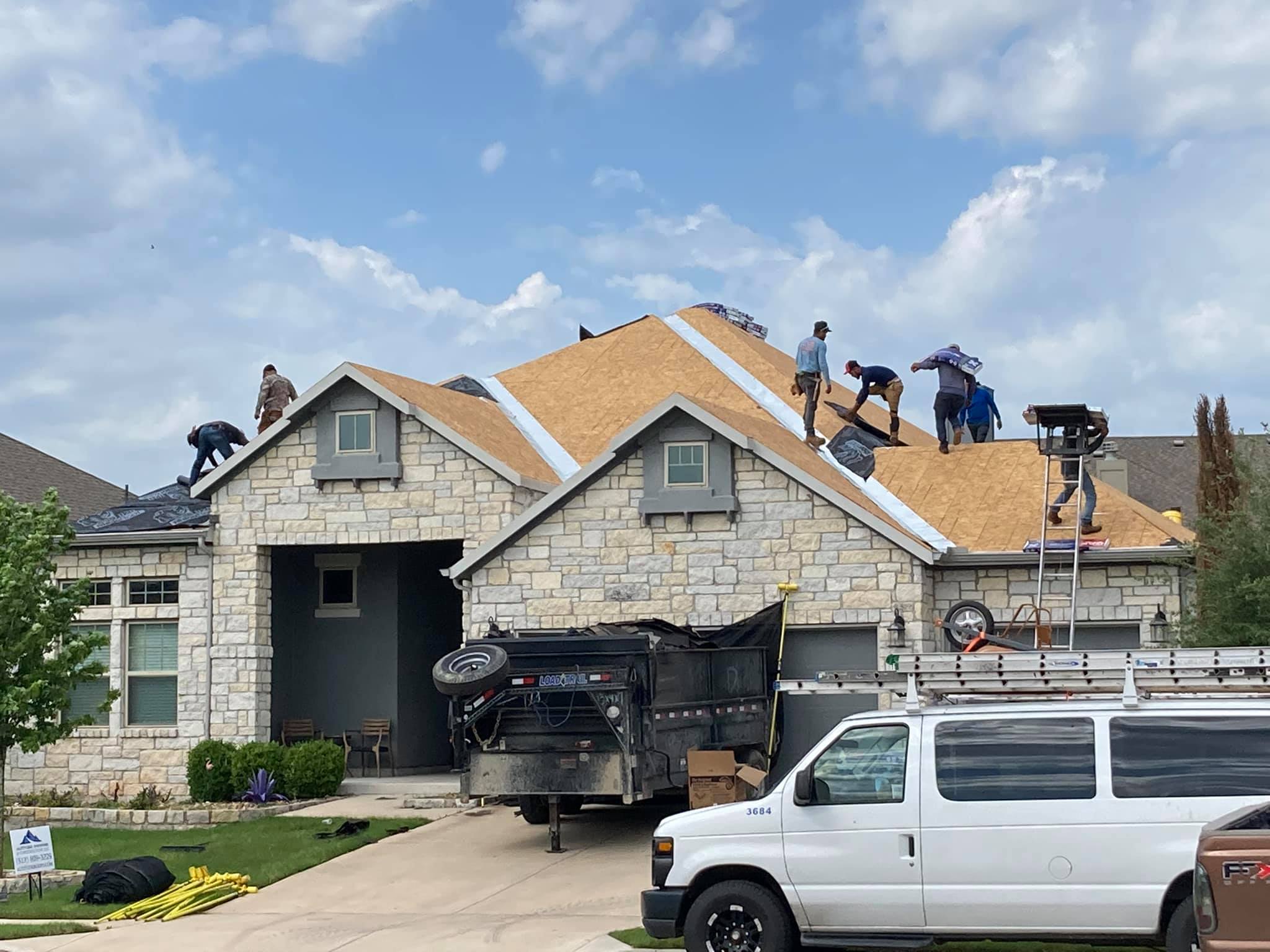
Austin sees its fair share of hailstorms, and hail damage isn’t always obvious from the ground. Small dents and bruised spots on shingles can weaken them without leaving an obvious hole. Weeks or months later, that same bruised spot can turn into a full leak during the next heavy rain.
If a storm rolled through your neighborhood recently, don’t wait for a leak to check things out. Getting an inspection soon after the storm also matters for insurance purposes, since most policies have a limited window for filing a claim.
How Much Does Roof Replacement Cost in Austin?
Cost is usually the first question homeowners ask, and it’s a fair one. Prices vary based on your roof’s size, pitch, and the materials you choose. Asphalt shingles tend to be the most budget-friendly option, while metal and tile cost more upfront but last significantly longer.
Getting a written estimate is the only way to know your real number. A trusted roof replacement contractor should walk you through material options, timeline, and total cost before any work begins.
Why a Professional Roof Inspection Still Matters
You can spot a lot from the ground, but some damage hides in places you simply can’t see. Flashing around chimneys, the underlayment beneath your shingles, and the roof deck itself all need a closer look. Climbing onto your roof yourself is risky, and it’s just not worth the danger.
A professional inspection gives you real answers instead of guesswork. It tells you honestly whether you’re looking at a simple repair or genuine signs your roof needs replacement. Most reputable roofers, including our team, offer free inspections with no pressure to commit right away.
Conclusion
Catching the signs your roof needs replacement early saves you money and stress down the road. A small leak or a few curling shingles rarely stay small for long, especially under Austin’s harsh sun and unpredictable storms. The safest move is always a professional look before problems grow worse.
If you’ve spotted any of the warning signs in this guide, don’t wait for the next storm to find out how bad it really is. At Altitude Roofs, we offer free, no-pressure roof inspections across Austin and the surrounding Hill Country. Reach out today, and let our team give you a clear, honest answer about what your roof really needs.
FAQs
What is the most common sign a roof needs replacing?
Widespread granule loss is one of the biggest red flags. Once the granules wear away, shingles lose their main layer of protection. At that stage, patching rarely solves the problem for long.
Can I tell if my roof needs replacing without climbing on it?
Yes, many signs show up from the ground or inside your attic. Curling shingles, granule buildup, and ceiling stains are all visible without a ladder. A full inspection still confirms the complete picture.
Is a sagging roof always an emergency?
In most cases, yes. Sagging usually means the roof deck has weakened from trapped moisture or age. It’s best to get it checked right away instead of waiting.
Does homeowners insurance cover roof replacement in Austin?
It depends on the cause of the damage and your specific policy. Storm and hail damage are commonly covered, while normal wear usually isn’t. A roofer can help document damage for your claim.
How much does a roof inspection cost?
Many Austin roofing companies, including ours, offer free inspections. This gives you an honest assessment without any upfront cost or obligation.